

A shop replaces a windshield on a late-model sedan. Routine work, done thousands of times, except this car has a forward-facing camera mounted behind the glass that feeds automatic emergency braking and lane keeping.
The camera is not recalibrated, or it is calibrated on a floor that is not level, or with the wrong target distance. Six weeks later the car fails to brake for something it should have seen.
Nobody in the shop would describe that as a repair failure. The glass was installed correctly. But the vehicle left with a safety system that did not work, and that is a liability question with the shop’s name on it.
The autonomous vehicle conversation is interesting and mostly speculative. The technology that has already changed what a repair shop is exposed to arrived years ago and is sitting in the bays right now.
Calibration Is the Exposure That Is Here Now
Advanced driver assistance systems are standard equipment across most of what comes through a shop today. Cameras, radar sensors, ultrasonic sensors, and blind spot modules are mounted in windshields, bumpers, grilles, mirrors, and quarter panels.
That means work nobody used to think of as safety work now is. A windshield replacement, a bumper cover, an alignment, a suspension change that alters ride height, a mirror swap — any of them can require recalibration, and a system that is out of calibration fails quietly rather than obviously.
Three things follow for a shop.
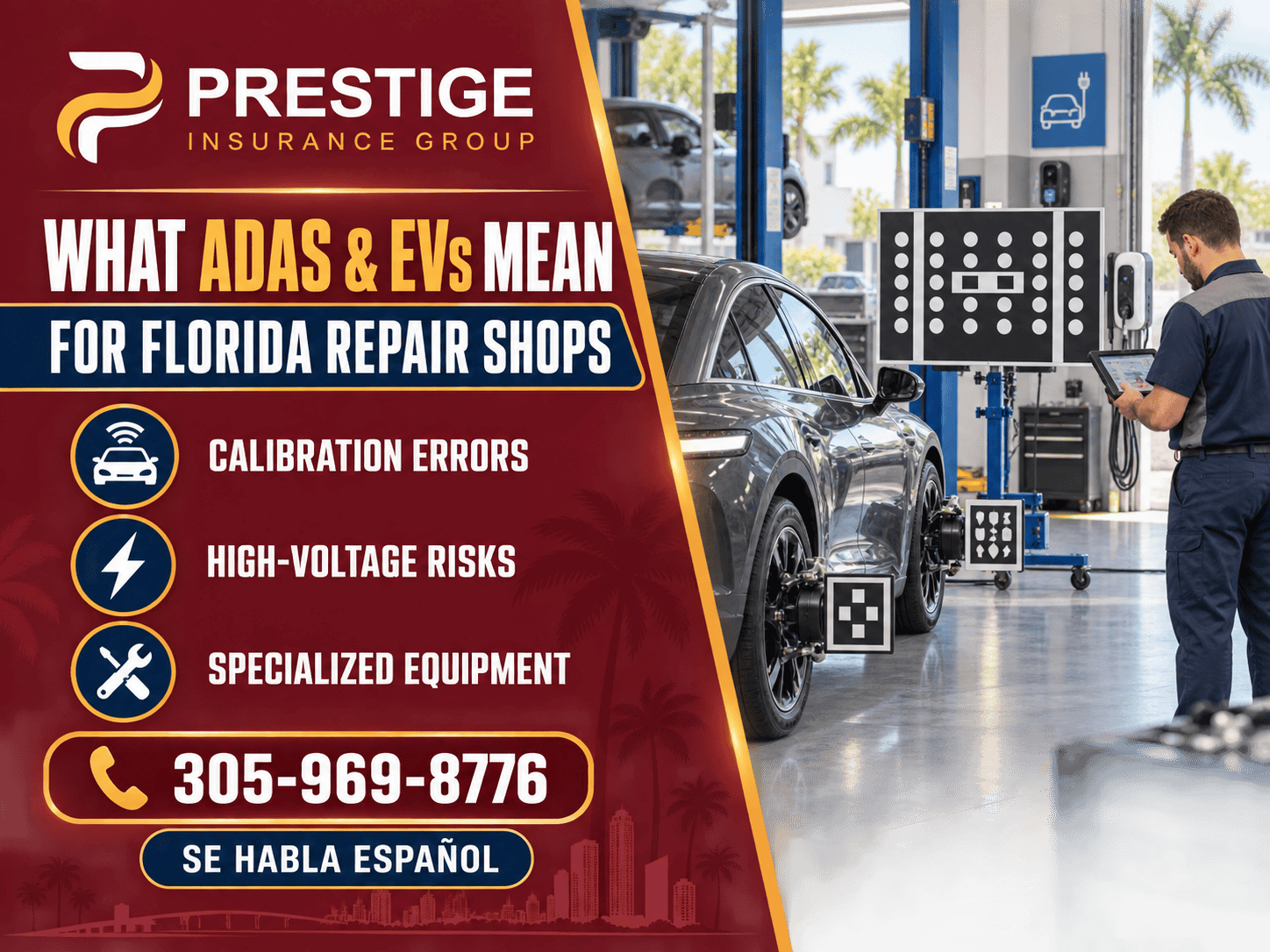
The work requires conditions, not just equipment. Static calibration needs level floor space, controlled lighting, and correct target placement. A shop performing calibrations in a bay that does not meet the specification is producing a result it cannot stand behind.
Documentation becomes the defense. Pre-scan and post-scan reports, calibration confirmation, and the OEM procedure followed are what establish that the work was done correctly. A shop that calibrates and does not document is in the same position as one that did not calibrate.
Sublet does not transfer the exposure. Many shops send calibration out. That is a reasonable business decision and it does not remove the shop’s responsibility to the customer. The sublet vendor’s insurance, their certificate, and what your agreement with them says all matter, because the customer’s claim comes to the shop that did the repair.
What This Does to the Liability Picture
A miscalibrated system that contributes to a collision produces a third-party injury claim. That is garage liability, and it is the kind of claim that develops well past a base limit.
The work itself — redoing the calibration — is not covered. Same rule as any other trade: the policy covers damage you cause to others, not the failure of your own work.
Two practical consequences. Umbrella limits matter more on a shop doing ADAS work than they did on the same shop ten years ago. And the underwriting conversation changes: carriers ask about calibration capability, procedures, and documentation, and shops that can answer well present differently from shops that cannot.
Electric Vehicles Change the Shop, Not Just the Work
EVs are a smaller share of most Florida shops’ volume than ADAS, and they carry more concentrated risk.
High-voltage systems require trained technicians. Battery and drive system work is not something a general technician should attempt on experience alone. Training, insulated tooling, and documented procedures are the difference between a job and an incident.
Battery fires behave differently. Lithium-ion thermal runaway burns hot, can reignite hours later, and is difficult to extinguish with what is on the wall. A shop storing damaged or suspect EV batteries has a property and garagekeepers exposure it did not previously have, and where those batteries sit matters.
Underwriters are asking. Carriers increasingly want to know whether a shop performs high-voltage work, what training the technicians have, and how damaged batteries are handled and stored. That is not a reason to avoid the work. It is a reason to be able to answer.
Tooling is a capital question. Scan tools, calibration rigs, insulated equipment, and battery lifting gear are significant investments, which raises the equipment values on the property schedule and makes equipment breakdown more relevant than it was.
The Parts and Procedure Question
Both trends push in the same direction on parts sourcing and procedure.
OEM repair procedures for vehicles with ADAS and high-voltage systems are more prescriptive than they used to be, and deviating from them is harder to defend afterward. Aftermarket parts in safety-relevant positions — a bumper reinforcement, a bracket holding a radar sensor, a windshield with a different optical specification — create arguments that did not exist on older vehicles.
A shop that documents which procedure it followed and which parts it used has a record. A shop that does not is relying on memory when someone asks two years later.
What Actually Happens to Volume
The industry conversation assumes that better driver assistance means fewer collisions and therefore less work. The picture in shops has been more complicated.
Frequency pressure is real in some categories. Severity has gone the other way, because the same bumper cover that used to be a paint job now contains sensors that must be replaced, aimed, and verified. Repairs that were once straightforward now involve scanning, calibration, and documentation time.
The practical read is that the work is not disappearing. It is getting more technical, more equipment-dependent, and less forgiving of shortcuts, which is a training and capital problem rather than an existential one.
The industry has absorbed this kind of shift before. Carburetors gave way to fuel injection, mechanical diagnosis gave way to computer-based troubleshooting, and each transition looked like a threat to shops that did not invest and an opportunity to shops that did. This one is following the same shape.
Fully autonomous vehicles in meaningful volume remain far enough out that planning around them is not useful. Planning around the calibration and high-voltage work already in your bays is.
What Shop Owners Should Confirm
-
Do you perform ADAS calibration in-house, sublet it, or neither, and does your carrier know?
-
If you calibrate, does your space meet the specification for static calibration?
-
Are pre-scan, post-scan, and calibration results documented on every applicable job?
-
If you sublet calibration, do you hold a current certificate from that vendor?
-
Do you perform any high-voltage EV work, and what training do those technicians have?
-
Where are damaged or suspect EV batteries stored, and for how long?
-
Is your equipment schedule current, given what scan and calibration tooling costs?
-
Do you carry an umbrella, and does the limit reflect the kind of claim a safety system failure produces?
-
Do your repair records show which procedure was followed and which parts were used?
Auto Repair Shop Insurance in Florida
Prestige Insurance Group writes garage and repair shop coverage for auto repair shops, body shops, and service operations across Miami, Hialeah, Doral, Fort Lauderdale, Orlando, and Tampa, including shops doing calibration and high-voltage work.
If you have added ADAS or EV capability and your policy has not been reviewed since, that is worth a conversation. Carriers are asking about it now, and a shop that can describe its procedures gets a better reception than one that cannot.
Call the office nearest you.
Miami: 305-969-8776 Orlando: 407-993-2331
General information only, not legal advice, and not technical or safety guidance. Repair procedures, calibration requirements, and high-voltage safety practices should follow OEM specifications and qualified training. Coverage forms, limits, and carrier appetite vary and change over time; refer to your actual policies for the terms that apply to your operation.