


A storm passes east of Cocoa Beach in late summer. The owner of a twenty-eight-room oceanfront hotel walks the property the next morning and finds it mostly intact: a few torn awnings, some water in the ground-floor lobby and debris in the pool. The power is out across the barrier island, the bridges are restricted for two days, and the hotel stays closed for most of a week. When she calls about the lost revenue, she learns that very little of what she lost is covered, even though her policy is in force and her limits looked generous.
Coverage gaps in hospitality are quiet. Nothing on a declarations page says a claim will not respond. The gaps show up during adjustment, after the money has already been lost. Knowing where they usually sit is the best way to close the ones that can be closed and plan for the ones that cannot.
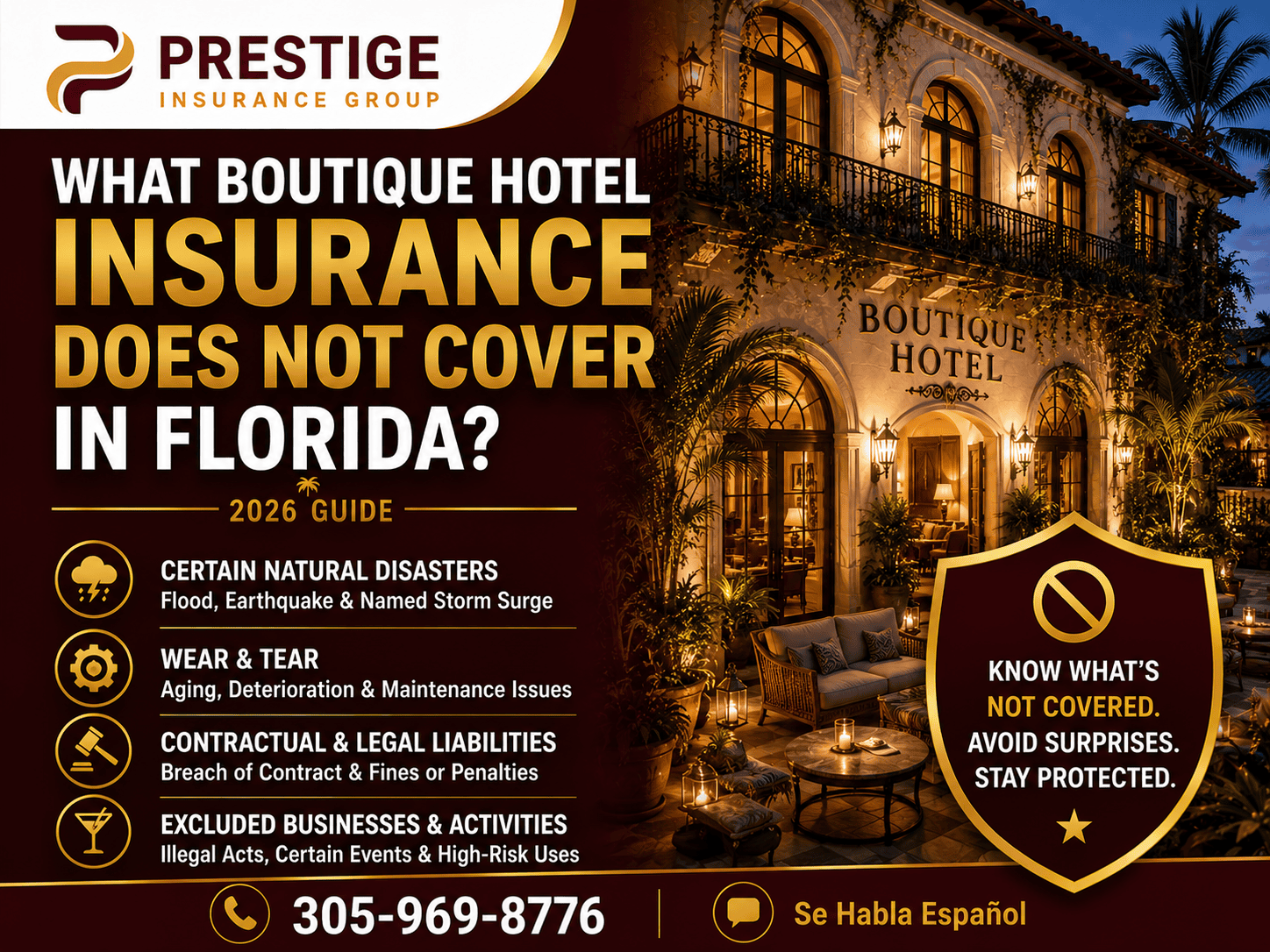
Flood and Everything That Follows It
No commercial property policy covers flood. Storm surge, rising water and water entering at ground level are excluded, and for a coastal or low-lying hotel that is often the largest single gap in the program. Flood coverage has to be bought separately, through the National Flood Insurance Program, a private flood carrier or both.
Two consequences tend to surprise owners. Mechanical equipment such as chillers, boilers, electrical panels, elevator machinery and laundry is often at or near ground level, and those are the losses that keep a hotel closed longest. Business income also follows the cause of loss: if flood caused the closure and flood is excluded, the property policy’s business income coverage does not respond. Standard NFIP policies do not include business income at all, while some private flood products do. Our guide to hurricane and flood insurance for Florida boutique hotels covers that comparison.
Closed Without Damage
Business income responds when a covered physical loss makes the property unusable. A hotel that took little or no damage but cannot operate because the power is out, the area is under an evacuation order or the only road in is closed has no claim under the base form.
Three extensions address this, and none is automatic. Utility service interruption covers loss from off-premises power, water or communications failures. Civil authority covers closures ordered by government, usually for a limited number of days. Ingress and egress coverage responds when the property is intact but cannot be reached. For barrier island and Keys properties, these extensions are often the difference between a recoverable week and an uninsured one. Our article on business income coverage in Florida explains how the trigger works.
Cancellations Before a Storm
When a storm appears in the forecast, reservations empty out days before it arrives, whether it hits or not. Standard business income requires physical loss, and guests cancelling because of a forecast cause none. Weather-related cancellation coverage exists as a specialty product, but most hotel programs do not carry it. It may not be solvable for every property, but owners should know this exposure is uninsured rather than assume business income reaches it.
Mechanical Failure and Wear
Property coverage responds to sudden events such as fire, windstorm and the sudden discharge of water. It does not respond when equipment simply fails. A chiller, boiler, elevator or walk-in cooler that stops working from age or wear falls under equipment breakdown coverage, which is a separate line. For a hotel, an elevator out of service in a four-story building is not an inconvenience; it takes rooms off the market.
Related exclusions remove gradual deterioration, corrosion, rot and the results of deferred maintenance. Carriers look closely at the difference between a sudden failure and a system run to the end of its life.
Water That Is Not Sudden
A slow leak behind a shower wall, a seeping supply line or condensation that has been soaking a ceiling for months is usually excluded as repeated or continuous seepage, and mold that results from it is typically excluded or sharply sublimited. The sudden burst pipe is covered; the leak nobody reported is not. Fast reporting and routine room inspections are the practical defense.
Liability Exclusions That Matter in Hospitality
Many hospitality general liability forms exclude or sublimit assault and battery, which is the exposure behind fights in a bar, confrontations in a parking lot and claims of inadequate security. Liquor liability is excluded from general liability for any business that sells or serves alcohol and must be bought separately. Some forms now carry exclusions tied to human trafficking claims, and the wording varies widely. Claims by employees, discrimination and wrongful termination belong to employment practices liability, not general liability.
Guest data is another gap. A breach of reservation or payment card systems is not covered by general liability or property and requires cyber coverage. Our overview of assault and battery coverage explains how those exclusions typically read.
Valuation Gaps
Even when a loss is covered, the payment can fall short. Older roofs are sometimes settled at actual cash value rather than replacement cost. Older buildings that must be rebuilt to current code need law and ordinance coverage for the upgrade cost. Underinsuring the building to reduce premium can trigger a coinsurance penalty that reduces every claim, not just total losses.
Worth Confirming With Your Agent
-
Whether flood coverage is in place and whether it includes any business income
-
Whether utility service interruption, civil authority and ingress and egress extensions are on your policy
-
Whether equipment breakdown covers chillers, elevators, boilers and kitchen equipment
-
How assault and battery, liquor and trafficking-related claims are treated
-
Whether your roof is covered at replacement cost or actual cash value
-
Whether law and ordinance coverage fits the age of the building
-
Whether you carry cyber coverage for guest payment data
This article is general information and is not legal advice.
Talk to Prestige Insurance Group
Prestige Insurance Group reviews boutique hotel programs across Florida for the gaps that only appear during a claim. If you are not sure how your policy treats flood, a closure without damage or an incident at your bar, we can read the forms with you and show you what responds and what does not.
Call the office nearest you. Se habla español.
Orlando: 407-993-2331
Miami: 305-969-8776
Stuart: 772-247-3788
Prestige Insurance Group, License L057894