


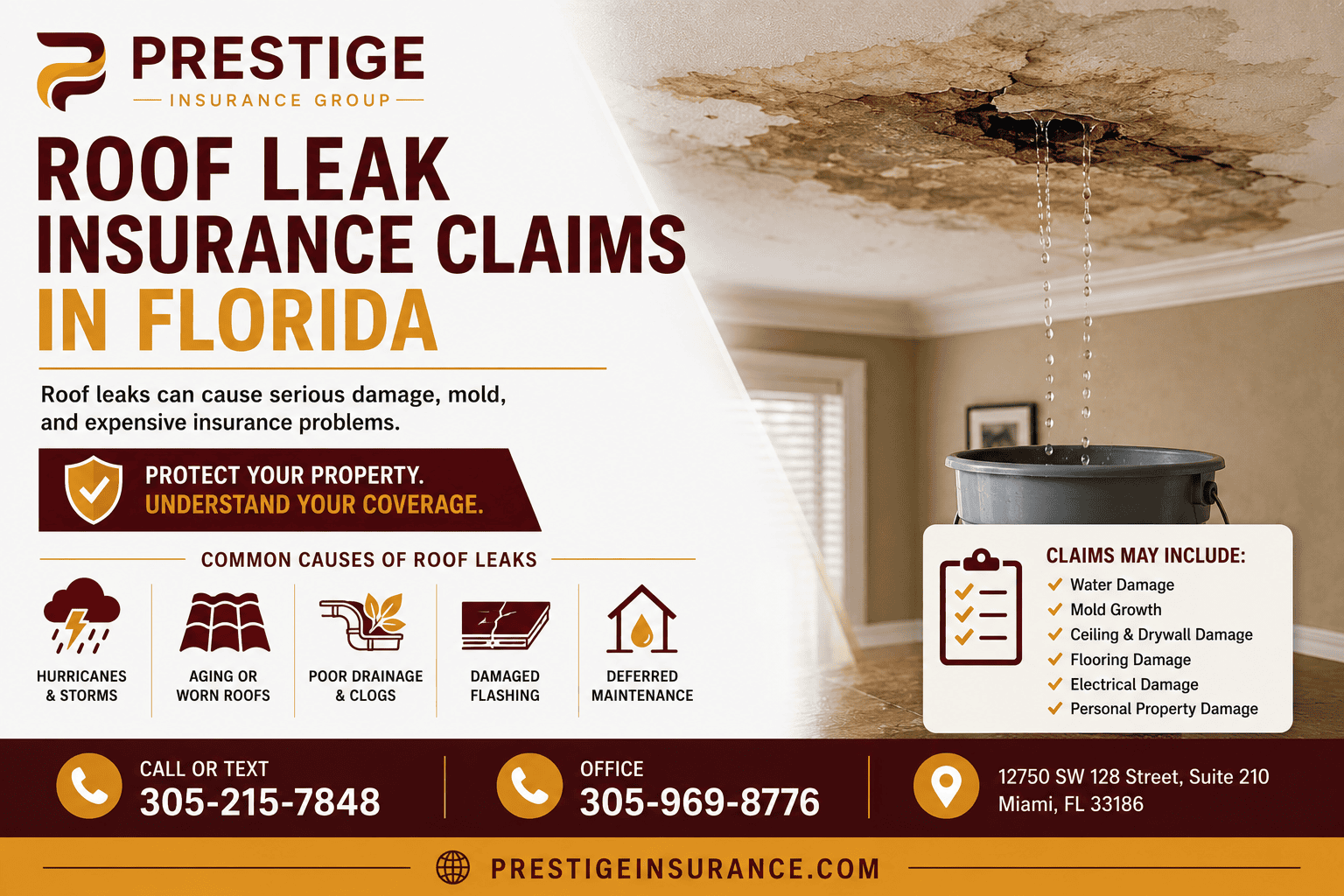
A roof leak claim in Florida usually turns on one question: did something happen to the roof, or did the roof simply wear out? A homeowner in Tampa whose shingles were torn off by a storm and whose ceiling then stained will usually be paid. A homeowner whose 20-year-old roof finally started leaking during an ordinary afternoon rain often will not. Most of the rules around roof claims follow from that distinction.
Wind and Hail Damage Is Covered
Homeowners and commercial property policies cover sudden damage to a roof from wind, hail and falling objects, and the water damage that follows when rain enters through the opening. During a hurricane, the hurricane deductible usually applies, often 2 percent or more of the dwelling limit, which can be several thousand dollars or more.
Wear and Tear Is Not
Policies exclude wear and tear, deterioration and lack of maintenance. Cracked flashing, failed sealant, worn underlayment and granule loss from age are maintenance items. If water comes in because the roof has reached the end of its life, the interior damage may be denied along with the roof. See our article on the water damage exclusions in a Florida policy.
Roof Age and Florida Law
Roof age drives both underwriting and claims in Florida. Under a 2022 Florida law, an insurer generally cannot refuse to write or renew a homeowners policy solely because the roof is less than 15 years old, and for roofs 15 years or older the homeowner can have an inspection; if it shows at least five years of useful life remaining, the insurer cannot refuse coverage based on age alone. Insurers may still use roof age in pricing, and some policies include a roof payment schedule that pays a reduced percentage of the replacement cost for older roofs.
Full Replacement or Repair
When only part of a roof is damaged, the insurer will usually pay to repair the damaged area rather than replace the whole roof. Florida building rules can require a larger replacement in some cases, and ordinance or law coverage helps pay for code-required work. Ask what your policy says about matching and code upgrades.
Interior Water Damage
The most expensive part of a roof claim is often inside: ceilings, insulation, drywall, flooring and belongings. Report the leak quickly, put a tarp on the roof, and dry the interior. The policy requires reasonable steps to prevent further damage, and delays can reduce the claim. Mold that follows a roof leak is often covered only up to a sublimit. See our article on mold and insurance in Florida.
Commercial and Flat Roofs
Condo buildings, apartment buildings and commercial properties often have flat or low-slope roofs, where ponding water, membrane failure and clogged drains are common. Commercial policies may settle older roofs on an actual cash value basis or exclude cosmetic damage. See our article on roof insurance problems for office buildings and our page on commercial property insurance.
Documentation Wins Roof Claims
-
Keep the roof permit, installation date and any inspection reports.
-
Get a wind mitigation inspection, which can also lower your premium.
-
Photograph the roof each year and before hurricane season.
-
After a storm, photograph the damage before temporary repairs.
For more on water claims, see what home insurance covers for water damage and problems with water damage claims. For coverage options, see our page on homeowners insurance in Florida.
Call the office nearest you. Se habla español.
Miami: 305-969-8776
Orlando: 407-993-2331
This article is general information and is not legal advice. Coverage depends on the terms of each policy.



