


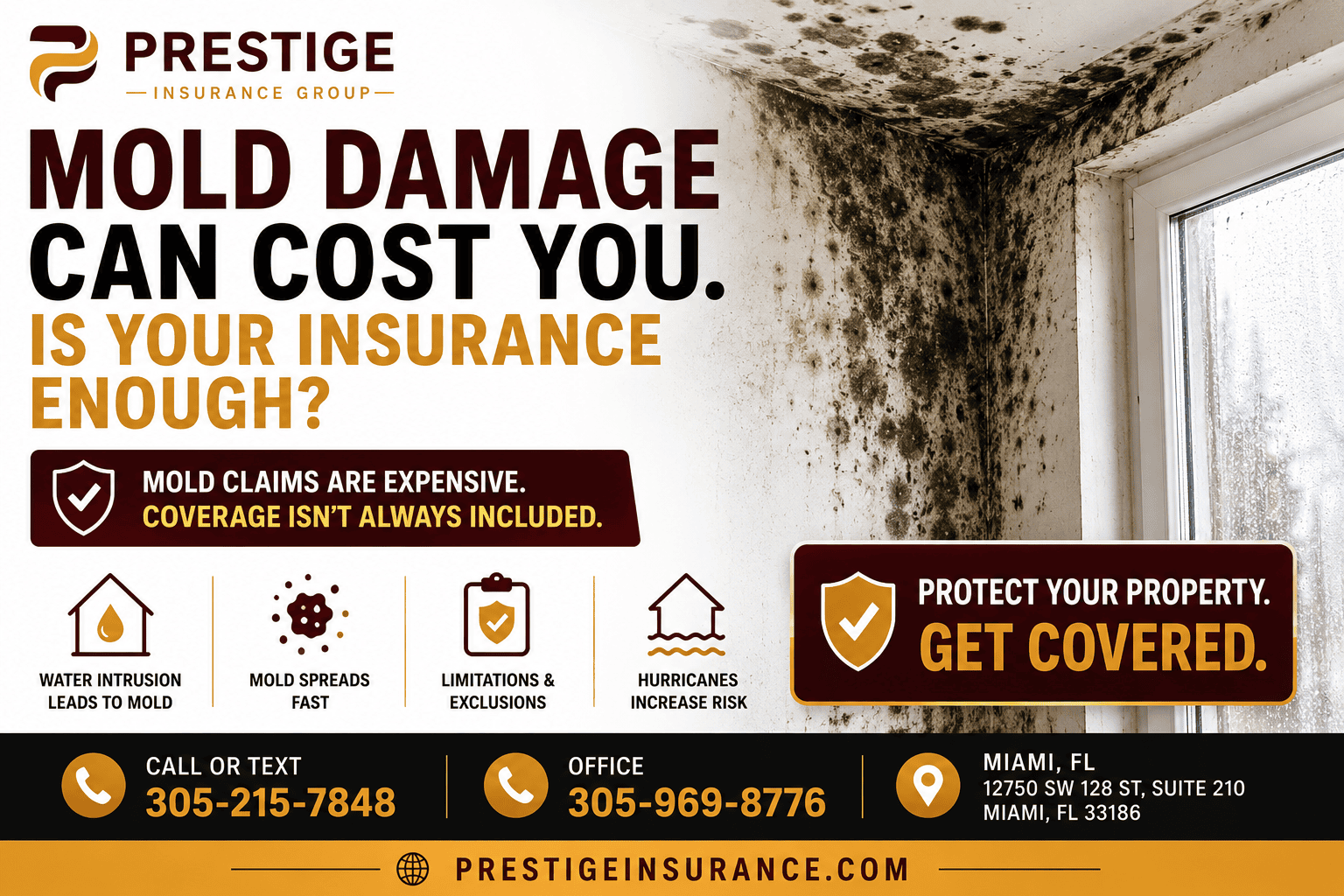
Mold grows quickly in Florida. Within a day or two of a water loss, in a closed house in August, it can start behind baseboards and under flooring. That speed is why mold is one of the most disputed parts of Florida property claims, and why most policies limit it so tightly.
Mold Is Excluded, With a Limited Exception
Homeowners, condo and commercial property policies exclude mold, fungi and bacteria. Most give back a limited amount of coverage when the mold results from a covered loss, such as a burst pipe or a roof damaged by wind. The coverage is subject to a sublimit, often around $10,000 on homeowners policies, and sometimes higher on commercial policies or with an endorsement.
When Mold Is Not Covered
Mold caused by humidity, condensation, poor ventilation, or a leak that continued for weeks or months is generally excluded. Mold that grows because the owner did not dry the property after a covered loss can also be excluded. And mold that follows a flood is not covered by the homeowners policy; a flood policy may cover it if the owner took reasonable steps to dry the property. See our article on the water damage exclusions in a Florida policy.
The Sublimit Problem
Mold remediation can be expensive. Containment, removal of drywall and flooring, cleaning of the air conditioning system and clearance testing can exceed a $10,000 limit, especially in condos and larger buildings. Ask whether your policy’s mold limit is per occurrence or per policy year, and whether it includes the cost of testing and tear-out.
Acting Quickly
The best protection is speed. Stop the water, report the claim and get the area dried professionally within the first day or two. Keep the drying logs and moisture readings. A claim with prompt mitigation is much easier to keep within the covered portion of the policy. Our article on problems with water damage claims covers the documentation insurers ask for.
Roof Leaks, Plumbing and Hurricanes
Most mold claims start with a roof leak, a plumbing failure or wind-driven rain during a storm. After a hurricane, power outages and delayed repairs make mold more likely, and the hurricane deductible may apply to the underlying damage. See our articles on roof leak claims and cast iron plumbing and insurance.
Condos, Rentals and Commercial Buildings
In condos, mold can cross unit lines, and responsibility is split between the association’s master policy and each owner’s condo insurance policy. Landlords face claims from tenants who allege health effects, which raise liability questions as well as property ones, and many liability policies exclude or limit mold. See our article on mold claims in Florida condos and our page on landlord insurance.
What to Check
-
The mold sublimit and whether higher limits are available.
-
Whether the mold limit includes testing and tear-out.
-
Any mold exclusion on your liability coverage, especially for rentals.
-
Whether you have flood insurance, since flood-related mold is not covered by a homeowners policy.
For more on water damage coverage, see what home insurance covers for water damage. For coverage options, see our pages on homeowners insurance in Florida and commercial property insurance.
Call the office nearest you. Se habla español.
Miami: 305-969-8776
Orlando: 407-993-2331
This article is general information and is not legal advice. Coverage depends on the terms of each policy.



