


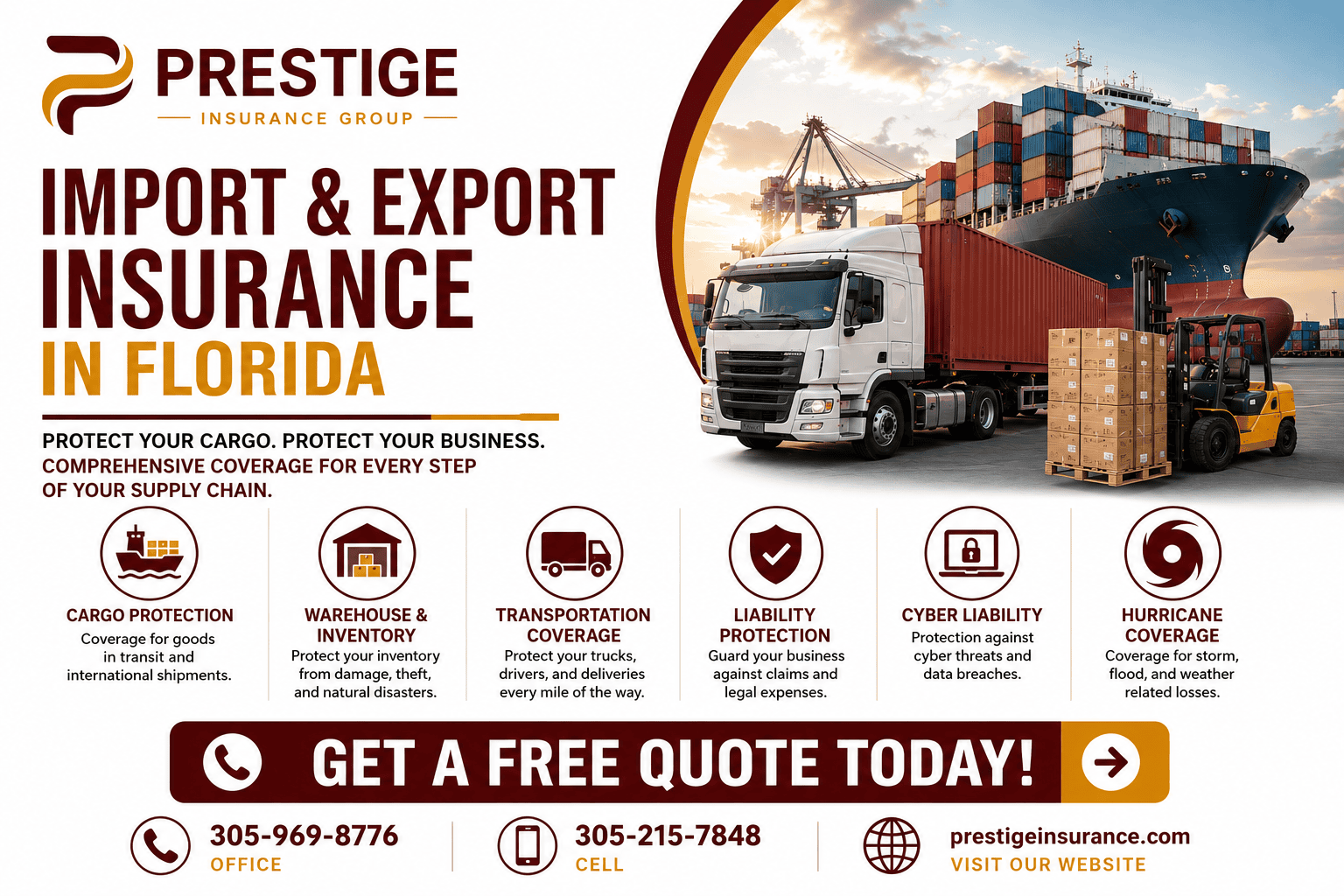
A Doral company imports kitchen appliances from China and sells them to retailers across Latin America and the Southeast. In a single year it can lose a container to a vessel fire, face a lawsuit over a defective blender, and have shipments held at the port for missing paperwork. Each of those is a different kind of risk, and each is handled by a different part of an import and export insurance program.
Who Insures the Goods Depends on the Sales Terms
The Incoterms written into the purchase or sales contract decide when the risk of loss passes from seller to buyer. Under terms such as FOB or EXW, the buyer carries the risk for most of the journey and should insure it. Under CIF, the seller must buy insurance, but only at the minimum level of coverage the rules require, which leaves gaps the buyer may want to fill. Importers who do not know their terms often discover after a loss that nobody had insured the goods at sea.
Ocean and Air Cargo
Imported and exported goods are insured under an ocean marine cargo policy, usually an open policy that covers every shipment automatically and reports values monthly or annually. The broadest terms cover all risks of physical loss or damage from the supplier’s warehouse to the buyer’s, subject to exclusions such as improper packing and delay. Our article on cargo insurance for importing distributors explains valuation, general average and how claims are documented.
Customs Bonds
Importers bringing in goods on formal entries generally need a customs bond, either for a single entry or a continuous bond that covers all entries for a year. The bond guarantees payment of duties, taxes and penalties to U.S. Customs and Border Protection. We place customs and other bonds for importers.
Products Liability on Imported Goods
When a product made overseas injures someone in the United States, the foreign manufacturer may be hard to sue, and the importer is often the company left defending the claim. Importers who sell under their own brand can be treated as the manufacturer. Products liability should be written with the importer’s role and countries of origin disclosed. See our article on when importers are treated as manufacturers.
Goods in the Warehouse and on the Road
Once goods arrive, they need property coverage at the warehouse and at any third-party facility, and inland marine transit coverage while they move domestically. Inventory values in import businesses swing with the shipping calendar, so reporting forms or peak season endorsements matter.
Exports
Exporters face the same cargo questions in reverse, plus products liability for goods sold abroad, which some policies exclude or limit to suits brought in the United States. Ask whether your policy’s territory covers claims filed in the countries where you sell.
Putting It Together
A typical program combines ocean cargo, a customs bond, products liability with worldwide territory where needed, property, transit, commercial auto and umbrella coverage. For a complete overview, see our page on wholesaler and distributor insurance in Florida. Importers who also manufacture or brand products should read our page on manufacturer insurance.
Call the office nearest you. Se habla español.
Miami: 305-969-8776
Orlando: 407-993-2331
This article is general information and is not legal advice. Coverage depends on the terms of each policy.



