

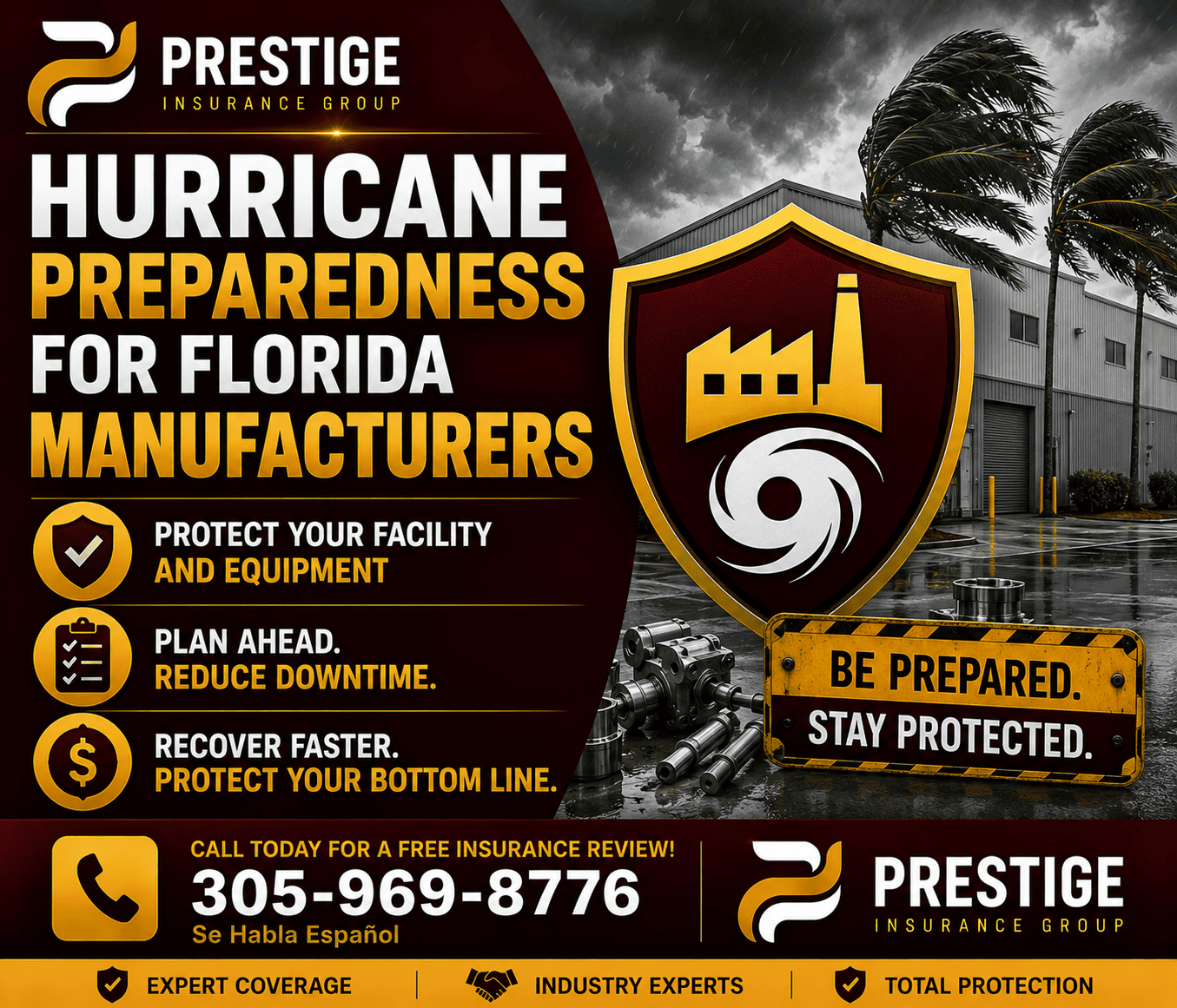
For manufacturers, hurricane season isn’t an abstract risk to plan around eventually. It’s a recurring operational reality that can shut down production, damage specialized equipment, and disrupt supply chains that customers depend on — sometimes far beyond Florida’s own borders.
A real case from the 2024 hurricane season illustrates exactly how far the ripple effects can travel. When Hurricane Helene severely damaged Baxter International’s plant in North Carolina — a facility supplying 60% of the medical-grade IV fluids used nationwide — hospitals across the country were told to expect only 40% of their normal shipments. Weeks later, Hurricane Milton threatened B. Braun’s Daytona Beach manufacturing facility, one of Florida’s own IV fluid producers, during the exact same national shortage. A DHL Resilience360 report specifically identifies Florida manufacturing — medical device makers, engineering suppliers, and others — as among the sectors most at risk during hurricane season, warning that disruptions to Miami International Airport or the Port of Miami can create ripple effects through both national and international supply chains.
At Prestige Insurance Group, we help Florida manufacturers evaluate insurance solutions and preparedness strategies designed around real hurricane risk. Learn more about our Manufacturer Insurance solutions.
Why Hurricanes Create Unique Risk for Manufacturers
Unlike many businesses that can shift to remote operations or reduced capacity during a storm, manufacturers depend on physical facilities, specialized equipment, and continuous production schedules. A hurricane can affect the building, the machinery inside it, raw material and finished goods inventory, and the power supply required to run automated production lines — all simultaneously. Recovery often isn’t a matter of simply reopening the doors; specialized equipment may need recalibration, inspection, or repair before production can safely resume.
Manufacturing Equipment Faces Distinct Hurricane Risks
Power surges and outages can damage sensitive automated equipment, control systems, and computerized machinery — even a brief power interruption can require lengthy diagnostic checks before equipment is safely restarted.
Water intrusion affecting electrical systems, control panels, and automated equipment can cause damage that isn’t always immediately visible, sometimes surfacing as equipment failures weeks after a storm has passed.
Roof and structural damage exposing production floors to wind-driven rain can affect not just the building but every piece of equipment and inventory beneath the compromised section.
Extended power outages halt automated production entirely, and facilities without backup power capacity may face days or weeks of lost production even when the physical building itself sustains no direct damage.
A Distinct Risk Category: Hazardous Material Release
Manufacturers working with chemicals, solvents, coatings, or other industrial materials face a genuinely distinct hurricane risk that most other industries don’t: the potential for hazardous material release during flooding or storm damage. After Hurricane Ian struck Florida’s west coast in 2022, runoff containing hazardous materials from damaged storage tanks and fertilizer facilities — along with millions of gallons of wastewater — was visible from space as it spread across coastal wetlands. Hurricane Ida triggered more than 2,000 reported chemical spills during a single storm. For manufacturers storing industrial chemicals on-site, hurricane preparedness must address containment and environmental risk specifically, not just structural protection.
Inventory Protection Before a Hurricane
Raw materials and finished goods inventory represent significant value for most manufacturers, and protecting that inventory before a storm matters directly. Elevating inventory off the floor reduces exposure to water intrusion. Prioritizing protection for high-value or temperature-sensitive products — electronics, pharmaceuticals, specialty materials — addresses the categories with the most to lose. Updating inventory records and documentation before a storm, rather than trying to reconstruct them afterward, genuinely simplifies the claims process if a loss does occur.
Equipment Protection Strategies
Securing or elevating critical equipment components where feasible reduces flood-related damage. Disconnecting sensitive electronics from power before a storm, where operationally possible, can reduce surge-related damage. Documenting equipment condition and value before hurricane season provides a real baseline for claims if equipment is damaged. And identifying which equipment requires professional inspection before restart — rather than assuming everything is fine once power returns — can prevent a secondary failure from compounding an already costly interruption.
Business Continuity Planning for Manufacturers
Given how quickly downtime costs accumulate — commonly running from $22,000 to over $300,000 per hour depending on operation size — a written business continuity plan is worth developing well before hurricane season, not during one. This should address emergency communication procedures for employees and key customers, backup power planning for critical systems, a facility inspection checklist for safely restarting operations after a storm, and relationships with alternative suppliers in case a key vendor is affected by the same storm system.
Supply Chain Disruption Extends Beyond the Manufacturer’s Own Facility
Even manufacturers whose own facilities escape direct damage can face real disruption when suppliers, transportation networks, or ports are affected. The Baxter/B. Braun case above illustrates this directly — a national supply shortage emerged not from a single catastrophic event, but from two separate storms affecting different facilities in the same supply chain within weeks of each other. Manufacturers dependent on a small number of key suppliers should evaluate contingent business interruption coverage, which may help address losses when a covered event affects a critical supplier’s facility rather than the manufacturer’s own.
Hurricane Preparedness Checklist for Manufacturers
Facility preparation: Inspect roof condition, secure exterior equipment and materials, test backup generators, and review drainage systems around the facility.
Equipment preparation: Identify critical equipment requiring protection, document current condition and value, and establish a post-storm inspection protocol before restart.
Inventory preparation: Elevate inventory where possible, prioritize protection for high-value products, and update inventory records and documentation.
Hazmat preparation: For manufacturers storing chemicals or industrial materials, review containment systems and storage tank security specifically ahead of storm season.
Supply chain preparation: Identify alternative suppliers for critical materials, and establish communication plans with key vendors before a storm approaches.
Employee preparation: Establish emergency contacts, communicate response plans clearly, and define responsibilities for the post-storm restart process.
Insurance Considerations for Hurricane Season
Commercial Property Insurance provides the foundation for storm-related building and equipment protection. Learn more about Commercial Property Insurance.
Commercial Flood Insurance is genuinely important given that standard property policies typically exclude flood damage entirely. Learn more about Commercial Flood Insurance.
Business Interruption Insurance helps address the revenue lost during a covered production shutdown. See our Business Interruption Insurance for Manufacturers guide for the full picture.
Equipment Breakdown Coverage addresses mechanical and electrical equipment failures that standard property insurance often excludes — genuinely relevant given how vulnerable automated production equipment is to power surges and water intrusion.
Frequently Asked Questions
Does commercial property insurance cover hurricane damage? Coverage depends on policy language and the specific cause of loss — wind damage and flood damage are often treated very differently.
Is flood damage automatically covered? Typically no. Separate flood insurance is generally required to address this exposure.
How can manufacturers protect specialized equipment before a storm? Securing components, disconnecting sensitive electronics where feasible, and documenting equipment condition beforehand all genuinely help.
What’s unique about hurricane risk for manufacturers compared to other businesses? Manufacturers face equipment-specific damage risks, potential hazardous material release if chemicals are stored on-site, and production stoppages that often can’t be worked around the way a service business might manage.
Can a hurricane at a supplier’s facility affect my business even if my own facility is fine? Yes — contingent business interruption coverage may help address exactly this scenario, which is a real, documented pattern in recent Florida hurricane seasons.
Protecting Florida Manufacturers Before the Next Storm
Hurricane season creates genuine, recurring risk for Florida manufacturers — not just to buildings, but to specialized equipment, inventory, and the supply chains that depend on continuous production. Reviewing facility conditions, equipment protection strategies, and insurance coverage before a storm develops can meaningfully reduce disruption and speed recovery.
Prestige Insurance Group helps Florida manufacturers evaluate insurance options designed around real hurricane risk.
Contact Prestige Insurance Group today to discuss hurricane preparedness and insurance for your manufacturing business:
Manufacturers that also import or distribute products should read our page on wholesaler and distributor insurance, and those running their own storage or fulfillment space our page on warehousing and logistics insurance.
Miami: 305-969-8776 Orlando: 407-993-2331
Se Habla Español.