A transmission shop in Hialeah gets two quotes that are several thousand dollars apart. Same limits on the declarations page, same carrier rating, same shop.
The difference is one word in the garagekeepers section. One quote says legal liability. The other says direct primary. The owner has no idea what that means, and it is the single largest coverage difference in the whole comparison.
Garage insurance pricing confuses shop owners because the number is built from things they do not think of as risk, and the biggest cost driver is a provision most of them have never read.
What the Premium Is Actually Built From
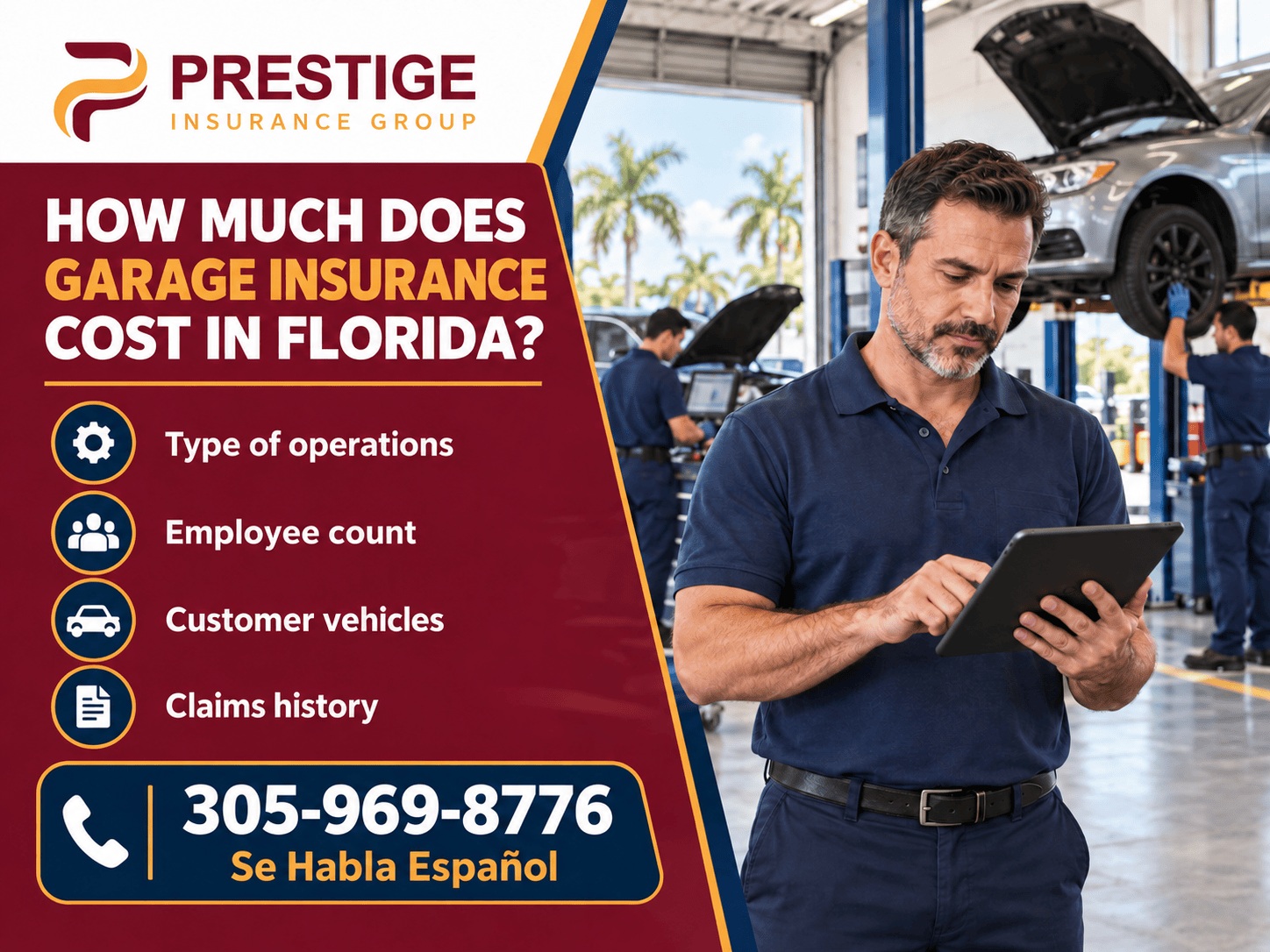
Garage insurance is not rated per bay or per car. The liability portion is driven by how many people work in the shop, and the rest follows from what those people do.
Employee count is the primary basis for garage liability. The policy is rated on how many people work in the shop, and it distinguishes between employees who drive customer vehicles and those who do not. Adding a technician who road tests cars affects the rating differently from adding someone who never leaves the counter.
That has a consequence worth understanding. A shop that grows its crew is buying more liability exposure whether or not revenue moved, and a shop that reports its headcount low at binding settles up when the carrier looks at actual staffing.
The work you perform matters more than anything else about the shop. General repair, transmission work, body and paint, performance and modification work, heavy truck, and motorcycle all rate differently. Body shops carry fire exposure from paint and solvents that mechanical shops do not. Performance work draws scrutiny because a modified vehicle that fails on the road is a different claim from a brake job.
Vehicle values and count. A shop working on late-model luxury and exotic vehicles carries a different exposure than one doing brake jobs on commuter cars, even at the same volume.
Where the cars sit overnight. Fenced, lit, gated, camera-covered, and inside beats an open lot on a main road, and carriers price the difference.
Loss history, which in this class means both liability claims and vehicle damage claims.
Garagekeepers Is Where the Money Is
Garagekeepers covers customers’ vehicles in your care, custody, and control. It is the coverage that makes a garage policy a garage policy, and it comes in two forms that cost different amounts and behave completely differently.
Legal liability pays only when the shop is legally responsible for the damage. If a customer’s car is stolen from a locked, fenced lot with no negligence on the shop’s part, legal liability coverage may pay nothing. The customer is out a car, and the shop is explaining that to him.
Direct primary pays for damage to the customer’s vehicle regardless of fault, subject to the policy’s terms. The customer is made whole, the shop keeps the relationship, and the conversation is short.
Direct primary costs more. It is also the version that matches what most shop owners believe they already have. If you are comparing two quotes and one is notably cheaper, check this line before anything else, because a legal liability policy and a direct primary policy are not the same product.
A related question is whether coverage applies on a per-vehicle or per-location basis, and whether the limit is enough to cover every car on the lot on a busy Friday rather than an average day.
Florida Adds a Problem Most States Do Not Have
Customer vehicles sitting outdoors are exposed to named storms, and a shop lot is full of other people’s property.
Expect a separate windstorm or named storm deductible on the garagekeepers portion, frequently expressed as a percentage rather than a flat figure. Work out that number in dollars, because after a hurricane you are funding it across potentially dozens of vehicles at once.
Two practical consequences. Carriers may restrict new placements once a storm is in the forecast cone, so shopping during the season is harder than shopping in spring. And some policies contain conditions about moving vehicles or securing the lot ahead of a storm, which turn into coverage disputes if nobody followed them.
Theft and vandalism sit alongside wind. A South Florida lot full of catalytic converters and wheels is a target, and security improvements show up in pricing as well as in claims.
What a Garage Policy Covers That a Standard Business Policy Does Not
This is why a shop cannot simply buy a business owners policy and move on.
Standard general liability excludes claims arising from auto operations, which is most of what a repair shop does. Standard commercial property covers your building and equipment but not customers’ vehicles, because those are property of others in your care.
A garage policy combines garage liability, which covers the operations a standard form excludes, with garagekeepers for the vehicles. Some programs also fold in the shop’s own property, equipment, and business income.
The pieces that commonly sit outside it and need separate attention: workers’ compensation, commercial auto for shop-owned vehicles and tow trucks, equipment breakdown for lifts and compressors, cyber if the shop handles card payments and customer data, and employment practices liability once there are enough employees for that exposure to be real.
The Work You Performed Is Not Covered by the Policy That Covers the Work
Shop owners expect the policy to cover comebacks. It generally does not.
If your repair fails and causes an accident, the resulting injury and damage to other property is a liability claim. Redoing the repair itself is your cost. The distinction is the same one every trade runs into: the policy covers damage you cause to others, not the failure of your own work.
That makes documented procedures, torque specs, parts sourcing, and post-repair inspection more than good practice. They are what keeps a comeback from becoming a liability claim.
Employees Driving Customer Vehicles
Test drives, moving cars between bays, running a vehicle to an alignment shop, and taking a customer’s car home overnight are all routine and all worth understanding.
Damage to the vehicle during a test drive is a garagekeepers question. Injury to a third party during that test drive is a garage liability question. And a personal errand in a customer’s car is neither, because it falls outside the scope of the business.
A written policy on who drives customer vehicles and under what circumstances is cheap and prevents the worst version of this.
Why Two Quotes on the Same Shop Differ
When comparing proposals, the premium is the last thing to look at. The things that actually differ:
Whether garagekeepers is legal liability or direct primary. The garagekeepers limit and whether it fits the busiest day rather than the average one. The named storm deductible in dollars. Whether the shop’s own property and equipment are included or written separately. Whether the employee count matches actual staffing, since a low number produces a low premium and a large audit bill.
Two quotes built on different assumptions are not comparable, and the cheaper one is frequently cheaper for a reason a shop owner would not accept if it were stated plainly.
How to Reduce the Cost Without Reducing the Coverage
Security investment is the most direct lever: fencing, lighting, cameras, and gates all matter to underwriters and all reduce the claims that drive renewals.
Beyond that, reporting headcount accurately avoids audit surprises, a clean loss history compounds over several years, and keeping vehicles inside overnight where the shop has the space changes both the wind and the theft exposure.
What does not work is buying a lower garagekeepers limit or accepting legal liability in place of direct primary to hit a number. Both save money now and transfer the cost to the day a customer’s car is damaged.
What Shop Owners Should Confirm
-
Is garagekeepers written on a legal liability or direct primary basis?
-
What is the garagekeepers limit, and does it cover every vehicle on the lot on your busiest day?
-
What is the named storm deductible in dollars?
-
Are there conditions about securing the lot or moving vehicles before a storm?
-
How many employees is the policy rated on, and does that match your actual headcount?
-
Is the split between employees who drive customer vehicles and those who do not reported correctly?
-
Is your own equipment, including lifts and diagnostic gear, covered and at what value?
-
Do you have commercial auto for shop-owned vehicles and any tow truck?
-
Is there a written policy on employees driving customer vehicles?
-
Do you carry workers’ compensation, and is payroll classified correctly?
Auto Repair and Garage Insurance in Florida
Prestige Insurance Group writes garage and repair shop coverage for auto repair shops, body shops, and service operations across Miami, Hialeah, Doral, Fort Lauderdale, Orlando, and Tampa.
If you want a real comparison rather than a premium comparison, send your current declarations page and a current employee list showing who drives customer vehicles. Whether your garagekeepers is direct primary, whether the limit fits your lot, and whether your headcount is reported correctly are the three things that decide what this actually costs you.
Call the office nearest you.
Miami: 305-969-8776 Orlando: 407-993-2331
General information only, not legal advice. Garage and garagekeepers forms, limits, deductible structures, and endorsements vary by carrier, and rating bases and appetite change over time. Refer to your actual policy for the terms that apply to your operation.