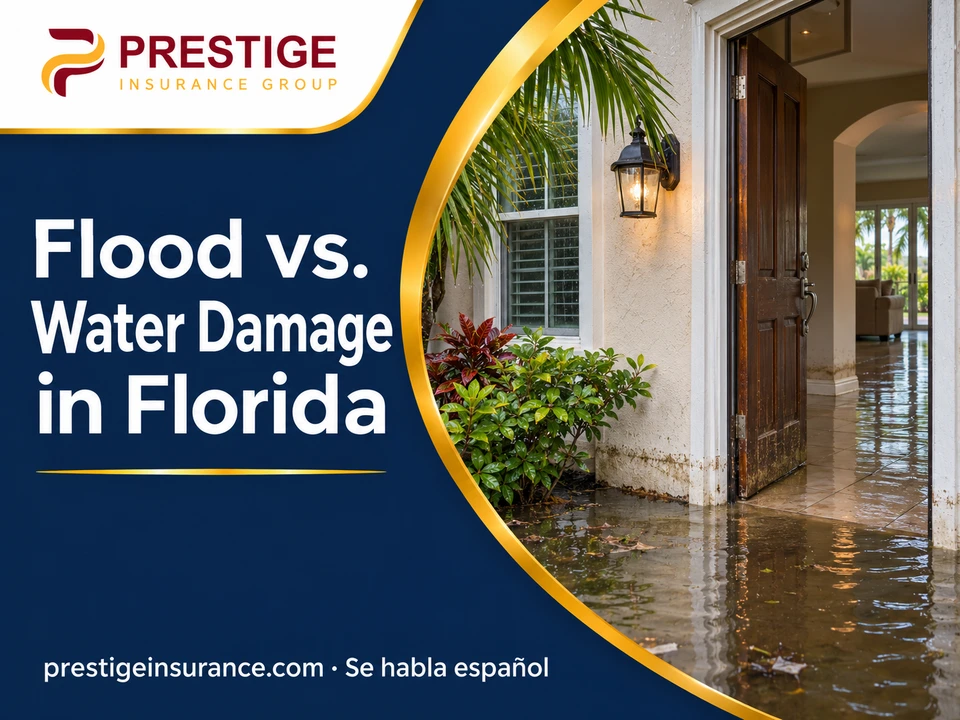
After a hurricane moves up the coast near Punta Gorda, two neighbors file claims for water in their homes. One had shingles torn off and rain pour through the ceiling into the bedrooms. The other had storm surge push 14 inches of water through the front door. Both call it water damage. Only the first is covered by a homeowners policy. The second is a flood, and only a flood policy pays for it.
Florida homeowners often use “water damage” and “flood” interchangeably, but insurance treats them as completely different losses, covered by different policies with different deductibles. Knowing the difference before a storm is what decides whether a claim gets paid.
What counts as water damage
A homeowners policy covers water damage that is sudden and accidental and comes from inside the home or through the building after it’s damaged. A burst pipe, a failed supply line, an overflowing appliance, an air conditioning drain line that backs up and rain that enters through a roof or window damaged by wind are all water damage. These claims are subject to the policy’s deductible, any water damage limit and the usual exclusions for long-term leaks and wear and tear, which we explain in does home insurance cover water damage in Florida.
What counts as flood
Flood is water that comes from outside and rises into the home: storm surge, rivers and lakes overflowing, heavy rain that accumulates or runs off faster than the ground and drains can absorb it, and mudflow. Under the National Flood Insurance Program’s definition, a flood generally has to affect at least two acres of normally dry land or two or more properties, including the policyholder’s. Every homeowners policy excludes flood, and it doesn’t matter whether the flood comes from a hurricane or an ordinary summer storm.
How adjusters tell them apart
The question is where the water came from and how it got in. Water lines on the walls, debris lines outside and water entering at ground level point to flood. Ceiling stains, damage concentrated below a damaged section of roof and water coming from a pipe or appliance point to water damage. Wind-driven rain is the gray area: rain that enters because wind damaged the roof, windows or doors is generally covered under the homeowners policy, while rain that comes through an undamaged opening, such as a window left open, usually isn’t covered by either policy.
When a hurricane causes both
A single hurricane often causes wind damage and flood damage to the same home. In that case two claims are filed: one under the homeowners policy for the wind and wind-driven rain, subject to the hurricane deductible, and one under the flood policy for the rising water, subject to the flood deductible. Each adjuster decides which damage belongs to which cause, and good photos of the home before and after the storm, with water lines and roof damage clearly shown, help keep the two claims from leaving damage uncovered in between. Our article on understanding your Florida hurricane deductible explains the wind side.
Gaps that neither policy covers
Some water falls between the two. Groundwater seeping up through a slab or foundation is generally excluded from homeowners policies and often limited under flood policies. Sewer and drain backup is excluded from homeowners policies unless a water backup endorsement is added, and flood policies cover it only when a flood directly causes it. We cover the backup gap in sewer backup insurance problems in Florida.
Flood coverage options
Flood insurance is available through the NFIP and from private flood carriers. NFIP policies cap building coverage at $250,000 and contents at $100,000 and usually have a 30-day waiting period, which means a policy bought when a storm is approaching won’t respond to it. Private flood policies can offer higher limits, additional living expenses and shorter waiting periods, and homes worth more than the NFIP limits often need excess flood. Florida law is also phasing in a requirement for Citizens policyholders to carry flood coverage. Our articles on NFIP vs. private flood insurance and the Citizens flood insurance requirement go into the options.
Why many homeowners need both
A large share of flood claims in Florida come from homes outside high-risk flood zones, where lenders don’t require flood coverage and many owners skip it. A homeowners policy and a flood policy cover different things, and in a hurricane a home can need both. The cost of flood coverage outside high-risk zones is often lower than owners expect.
Worth confirming on your policy
-
Whether you have a flood policy, or have decided against one knowingly
-
Whether your flood limits fit the value of the home and its contents
-
The 30-day waiting period on NFIP flood policies, and when your coverage starts
-
Whether your homeowners policy covers wind-driven rain through storm damage
-
Whether water backup is endorsed on your homeowners policy
-
Your hurricane deductible and your flood deductible, side by side
-
Photos of the home before each hurricane season
Talk to us
Prestige Insurance Group places homeowners and flood coverage through more than 20 Florida homeowners carriers, along with NFIP and private flood markets. Send us your declarations pages and we will show you where your water and flood coverage leave gaps, compare NFIP and private flood options, and coordinate the flood policy with your homeowners policy. Our flood insurance in Florida page explains the options in more detail.
Call the office nearest you. Se habla español.
-
Miami: 305-969-8776
-
Orlando: 407-993-2331
-
Stuart: 772-247-3788
This article is general information, not legal advice. Coverage forms, policy terms and carrier appetite vary and change over time. Prestige Insurance Group, Florida agency license L057894.