A West Palm Beach interior designer sets up an LLC and buys an SUV in the company’s name to visit clients and showrooms. She moves her personal auto policy over to cover the new vehicle and assumes the job is done. When she applies for a contract with a hotel group, the hotel asks for a certificate showing commercial auto liability, the hotel named as additional insured and a waiver of subrogation. Her personal carrier can’t issue any of it, and on closer reading, the vehicle’s owner, the LLC, isn’t the named insured on the policy at all.
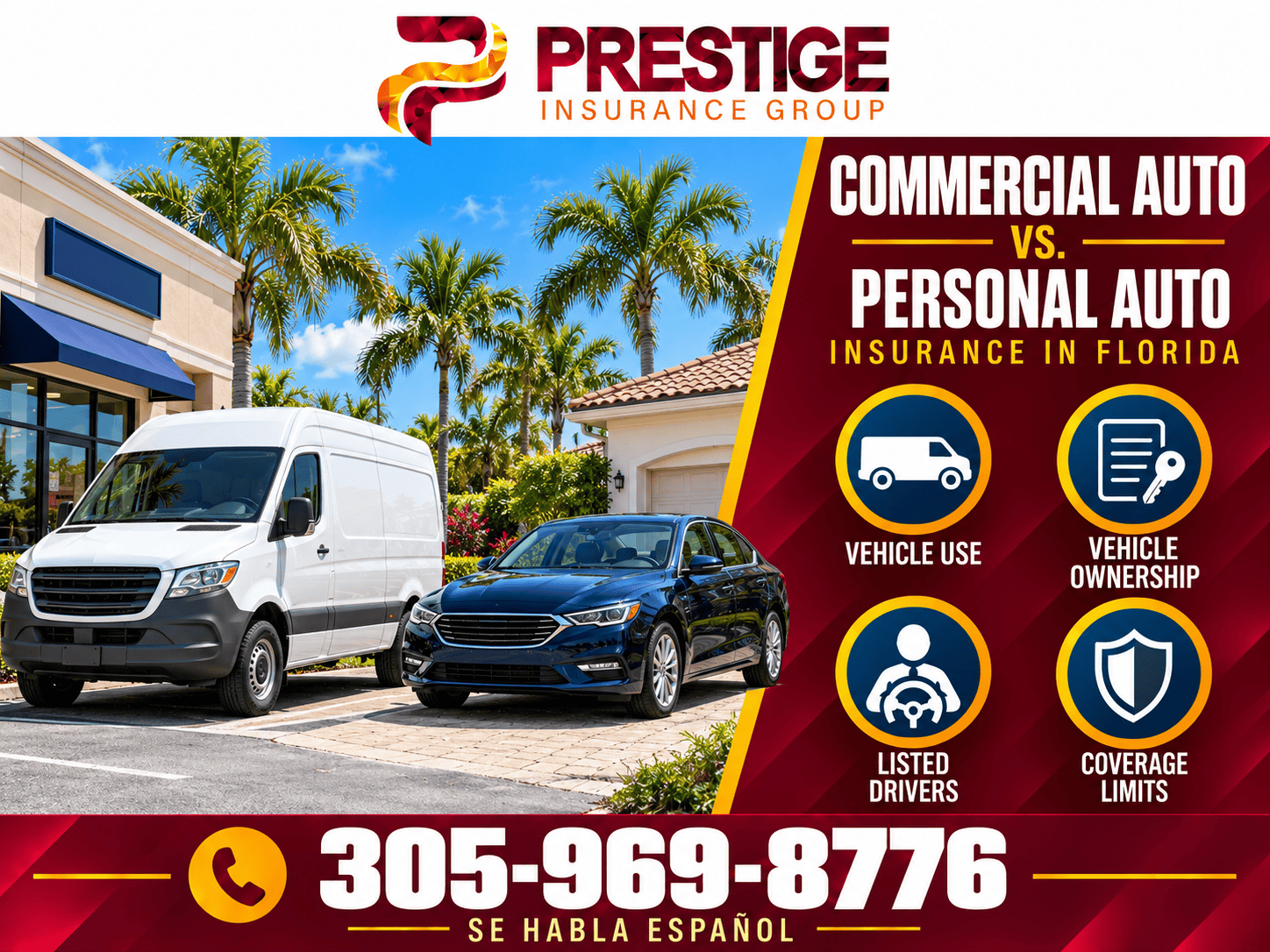
Personal auto and commercial auto both cover liability, physical damage, PIP and uninsured motorists, so they look alike on a quote. They’re built on different foundations. A personal policy is written around a household and the people in it. A commercial policy is written around a business and the vehicles and drivers it uses. Most of the differences that matter follow from that, and they’re easier to see side by side. Whether your situation requires a commercial policy is covered in our article on whether you need commercial auto insurance. This one is about how the two policies actually differ.
Who the Policy Insures
A personal policy insures a named individual and the family members in the household, and it follows them. If the named insured borrows a friend’s car or rents one on vacation, the policy generally goes with them.
A commercial policy insures the business, usually an LLC or corporation, and anyone the business permits to drive its covered vehicles. Because a company has no household, the policy doesn’t automatically follow the owner into a personal car, a rental on a family trip or a spouse’s vehicle. An owner who has no personal auto policy of their own, because every vehicle is on the business policy, can close that gap with a drive-other-car or named individual endorsement, and it’s often missing.
Which Vehicles Are Covered
Personal policies cover the vehicles listed on them, plus newly acquired vehicles for a short period and certain non-owned vehicles the household drives. They’re designed for private passenger cars, pickups and vans.
Commercial policies decide which vehicles are covered through coverage designations, often called symbols. The business can cover only the vehicles specifically listed, all owned vehicles, or any auto at all, including vehicles it rents or that employees drive on its behalf. That choice matters, because many contracts require liability coverage for any auto rather than only scheduled ones. Commercial policies also handle vehicles a personal policy won’t take, such as box trucks, heavy pickups, trailers and vehicles rated by gross weight.
How Business Use Is Treated
Personal policies generally exclude using a vehicle to carry people or property for a fee, and many limit coverage for business use beyond ordinary commuting and occasional work errands. Some carriers allow a business-use rating on a personal policy for a sole proprietor visiting clients, which is the right answer for some real estate agents and consultants. The problem is business use the carrier was never told about.
App-based driving is its own gray area. Rideshare and delivery work typically falls between the personal policy and whatever the platform provides, depending on whether the app is on and a trip is underway. Some personal carriers offer endorsements for it, and some don’t.
Commercial policies are written for business use from the start, and the business’s operations are what the carrier rates.
Limits and How They’re Structured
Personal policies are often written with split limits, separate amounts for injury to each person, injury per accident and property damage, and Florida doesn’t require bodily injury liability on most private passenger vehicles. Many personal policies carry modest limits as a result.
Commercial policies are usually written on a combined single limit, one amount for all injury and damage from an accident, and businesses typically carry far more than the state minimums. Florida’s dangerous instrumentality doctrine generally holds a vehicle’s owner responsible for accidents caused by anyone it lets drive, so the business itself is exposed to every crash in its vehicles, which is the main reason commercial limits run higher. Our article on business auto insurance requirements in Florida covers the state rules.
What Contracts Can Be Given
Clients, general contractors, landlords and property managers often require proof of auto coverage with specific terms: the client named as additional insured, a waiver of subrogation, primary and noncontributory wording and minimum limits. Commercial policies can add these by endorsement. Personal policies generally can’t, which is often how a business discovers it’s on the wrong policy, as the designer did. Our article on what your contract requires from your insurance explains these terms.
Employees and Their Cars
A personal policy has nothing to say about employees. If an employee causes an accident while running an errand for the business in their own car, the business can be sued, and the employee’s personal policy is the only coverage in the picture unless the business carries hired and non-owned auto. That coverage can be added to a commercial auto policy or, for businesses that own no vehicles, often to a general liability policy. Our guide to hired and non-owned auto insurance explains how it works.
How Each Is Priced
Personal auto is priced around the household: the drivers, their records, where the car is kept and how it’s used. Commercial auto is priced around the operation: the type and weight of each vehicle, what the business does, how far vehicles travel, where they’re garaged, who drives and the business’s loss history. Commercial auto generally costs more because it carries more exposure, higher limits and more drivers, not because the same risk is being priced differently. Progressive and GEICO both write commercial auto, which keeps pricing competitive for small fleets and single work vehicles. Our article on how much business auto insurance costs goes into the rating factors.
The Umbrella Has to Match
A personal umbrella sits above personal auto and homeowners policies, and many personal umbrellas exclude business vehicles or business activities. A commercial umbrella sits above the business’s auto, general liability and employer’s liability policies. An owner who moves vehicles to a commercial policy but keeps only a personal umbrella may find the vehicles no longer have excess coverage above them. When vehicles change policies, the umbrella should be reviewed with them. Our article on umbrella insurance vs. excess liability explains how the layers fit.
Questions to Ask About Your Own Setup
-
Is the named insured on the policy the same person or company that owns the vehicle?
-
Does the policy cover only listed vehicles, or any auto the business uses?
-
Has the carrier been told how the vehicle is actually used?
-
Does anyone drive for an app, deliver for a fee or carry passengers for pay?
-
Are limits written as split limits or a combined single limit, and are they enough for your contracts?
-
Can the policy provide additional insured, waiver of subrogation and primary wording?
-
If every vehicle is on a business policy, are the owners covered when they drive other cars?
-
Do employees use their own cars for business, and is hired and non-owned auto in place?
-
Does your umbrella sit above the policy your vehicles are actually on?
For more, see our business auto insurance page, what business auto insurance covers, what it doesn’t cover, the biggest business auto claims in Florida, commercial auto for contractors and cargo van insurance.
Business Auto Insurance in Florida
Prestige Insurance Group helps business owners across Miami, West Palm Beach, Fort Lauderdale, Orlando and Tampa sort out which vehicles belong on which policy. We write Progressive and GEICO directly and work with over 100 MGAs and specialty markets for harder risks. Send us your current auto declarations, how each vehicle is titled and used, and any contract requirements you need to meet, and we’ll show you where the personal and business sides of your coverage don’t line up. Call the office nearest you. Se habla español.
Miami: 305-969-8776 Orlando: 407-993-2331
General information only, not legal advice. Policy forms, endorsements, rideshare and delivery coverage and Florida financial responsibility requirements vary by carrier and change; refer to your policy for the terms that apply to your vehicles.