


The owner of a small pool service company in Winter Garden gets two renewal notices in the same week. One is for her three service trucks, and it is noticeably higher than last year. The other is for her neighbor’s landscaping business, which runs more trucks than she does, and his premium went down. She calls to ask the obvious question: how can a smaller fleet cost more to insure than a bigger one?
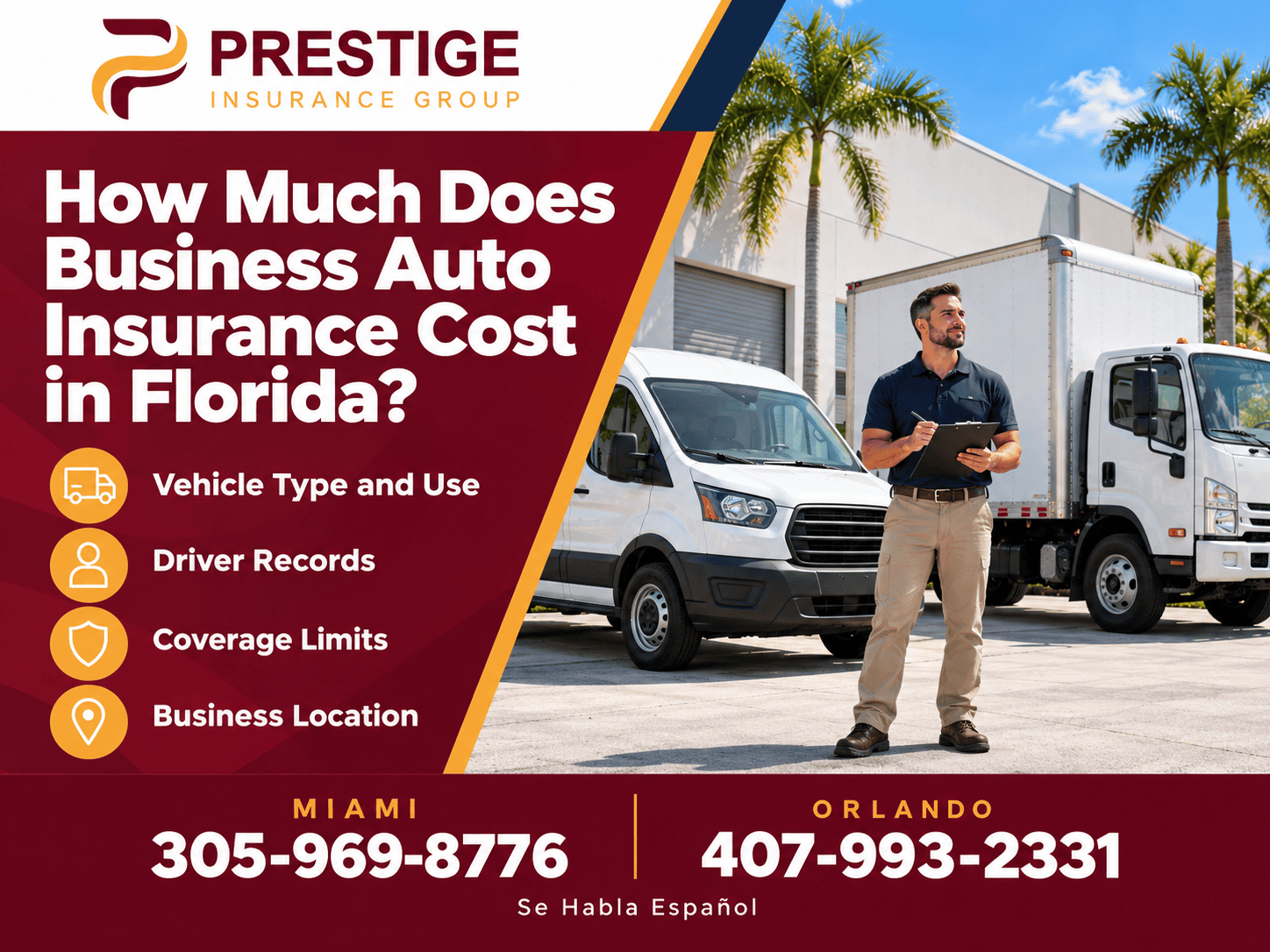
The answer is that business auto insurance is not priced by the number of vehicles alone. Two companies with the same trucks can pay very different premiums because carriers are pricing the drivers, the work the vehicles do, where they go, and the loss history behind the account. Once you understand what moves the price, you have a much better chance of controlling it.
What Carriers Are Actually Pricing
A business auto policy is a bet on how likely your vehicles are to be involved in an accident and how expensive that accident is likely to be. Every rating factor comes back to one of those two questions. The vehicle matters, but so does who is behind the wheel, how many miles they drive, what they carry, and how far from home the vehicle travels. Carriers also look at the business itself, because a company with a history of claims tends to keep having them.
That is why a quote can change when nothing about the trucks has changed. A new driver with a speeding ticket, a claim from last spring or a shift in the kind of work you do can all move the price at renewal.
The Drivers Matter More Than the Vehicles
For most small fleets, the motor vehicle records of the people driving are the single biggest factor in the premium. Carriers run MVRs on every listed driver, and recent at-fault accidents, speeding violations, license suspensions and DUIs all raise the rate, sometimes sharply. Young drivers and drivers with only a few years of experience behind the wheel of a larger vehicle are rated higher as well.
This is also where a business has the most control. Checking a driving record before you hire someone who will drive, setting clear rules about who may use company vehicles, and keeping family members and occasional helpers off the vehicles unless they are listed and approved can make a meaningful difference at renewal. Some carriers will exclude a specific high-risk driver rather than surcharge the whole policy, but an excluded driver means no coverage if that person drives anyway, so that decision needs to be enforced, not just signed.
The Vehicle, Its Use and Its Radius
The type and size of the vehicle affect both liability and physical damage costs. A heavy box truck can cause more damage in a crash than a pickup, and a new cargo van with sensors and cameras costs far more to repair than an older one. If you carry collision and comprehensive coverage, the value of each vehicle feeds directly into that part of the premium, which is why our article on why modern vehicles are making auto repairs more expensive is worth a read for anyone replacing older units.
How the vehicle is used matters just as much. A contractor’s pickup that drives to a job site in the morning and sits there all day is a different risk than a delivery van making stops across three counties. Carriers also rate the radius of operation. Vehicles that stay local are generally less expensive to insure than vehicles that regularly run long distances or cross state lines, and some classes, such as for-hire trucking, are written in separate markets altogether.
Where the Vehicles Are Garaged
Florida’s metro areas are expensive places to insure vehicles, and the garaging address on each vehicle affects its rate. Dense traffic, frequent litigation and the cost of medical care in a given area all show up in the price. A company headquartered in one county with trucks parked overnight in another should make sure each vehicle is listed where it actually stays, because an inaccurate garaging address can create problems at claim time and at audit.
Limits, Deductibles and Coverage Choices
The coverage you choose is the part of the price you decide directly. Higher liability limits cost more, though the step from a lower limit to a higher one is often less expensive than owners expect, and it is the part of the policy that protects the business from a lawsuit. Many contracts and certificate requests now require higher limits, so it pays to know what your customers expect before you shop. Our guide to business auto insurance requirements in Florida covers the legal minimums and the contract side.
Deductibles work the other way. Raising the collision and comprehensive deductibles on vehicles that are paid off, or dropping physical damage coverage on older vehicles that are worth little, can lower the premium without touching the liability protection that matters most. The tradeoff is that the business pays more of its own repairs, so the deductible should be one the company can comfortably absorb.
Loss History and Years in Business
Carriers want to see how an account has performed. A clean loss history over the past several years is one of the strongest arguments for a better price, and a pattern of small claims can hurt more than a single large one, because it suggests the losses will continue. Newer businesses with no history often pay more simply because there is nothing to rate them on, and that tends to improve once the business has a few clean years behind it.
Ways to Get a Better Price
The most effective step is controlling who drives. Run MVRs before hiring and once a year after that, keep a written list of authorized drivers, and do not let unlisted people use the vehicles. The second is keeping the vehicle schedule accurate. Remove vehicles you have sold, add new ones promptly, and make sure each one is listed with the right use and garaging location.
Telematics programs are worth considering for fleets that are willing to let a carrier see how their vehicles are driven. Good driving can earn a discount, and the data often helps the owner as much as the insurer. Paying the premium in full, bundling the auto policy with the company’s general liability or other coverages where the carrier offers it, and reviewing deductibles each year are other levers that do not reduce protection.
Finally, shop the account properly. Different carriers favor different kinds of fleets. One may price contractors well and another may prefer local delivery, and an agency that can quote several markets will usually find a better fit than a single carrier quoting on its own. If your business also uses rentals or employee vehicles, make sure the quote includes hired and non-owned auto coverage, so the lowest price is not the result of a missing coverage.
Worth Confirming With Your Agent
-
Which drivers are listed on the policy and whether each driving record has been checked recently
-
Whether every vehicle is scheduled with the correct use, radius and garaging address
-
Whether physical damage coverage still makes sense on older, paid-off vehicles
-
Which liability limits your contracts and customers actually require
-
Whether a telematics or safety program discount is available from your carrier
-
Whether hired and non-owned auto coverage is included in the quote you are comparing
Talk to Prestige Insurance Group
Prestige Insurance Group quotes business auto insurance for contractors, service companies, delivery operations and small fleets across Florida, with access to several carriers that each price fleets differently. If your renewal went up and you are not sure why, or you want to see what a properly shopped policy looks like, we can review your drivers, vehicles and coverage and show you where the price is coming from.
Call the office nearest you. Se habla español.
Orlando: 407-993-2331
Miami: 305-969-8776
Stuart: 772-247-3788
Prestige Insurance Group, License L057894



