


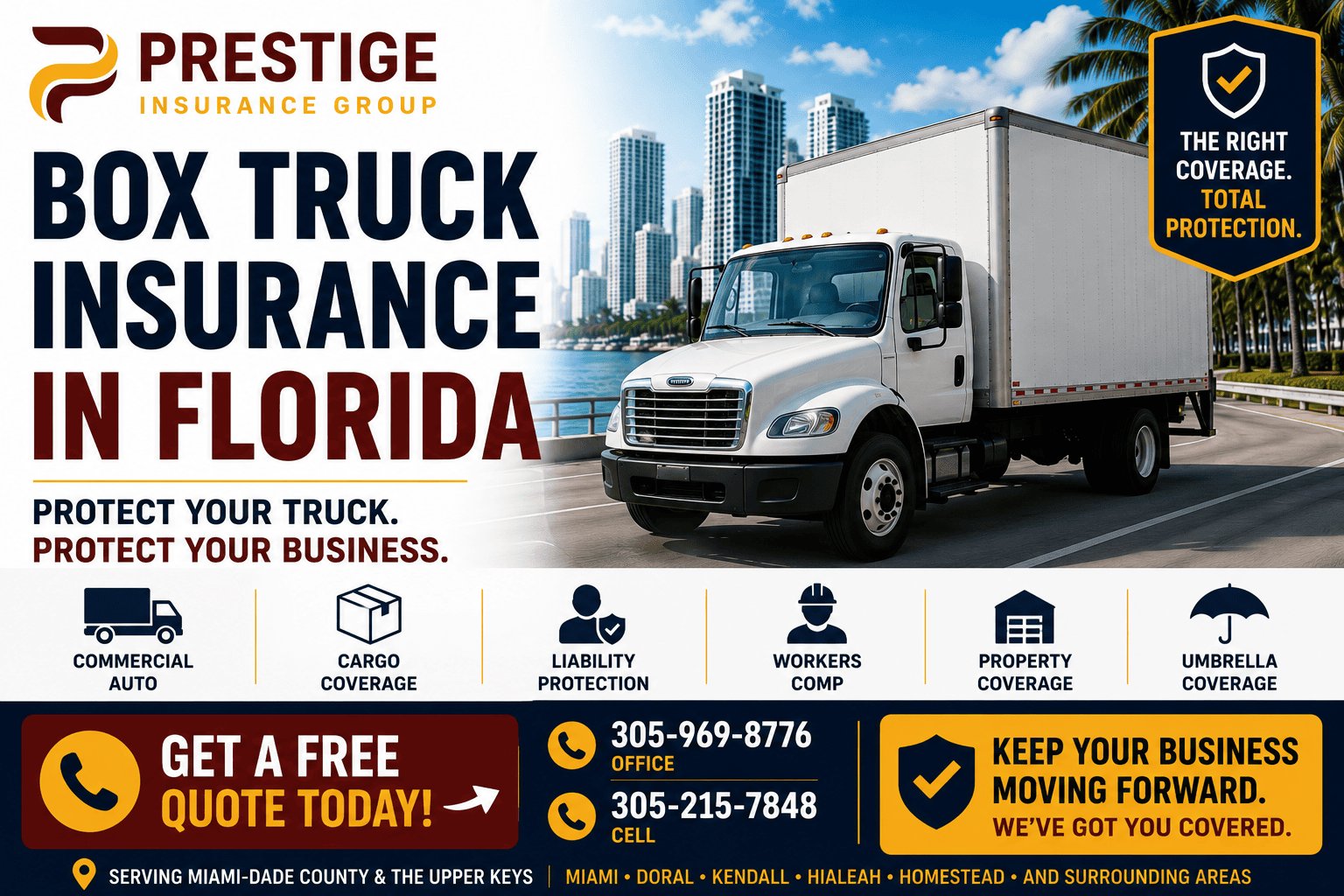
A furniture retailer in Sanford buys a used twenty-six-foot box truck to handle its own deliveries instead of paying a third-party service. The driver it hires has a clean license and years of experience in cars and pickups, but has never driven anything taller than a van. In his second week he pulls into a fast-food drive-through for lunch, and the top of the box catches the canopy. The truck needs a new roof section, the restaurant needs a new canopy, and the retailer learns quickly how much its new truck changed its insurance.
Box trucks are everywhere in Florida because almost anyone can legally drive one. Most are built to stay under the weight at which a commercial driver’s license is required, which lets movers, retailers, distributors and couriers put large trucks on the road with drivers who have never handled anything that size. That same fact explains most of what underwriters worry about in this class.
Two Weight Lines That Matter
Two gross vehicle weight ratings shape a box truck’s obligations. At 10,001 pounds and above, a vehicle used in interstate commerce is a commercial motor vehicle under federal rules, which brings a USDOT number and federal financial responsibility requirements into the picture. Most box trucks clear that line easily. Operations that stay entirely within Florida answer to state rules instead, which vary by weight and use.
At 26,001 pounds and above, a commercial driver’s license is required. Most sixteen-, twenty- and twenty-six-foot box trucks are deliberately rated just below that line. Knowing exactly where each truck falls tells you which rules apply and changes how a carrier evaluates your drivers. Our article on interstate versus intrastate trucking explains how Florida and federal requirements divide.
The Driver Is the Underwriting Question
Because no CDL is required, box truck operations often hire drivers with ordinary licenses and limited large-vehicle experience. Carriers price that risk and sometimes decline it. They want to see motor vehicle records pulled before hiring and periodically afterward, minimum age and experience standards, training on the specific truck and a clear list of approved drivers.
High turnover, drivers added without being reported to the carrier and family members or temporary helpers driving during busy weekends create problems. An undisclosed driver is not a technicality. It is one of the most common reasons a box truck claim becomes a dispute.
Overhead Strikes and Backing
The signature box truck claim is an overhead strike. Drive-through canopies, parking garage entrances, low bridges, gas station awnings, loading dock overhangs and residential carports all catch drivers who are used to thinking in car heights rather than thirteen feet or more. These losses are usually covered under physical damage and liability, but they are frequent enough that underwriters ask about prevention. Clearance stickers in the cab, route planning that avoids known low clearances and a rule that drivers stop and check rather than guess cost almost nothing.
Backing is the other common loss. Much of the damage to box trucks and to other people’s property happens at low speed in tight spaces with poor visibility, which is why backup cameras and spotters pay for themselves faster in this class than almost any other.
Liftgates
Liftgates create two separate problems. A liftgate failure is a mechanical breakdown, and physical damage coverage generally does not pay for mechanical breakdown. If the liftgate is essential to the operation, it is worth asking about equipment breakdown or mechanical coverage. Liftgates are also a leading source of workers’ compensation injuries in this class, from crushed fingers to falls from the platform and strains from moving heavy items. Training and written procedures matter as much as the insurance.
Rented Trucks
Box truck businesses rent constantly, whether for peak season, to replace a truck in the shop or to handle an unusually large job. The rental counter will sell its own coverage. The business’s policy may already respond if hired auto coverage is included, often on better terms, but many box truck policies do not include it. The result is either paying for counter coverage every time or driving a rental without protection. It is worth confirming before the next rental, along with hired and non-owned auto coverage for employees who use their own vehicles on company business.
Cargo Is Not on the Auto Policy
Auto liability excludes property in the business’s care, custody or control, and the goods in the back of a box truck fit that description exactly. Businesses carrying other people’s goods need motor truck cargo coverage, and businesses carrying their own inventory should check how their property or inland marine coverage treats goods in transit. On a cargo policy, three details matter most: the commodity list compared with what you actually carry, theft conditions such as requirements for a locked and alarmed unit or a secured yard, and a limit that reflects the largest load rather than the average one. Our article on truck physical damage and cargo insurance goes deeper into both coverages.
Movers Have Their Own Rules
Box trucks that move household goods operate under a different liability structure. For interstate moves, federal law under the Carmack Amendment governs carrier liability, and bills of lading often limit liability through released value provisions. Customers frequently do not understand that limitation, which creates disputes after a damaged move. Movers also carry the heaviest loading and unloading exposure in the class, with damage to floors and walls and injuries inside customers’ homes falling between cargo, general liability and workers’ compensation.
Physical Damage on Older Trucks
Box trucks stay in service a long time, and at some point the physical damage premium approaches the truck’s value. Each year it is worth reviewing whether comprehensive and collision still make sense on older units and how each truck is valued. If a truck is essential to daily revenue, rental reimbursement or downtime coverage can help, because a box truck out of service for three weeks is a revenue problem before it is an insurance one.
Worth Confirming With Your Agent
-
Each truck’s gross vehicle weight rating and which federal and Florida rules apply
-
Whether every driver is listed and their records have been reviewed
-
Whether liftgate breakdown and liftgate injuries are addressed
-
Whether hired auto coverage is in place before your next rental
-
Whether your cargo coverage matches what you haul and where trucks park overnight
-
How older trucks are valued and whether physical damage still makes sense
-
Whether moving operations need coverage for household goods liability
This article is general information and is not legal advice.
Talk to Prestige Insurance Group
Prestige Insurance Group works with moving companies, furniture and appliance retailers, distributors, couriers and local delivery fleets that run box trucks across Florida. We write Progressive and GEICO directly and work with more than 100 MGAs and specialty markets, so we can place box truck fleets with the auto, cargo and workers’ compensation coverage they need.
Call the office nearest you. Se habla español.
Orlando: 407-993-2331
Miami: 305-969-8776
Stuart: 772-247-3788
Prestige Insurance Group, License L057894