


A furniture delivery company in Gainesville has three box trucks, a small warehouse near the airport and a solid insurance program, or so the owner believes. In the same month, a reefer unit on a leased truck fails overnight and spoils a load for a restaurant supplier, a driver delivers a sectional to the wrong address and the customer cancels a standing contract, and someone posing as a regular carrier picks up a pallet of mattresses from the warehouse with convincing paperwork. Three losses, three phone calls to the agent, and not one of them is covered the way the owner expected.
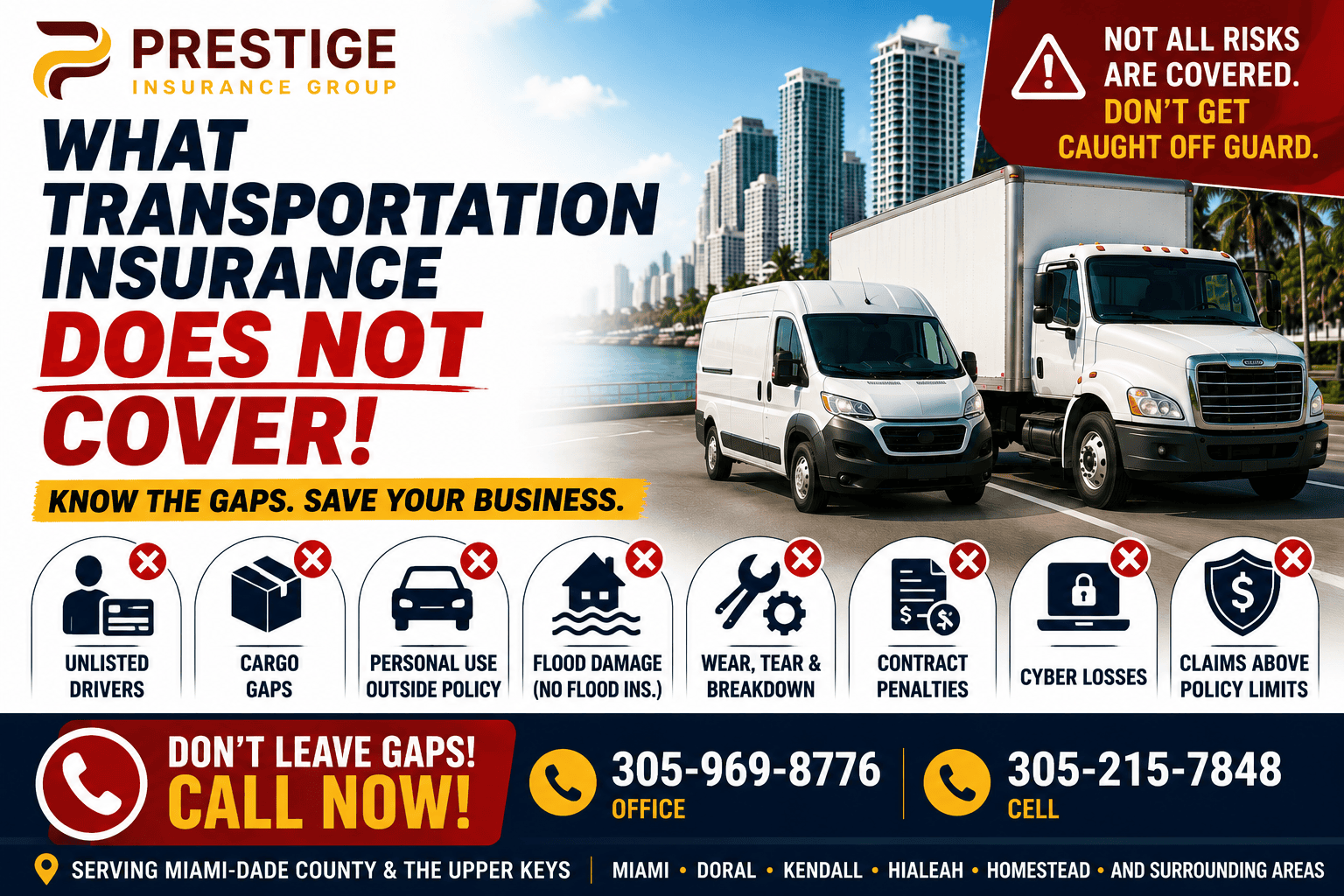
Transportation businesses buy several policies, and each one is written around a specific kind of loss. The gaps are rarely hidden. They sit in the places where one policy was designed to stop and another was never purchased. Knowing where those places are is the best way to decide which gaps to close and which risks to manage yourself.
Why the Auto Policy Does Not Cover the Load
Commercial auto liability covers injuries and damage your vehicles cause to other people and their property. It excludes property in your care, custody or control, and freight loaded in your truck is in your care by definition. That is not an oversight. It is how the form is built, and it is the reason cargo coverage exists as a separate policy. A business that hauls other people’s goods without cargo coverage is carrying that exposure on its own balance sheet.
Cargo Coverage Has Its Own Limits
Once cargo coverage is in place, a second set of boundaries begins. Most cargo forms exclude or sublimit categories such as jewelry, cash, fine art, alcohol, tobacco, pharmaceuticals, live animals, hazardous materials and high-value electronics. Theft coverage commonly depends on conditions like an attended vehicle, a locked and alarmed unit or a fenced yard. Spoilage from a refrigeration breakdown is usually excluded unless a reefer breakdown endorsement is added, and that endorsement typically requires maintenance records and temperature data after a loss. Some forms also limit coverage for cargo left in a vehicle overnight or carried outside a stated territory. For trucking-specific cargo questions, our article on truck physical damage and cargo insurance in Florida goes further.
Breakdowns Are Not Accidents
Physical damage coverage on a vehicle responds to collision, theft, vandalism, fire, flood and similar events. It does not pay when the vehicle simply fails. Engine and transmission failures, worn brakes, rust, electrical problems and damage from deferred maintenance fall outside the policy. Liftgates and refrigeration units are in the same position unless they are specifically scheduled or endorsed. For a business whose revenue depends on a liftgate or reefer working every morning, pricing that endorsement or setting aside a repair reserve is a practical decision, not an afterthought.
Service Failures and Contract Penalties
A wrong address, a missed delivery window, lost paperwork or a load routed to the wrong dock involves no injury and no physical damage, so neither auto liability nor general liability responds. These are errors in the service itself, and they fall under errors and omissions or professional liability coverage. That matters most for businesses that coordinate logistics, dispatch for others, broker freight or run time-sensitive medical courier routes.
Contract penalties are a related gap. Late delivery fees, service-level credits, refund demands and the loss of a customer are business disputes rather than insured losses. The time to evaluate them is when the contract is negotiated, not after a missed delivery.
Fraud, Impersonation and Cyber Losses
Cargo theft has shifted from breaking into trailers to impersonating legitimate carriers. Criminals use stolen credentials and spoofed documents to book real loads, and the goods are handed over willingly. Whether that loss falls under cargo, crime or cyber coverage depends on how it happened and how each policy is worded, and many cargo forms exclude voluntary parting with goods obtained through fraud. The same is true of payment fraud, where someone impersonating a vendor or a customer redirects a wire. Social engineering coverage is often a separate endorsement even inside a cyber or crime policy. Our article on Florida cargo theft trends covers how these schemes work.
Pollution and Spills
Fuel, chemicals, paint, automotive fluids, cleaning products and medical materials all carry pollution exposure, and standard transportation and general liability policies generally exclude pollution. A spill after an accident can create cleanup costs that far exceed the value of the load. If you haul anything in those categories, or fuel your own vehicles at your yard, pollution coverage needs a specific answer.
Flood, Wind and Business Interruption
Commercial property policies exclude flood, which is a real exposure for warehouses and yards in many parts of Florida. Vehicles are treated differently: comprehensive coverage on the auto policy generally responds to flood damage to a vehicle, which means a truck parked in the yard may be covered when the building next to it is not. Windstorm on the property policy usually carries a hurricane deductible expressed as a percentage of the insured value, so it is worth converting into dollars before storm season.
Business income coverage responds when a covered loss damages your premises. A business that suffers no damage but cannot operate because the area lost power, or because authorities closed the roads, needs utility service interruption or civil authority coverage, and neither is automatic.
Drivers, Contractors and Paperwork
Workers’ compensation covers employees, not independent contractors, and whether a driver is truly independent depends on the working relationship rather than what the agreement calls them. If you use owner-operators or contract drivers, collect their certificates and confirm their own coverage. Two administrative gaps cause more denied claims than any exclusion: vehicles that were never added to the policy and drivers who were never disclosed. Both are free to fix. For a broader look at what a program should include, see what insurance transportation businesses need in Florida.
Worth Confirming With Your Agent
-
Which commodities your cargo policy excludes or sublimits, and what its theft conditions require
-
Whether refrigeration, liftgate or other equipment breakdown is covered
-
Whether you need errors and omissions coverage for the services you provide
-
How your cargo, crime and cyber policies treat fraudulent pickups and payment fraud
-
Whether you have pollution coverage for the materials you haul or store
-
Your hurricane deductible in dollars and whether flood coverage is in place for your premises
-
Whether every vehicle and driver is listed and every contractor carries their own coverage
This article is general information and is not legal advice.
Talk to Prestige Insurance Group
Prestige Insurance Group helps Florida transportation businesses find the gaps between their policies before a claim does. We write Progressive and GEICO directly and work with over 100 MGAs and specialty markets for cargo, pollution, errors and omissions and other coverage standard programs leave out. Send us your current policies and a description of what you haul, and we will show you where you stand.
Call the office nearest you. Se habla español.
Orlando: 407-993-2331
Miami: 305-969-8776
Stuart: 772-247-3788
Prestige Insurance Group, License L057894