


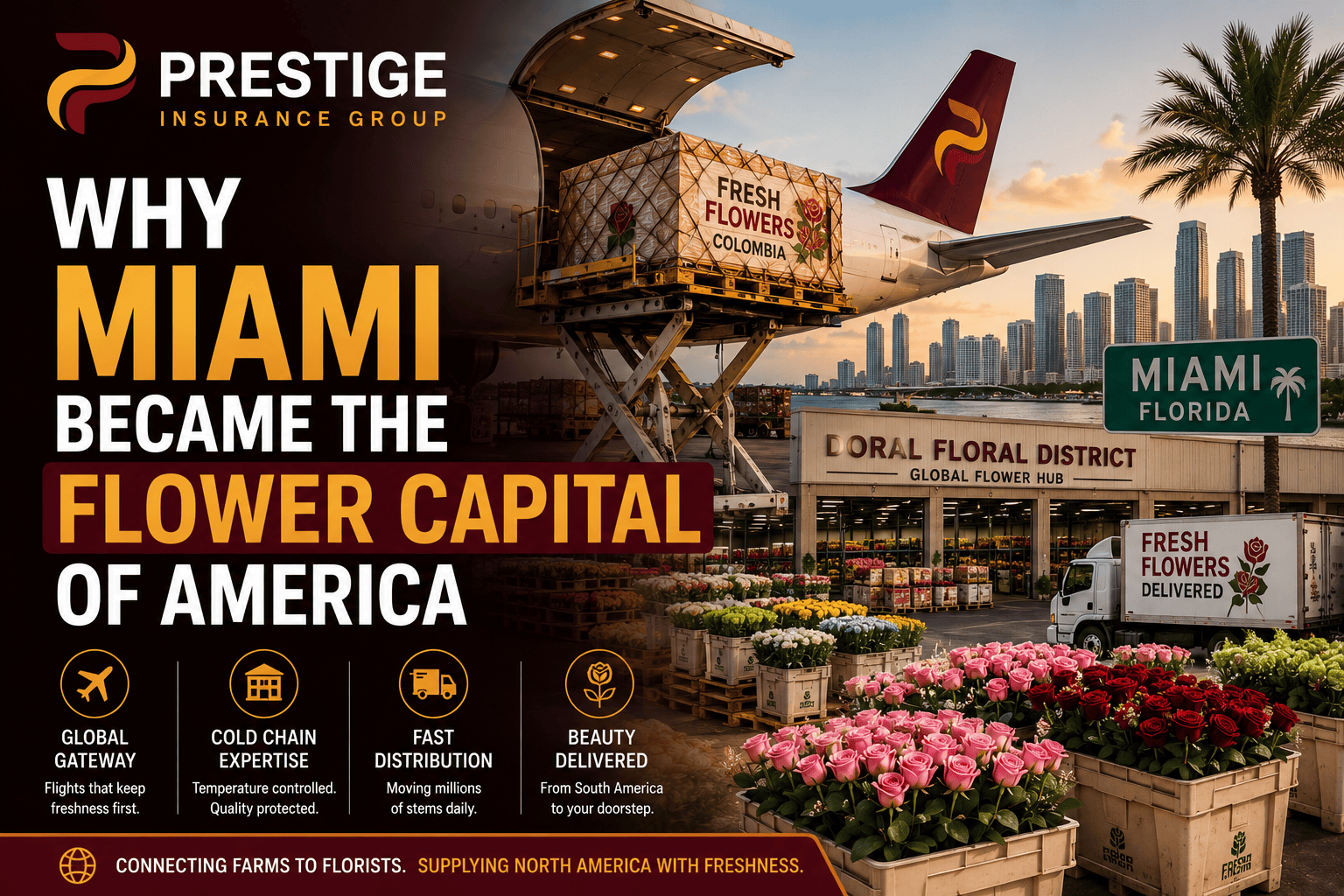
Why Miami Became The Flower Capital Of America
Most people associate Miami with beaches, tourism, cruise ships, international trade, and luxury real estate.
Few realize that Miami also plays a critical role in one of the largest floral supply chains in the world.
Every day, aircraft arrive at Miami International Airport carrying fresh flowers from farms throughout South America. Within hours, those flowers begin moving through a sophisticated network of refrigerated warehouses, distributors, wholesalers, transportation providers, and floral businesses.
The roses purchased in Chicago.
The wedding flowers delivered in Atlanta.
The Mother’s Day arrangements sold in Orlando.
The sympathy bouquets delivered in Dallas.
Many begin their journey in Miami.
For decades, South Florida has quietly served as one of the most important gateways connecting flower farms in Latin America with consumers throughout North America.
The scale of that operation surprises even people who work within the industry.
The Perfect Location For International Floral Trade
Miami’s role in the floral industry did not happen by accident.
Geography played a significant role.
South Florida sits closer to many South American flower-growing regions than almost any other major American city. That proximity reduces transportation times and helps preserve freshness as flowers move from growers to consumers.
For products with extremely limited shelf lives, every hour matters.
A shorter trip means flowers can arrive in better condition and remain marketable for longer periods.
As air transportation expanded throughout the late twentieth century, Miami became a natural entry point for floral imports.
The infrastructure supporting international cargo continued growing, and over time the city developed into one of the most important floral logistics centers in the country.
Colombia Changed The Industry Forever
No discussion about Miami’s floral industry would be complete without mentioning Colombia.
Today, Colombia is one of the largest flower-exporting countries in the world.
Its climate, elevation, and growing conditions allow farms to produce flowers throughout the year while maintaining exceptional quality.
The relationship between Colombia and Miami transformed the floral marketplace.
Large volumes of flowers could be harvested, transported by air, processed through customs, and distributed throughout the United States within remarkably short periods of time.
What once required complex and costly logistics became increasingly efficient.
The result was a supply chain capable of supporting florists, supermarkets, wholesalers, wedding professionals, and event companies across North America.
Doral Became The Warehouse Behind The Industry
If Miami International Airport serves as the gateway, Doral serves as the engine room.
Many of the floral warehouses, importers, distributors, and logistics providers supporting the industry operate throughout Doral and surrounding areas.
Drive through parts of Doral and you may pass facilities containing millions of flowers without even realizing it.
Behind ordinary warehouse doors, flowers are inspected, sorted, cooled, processed, stored, and prepared for shipment.
Refrigerated facilities operate around the clock.
Trucks arrive and depart continuously.
Inventory moves quickly because freshness determines value.
The average consumer never sees this side of the floral business.
Yet it is one of the reasons flowers can appear fresh and beautiful in flower shops thousands of miles away.
A Business Built Around Speed
Many industries focus on efficiency.
The floral industry focuses on speed.
Flowers are among the most perishable products traded internationally.
Unlike furniture, electronics, or clothing, floral inventory begins losing value almost immediately after harvest.
Every delay matters.
Every hour matters.
Every temperature fluctuation matters.
That reality has forced the floral industry to become exceptionally sophisticated when it comes to logistics.
Growers, airlines, customs officials, warehouse operators, distributors, transportation providers, and retailers all depend on one another.
A disruption at any point in the process can affect businesses throughout the supply chain.
The success of the industry depends on thousands of individual actions occurring at exactly the right time.
More Than Just Flower Shops
When people think about the floral industry, they usually picture a neighborhood florist.
The reality is much larger.
The floral economy supports:
-
Importers
-
Exporters
-
Distributors
-
Refrigerated warehouses
-
Trucking companies
-
Cargo airlines
-
Event companies
-
Wedding planners
-
Retail florists
-
Grocery chains
Thousands of jobs throughout South Florida are connected directly or indirectly to the movement of flowers.
What appears to be a simple bouquet is often the final step in a remarkably complex supply chain.
Why The Industry Continues To Grow
Demand for flowers remains strong.
Weddings continue.
Corporate events continue.
Holiday celebrations continue.
Consumers continue purchasing flowers to celebrate milestones, express sympathy, strengthen relationships, and mark important occasions.
As long as those traditions remain important, the need for an efficient floral supply chain will remain equally important.
Miami’s combination of geography, infrastructure, transportation access, and logistics expertise positions the region to remain a major floral hub for years to come.
While most consumers will never visit a floral warehouse in Doral or watch flowers being unloaded from an aircraft at Miami International Airport, they experience the results every time they receive a fresh bouquet.
The next time someone purchases flowers from a local florist, there is a good chance the journey began in South Florida.
South Florida’s floral industry includes florists, distributors, importers, wholesalers, refrigerated warehouses, and transportation companies that help keep flowers moving throughout North America.
Learn more:
https://www.prestigeinsurance.com/business-insurance/insurance-by-industry/floral-shop-insurance/
Call 305-969-8776 to discuss insurance solutions for floral businesses throughout Florida.