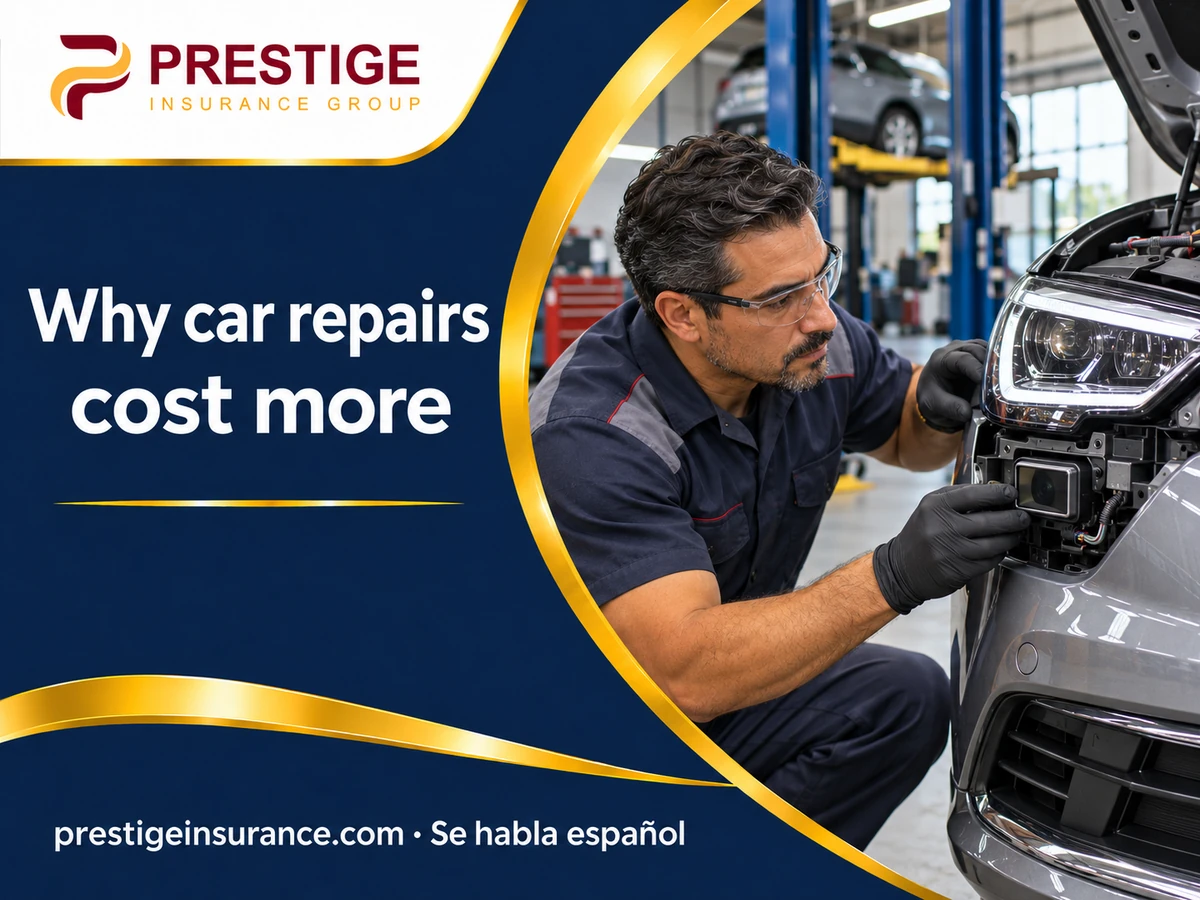
A driver in Davie taps the bumper of the car ahead of her at a light on University Drive. Nobody is hurt, and the dent is small enough that she expects a quick, inexpensive fix. The estimate comes back much higher than she imagined. The bumper cover hides radar sensors and a parking camera, the replacement part is on back order, and after the repair the shop has to calibrate the driver assistance system before the car is safe to drive. A minor bump has turned into a claim several times larger than it would have been on an older car.
That gap between what a repair looks like and what it costs is now one of the main reasons auto insurance prices have risen in Florida and across the country. Understanding where the money goes helps you choose coverage that still makes sense for the car you actually drive.
Sensors and cameras turn small repairs into big ones
Most newer cars carry advanced driver assistance systems: automatic emergency braking, lane keeping, adaptive cruise control and blind spot monitoring. These systems depend on cameras, radar and other sensors mounted in bumpers, grilles, side mirrors and behind the windshield. When one of those parts is damaged or replaced, the sensors usually need to be recalibrated so they read the road correctly.
Calibration takes specialized equipment, trained technicians and sometimes a trip to a dealer. It adds time and cost to repairs that used to be simple, including windshield replacement. A cracked windshield on a car with a forward facing camera is no longer just a glass job, because the camera mounted to it has to be aimed again after the new glass goes in.
Materials, parts and labor
Manufacturers use more aluminum and high strength steel to make cars lighter and safer. Those materials often require different tools, training and repair methods, and some panels that once could be straightened now have to be replaced. Many parts also carry more technology than they used to, such as headlights with built-in electronics, and they cost more as a result.
Parts availability adds another layer. When a part is back ordered, the car sits at the shop longer, which raises the cost of the claim if the policy is paying for a rental. Labor rates at body shops have also risen, and skilled technicians who can work on newer systems are in demand. Each of these factors on its own adds a little; together they can make the same type of accident noticeably more expensive than it was a few years ago.
Electric and hybrid vehicles
Electric vehicles bring their own repair considerations. The battery pack is one of the most expensive components on the car, and damage to it or to the structure around it can lead an insurer to declare the vehicle a total loss even when the rest of the car looks repairable. Not every shop is equipped or certified to work on electric vehicles, which can limit where repairs are done and how quickly. Florida’s flood risk adds another concern, since saltwater exposure can be especially damaging to high voltage systems.
Why this shows up in your premium
Insurers price collision and comprehensive coverage based on what claims cost to pay. When the average repair bill rises, the premium for physical damage coverage tends to follow. Liability pricing is affected too, because when you cause an accident your policy pays to repair the other driver’s car, and that car is increasingly likely to be newer and full of sensors. Our guide to auto insurance cost in Florida explains the other factors that drive the price, from your driving record to where the car is garaged.
Property damage liability limits deserve a second look
Florida requires drivers to carry property damage liability, but the required minimum is low compared with what many accidents now cost. If you cause a crash that damages a newer vehicle, especially a luxury car, an electric vehicle or a car loaded with driver assistance features, the repair bill can exceed a minimum limit quickly. Anything above your limit can become your personal responsibility. Our guide to auto insurance requirements in Florida explains what the state requires and why the minimums rarely match real exposure. Carrying higher liability limits, and an umbrella policy if you have assets to protect, is one of the more effective ways to respond to rising repair costs.
Choosing deductibles
A higher collision and comprehensive deductible lowers your premium, but it also means you pay more out of pocket when a claim happens. With repair costs rising, even a minor accident can exceed a low deductible, so the right choice depends on how much you could comfortably pay on short notice and how much you value a lower premium. Some drivers keep a lower comprehensive deductible because glass and storm claims are common in Florida, while carrying a higher collision deductible. It is worth reviewing these choices when you replace a car, since the right deductible for an older vehicle may not suit a newer one.
Parts, rental and gap coverage
How a policy treats replacement parts matters more than it used to. Some policies allow non original or aftermarket parts in repairs, while others offer an endorsement that pays for original manufacturer parts, often for newer vehicles. If you want repairs done with original parts, ask whether that option is available and what it costs.
Rental reimbursement pays for a rental car while yours is being repaired after a covered claim. Because repairs now often take longer, the daily limit and the maximum number of days on this coverage are worth checking. A limit that covered a typical repair a few years ago may run out before a car waiting on parts is ready.
If you finance or lease your car, gap coverage pays the difference between what you owe and what the car is worth if it is totaled. Newer cars can lose value quickly, and with more repairs ending in a total loss, gap coverage can prevent you from owing money on a car you no longer have. It may be available through your auto policy, your lender or the dealer, and the terms differ by source.
What the policy will not cover
Rising repair costs do not change what auto insurance is built to pay for. Wear and tear, mechanical breakdown and damage that existed before the claim are generally not covered. Our guide to what auto insurance does not cover in Florida walks through the common exclusions. If you are adding a young driver to a household with newer cars, our guide to adding a teen driver to your Florida auto policy covers how that affects both cost and coverage.
Worth confirming on your policy
-
That your property damage liability limit reflects what it costs to repair a newer car today
-
That your bodily injury limits and any umbrella policy match the assets you need to protect
-
That your collision and comprehensive deductibles are amounts you could pay on short notice
-
Whether glass claims, including camera calibration after windshield replacement, are covered and at what deductible
-
Whether the policy uses original manufacturer parts or allows aftermarket parts, and whether an endorsement is available
-
The daily limit and number of days on rental reimbursement
-
Whether you need gap coverage on a financed or leased car, and where it comes from
-
How the policy handles an electric or hybrid vehicle, including battery damage
Talk to us
Prestige Insurance Group helps Florida drivers review their auto coverage against what repairs actually cost today. We compare liability limits, deductibles, parts options, rental reimbursement and gap coverage across the companies we work with, so your policy fits the car you drive and the risk you carry on the road. You can also start with our Florida auto insurance page.
Call the office nearest you. Se habla español.
-
Miami: 305-969-8776
-
Orlando: 407-993-2331
-
Stuart: 772-247-3788
This article is general information, not legal advice. Coverage forms, contract terms and carrier appetite vary and change over time. Prestige Insurance Group, Florida agency license L057894.