


The owner of a two-story medical office building in Wellington gets a call from a dermatology tenant at seven in the morning. A supply line above the second-floor restroom failed overnight, and water has come through the ceiling into the practice below. Two exam rooms are soaked, a laser device sat under a dripping ceiling tile for hours, and the waiting room carpet is saturated. The practice has a full schedule that day, including several procedures. By nine o’clock the physicians are calling patients to cancel, the building owner is calling a restoration company, and everyone is asking the same question: whose insurance pays for what?
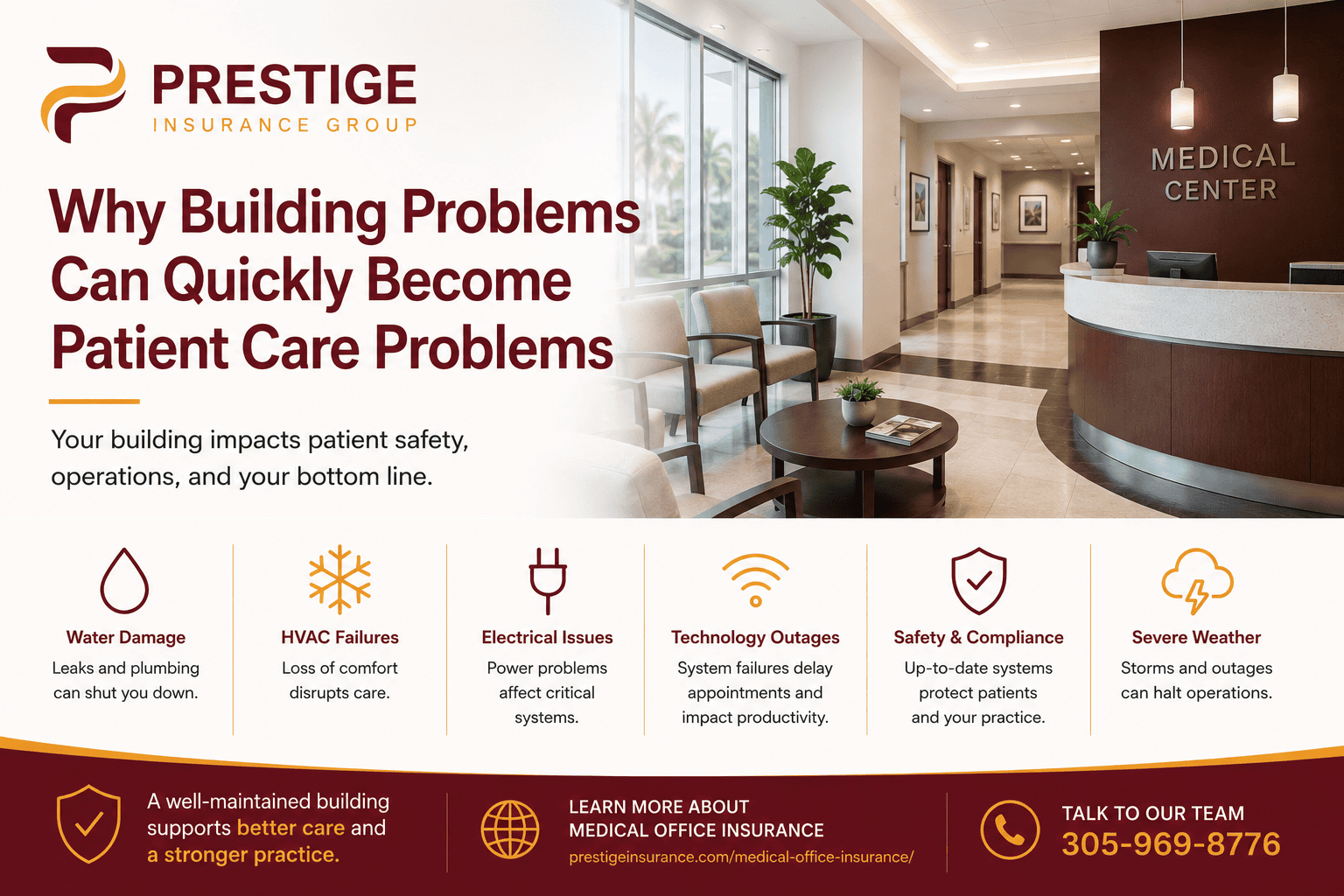
Patients rarely think about the building where they see their doctor. They notice the physician, the staff and the wait time. But in a medical office the building is part of the care itself. When the plumbing, air conditioning, power or roof fails, appointments stop, equipment is damaged and patient safety can be affected within hours.
Medical Buildings Are Not Ordinary Offices
A medical office building carries loads and demands that a standard office does not. Exam rooms need sinks and plumbing in many more places. Imaging suites need shielding, stable power and precise temperature control. Procedure rooms may require specialized ventilation. Sterilization equipment, refrigerators for vaccines and medications, and lab equipment all depend on uninterrupted utilities. Accessibility for patients using wheelchairs, walkers and stretchers is not optional.
Those features make medical buildings more valuable to tenants and more complicated to maintain. They also mean that a building failure affects more than the physical space.
Water Damage Causes Outsized Problems
Water is one of the most common and expensive sources of loss in medical offices. A burst pipe, a failed water heater, a clogged condensate line or a roof leak during a storm can damage drywall, flooring, cabinetry, records and sensitive equipment. In a clinical setting, the cleanup is also stricter. Wet materials that might be dried in place in another business may need to be removed to avoid mold and contamination concerns, and the space may not be suitable for patient care until it is fully restored. Records stored on paper, sterile supplies and anything that cannot be properly disinfected may also need to be replaced, which adds both cost and delay.
Practices often discover that the cost of being closed is larger than the cost of the repair. Every canceled appointment is revenue that cannot be recovered, while payroll, rent and loan payments continue.
Air Conditioning Matters More Than Owners Realize
In Florida, air conditioning is not a comfort feature. Medications and vaccines must be stored within specific temperature ranges, imaging and laboratory equipment can be damaged or put out of calibration by heat and humidity, and high indoor humidity encourages mold growth. A failed compressor in August can force a practice to close and can spoil an inventory of temperature-sensitive supplies. Regular maintenance, monitoring alarms and a plan for emergency equipment are part of risk management, not just building upkeep.
Power and Technology Infrastructure
Medical practices now depend on electronic health records, digital imaging, phone systems and internet connectivity. A power outage or a surge can damage equipment and shut down operations even when the building itself is untouched. Surge protection, backup power for critical equipment and refrigeration, and an understanding of how long the practice can function during an outage all matter. Equipment breakdown coverage, which can be added to many property policies, responds to the sudden electrical and mechanical failure of covered equipment, a type of loss that standard property forms often exclude.
Florida’s Building Challenges
Florida adds its own pressures. Hurricanes can damage roofs, windows and building systems, and heavy rain can cause flooding even outside designated flood zones. Standard property policies exclude flood, so practices and building owners need separate flood coverage if they want that protection. Many commercial properties carry a separate hurricane deductible, usually a percentage of the insured value, which can leave the owner absorbing a significant share of a storm loss. Older buildings may face higher property premiums or limited carrier options, especially near the coast.
Who Insures What
In a leased medical office, responsibilities are divided by the lease. The building owner typically insures the structure and common areas. The tenant practice typically insures its own equipment, furniture, supplies and the improvements it paid for, such as custom cabinetry, exam room build-outs and specialized plumbing, often called tenant improvements and betterments. The tenant also needs business income coverage to replace lost revenue and pay continuing expenses while the space is repaired.
Confusion about these responsibilities is common, and it usually surfaces only after a loss. Leases often include waivers of subrogation, additional insured requirements and indemnity provisions that change how claims are handled between owner and tenant. We explain those provisions in insurance requirements in a Florida commercial lease, and the mechanics of lost income coverage in business income coverage in Florida, explained.
Maintenance Is Risk Management
The best-run medical buildings treat maintenance as a way to protect patient care. Routine inspections of roofs, plumbing and air conditioning, water leak detectors and automatic shutoff valves in high-risk areas, temperature alarms on medication refrigerators, documented service on medical equipment and a clear plan for after-hours emergencies all reduce the chance that a building problem becomes a canceled clinic. They also give insurers confidence, which can help when it is time to place or renew coverage. Our overview of medical office insurance shows how property coverage fits with the rest of a practice’s program.
Worth Confirming With Your Agent
-
Whether your property limits reflect today’s cost to replace your equipment and tenant improvements
-
Whether equipment breakdown coverage is included for imaging, sterilization, refrigeration and HVAC
-
How much business income coverage you carry and how long it would last
-
Whether spoilage of medications and vaccines is covered after a power or equipment failure
-
What your hurricane deductible is, and whether you carry flood coverage
-
What your lease requires you to insure, and what the building owner insures
This article is general information and is not legal or medical advice.
Talk to Prestige Insurance Group
Prestige Insurance Group works with medical practices and medical office building owners across Florida, and we help both sides understand how property, equipment breakdown, flood and business income coverage fit together. If you are signing a lease, renewing a policy or just want to know what would happen after a water loss or storm, we can review your program with you.
Call the office nearest you. Se habla español.
Orlando: 407-993-2331
Miami: 305-969-8776
Stuart: 772-247-3788
Prestige Insurance Group, License L057894