

Warehouse Slip-and-Fall & Premises Liability Claims in Florida
When warehouse owners think about insurance claims, they often focus on fires, hurricanes, cargo theft, or equipment accidents. However, some of the most common and costly claims involve something much simpler: slips, trips, and falls.
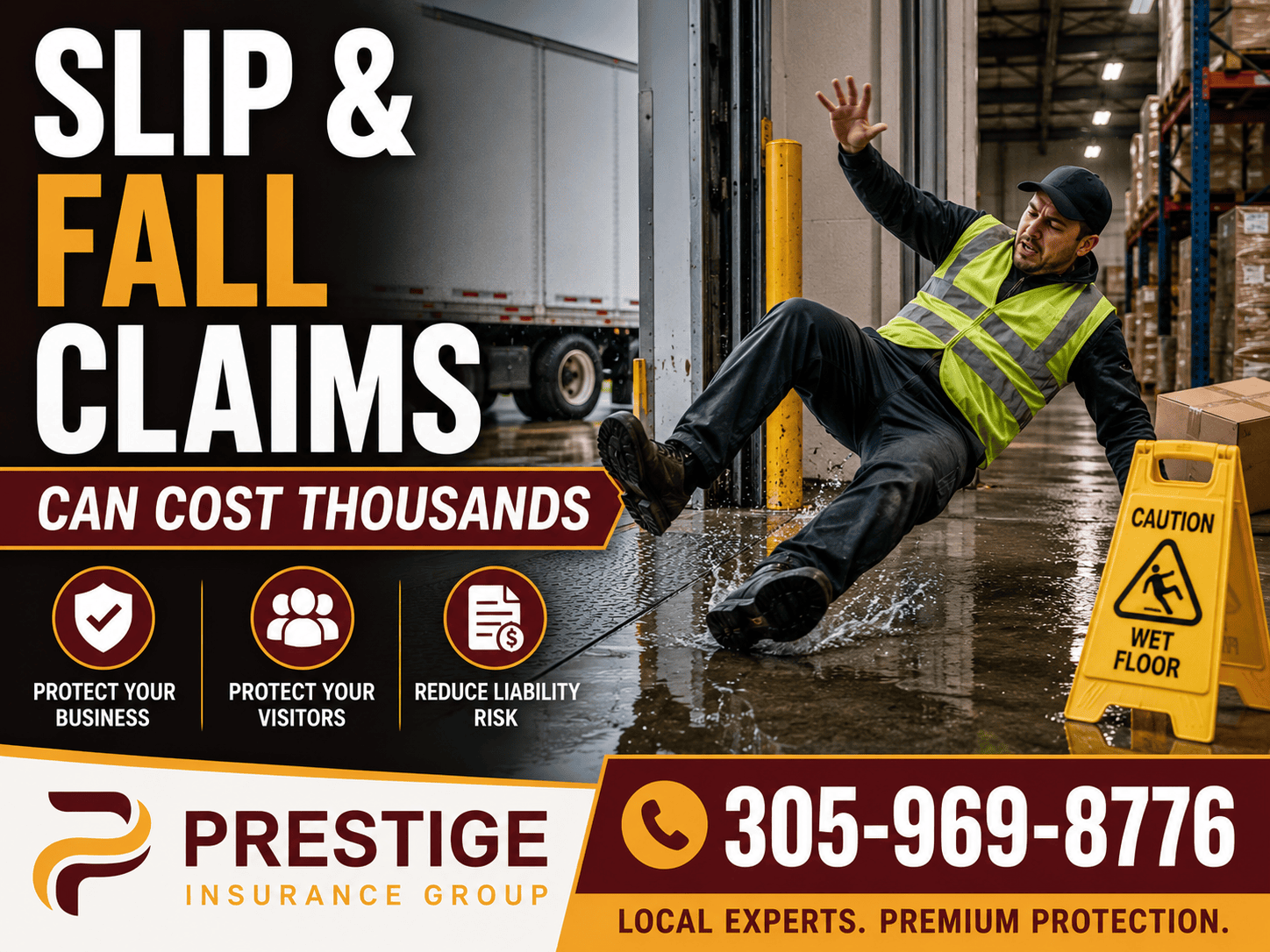
Warehouses are busy environments with constant employee activity, deliveries, loading operations, and customer visits. Wet floors, damaged pavement, uneven walking surfaces, poor lighting, and loading dock hazards can all contribute to injuries. Falls remain a genuinely significant national safety concern — the Bureau of Labor Statistics recorded 844 fatal workplace accidents involving falls or slips in 2024 alone, and typical premises liability settlements for slip-and-fall injuries commonly run $10,000 to $50,000, with severe injury cases reaching six or seven figures.
A single premises liability claim can result in medical expenses, legal costs, settlements, and operational disruptions. Understanding these risks can help warehouse operators improve safety and reduce potential liability.
What Is Premises Liability?
Premises liability refers to a business owner’s responsibility to maintain reasonably safe conditions for visitors and third parties. For warehouse operators, this may include delivery drivers, vendors, contractors, customers, inspectors, and service technicians. When someone is injured because of an unsafe condition, the warehouse may face a real liability claim as a result. Businesses concerned about liability exposures should also review General Liability Insurance.
Why Warehouses Experience Slip-and-Fall Claims
Warehouses contain numerous conditions that can contribute to falls, including wet floors, water intrusion, oil spills, damaged pavement, uneven concrete, poor lighting, loose materials, debris in walkways, and loading dock transitions. Even well-maintained facilities can experience accidents when housekeeping and maintenance procedures are not consistently followed.
Loading Docks Are a Major Liability Exposure
Loading docks are among the most common locations for warehouse injuries. Daily activity often includes deliveries, freight movement, forklift traffic, pedestrian traffic, and trailer loading — all happening in the same space. Potential hazards include wet surfaces, uneven dock plates, poor visibility, dock edge falls, and trip hazards. Because loading docks involve both employees and visitors simultaneously, accidents here frequently create real liability concerns.
Delivery Driver Injury Claims
Delivery drivers visit warehouses every day, and a driver may be injured while walking through the facility, entering loading areas, unloading cargo, or simply waiting for shipments. Common claims involve slips, trips, falls, falling objects, and loading dock accidents — and these incidents can sometimes lead to lawsuits if negligence is alleged.
Water Intrusion and Slip Hazards
Florida’s weather creates unique challenges here. Heavy rainfall, roof leaks, and water intrusion can create hazardous walking surfaces, and warehouse operators frequently experience rainwater near entrances, condensation, roof leaks, and loading dock moisture. Businesses concerned about water-related risks may also find our Warehouse Roof Leak & Water Damage Claims and Flood Insurance for Wholesale Warehouses guides helpful.
Common Premises Liability Claims
A visitor slipping on a wet floor is a common scenario: rainwater accumulates near a warehouse entrance, a visitor slips, and the resulting claim includes medical expenses, legal costs, and potential settlement expenses. A delivery driver falling at a loading dock occurs when a driver steps onto an uneven dock surface and falls, leading to medical treatment, lost income claims, and liability allegations. A contractor tripping over warehouse materials happens when temporary materials are left in a pedestrian pathway, and the warehouse faces a liability claim alleging unsafe conditions as a result. A parking lot fall can occur when poor lighting contributes to a visitor falling in a warehouse parking area, involving medical expenses, legal defense costs, and settlement negotiations.
How Premises Liability Claims Affect Insurance Costs
Insurance carriers evaluate prior claim history, building maintenance, safety procedures, housekeeping practices, lighting conditions, and overall property condition. Frequent liability claims may affect underwriting decisions and insurance costs directly — strong safety programs often help reduce this risk meaningfully over time.
Reducing Slip-and-Fall Risks
Warehouse operators can often improve safety through proactive maintenance and housekeeping. Maintaining walking surfaces means regularly inspecting floors, sidewalks, parking areas, and loading docks, with regular repairs reducing hazards before they cause an accident. Improving lighting in well-lit facilities often reduces accident potential directly. Addressing water intrusion quickly — leaks and standing water addressed immediately rather than left to sit — matters genuinely. Establishing consistent housekeeping procedures through routine cleaning and inspections helps reduce hazards systematically, and using warning signage to clearly mark temporary hazards whenever possible closes an easy, low-cost gap.
Real Florida Warehouse Liability Claim
A delivery driver visiting a South Florida warehouse slipped on a wet loading dock surface following heavy rainfall. The driver suffered injuries requiring medical treatment and alleged that the warehouse failed to properly address the hazardous condition. The resulting claim involved medical expenses, legal defense costs, and settlement negotiations. While the physical injury was not catastrophic, the overall claim became expensive due to litigation and related expenses — consistent with the real settlement ranges documented for premises liability claims generally.
Why Premises Liability Matters for Warehouse Operators
Many warehouse owners focus heavily on property protection and inventory risks. However, visitor injuries can create significant financial consequences even when no property damage occurs at all. Maintaining safe conditions, conducting regular inspections, and implementing effective housekeeping procedures can help reduce the likelihood of claims meaningfully.
Related Resources
Warehousing and Logistics Insurance · General Liability Insurance · Forklift Accident Liability for Warehouses in Florida · Warehouse Roof Leak & Water Damage Claims · Flood Insurance for Wholesale Warehouses · Biggest Warehouse Insurance Claims in Florida
Protect Your Warehouse From Liability Claims
Slip-and-fall accidents and premises liability claims remain some of the most common causes of warehouse lawsuits. Proactive maintenance, strong safety procedures, and proper insurance planning can help reduce risk and protect your operation.
For assistance reviewing warehouse insurance options in Florida, contact Prestige Insurance Group:
Miami: 305-969-8776 Orlando: 407-993-2331 Stuart: 561-983-4333
Se Habla Español.