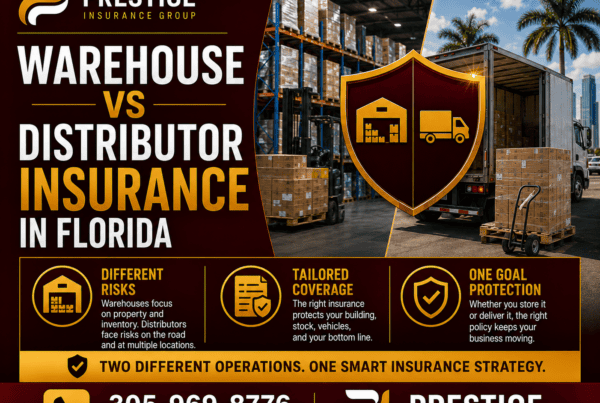


Many warehouse owners assume their commercial property insurance automatically protects all inventory stored inside their facility. However, that is not always the case.
One of the most misunderstood risks in the warehousing industry involves customer-owned inventory. Warehouses, distribution centers, fulfillment facilities, and third-party logistics providers often store products that belong to clients rather than the warehouse itself. When customer property is damaged, destroyed, or lost, the warehouse may face significant financial exposure.
Warehouse Legal Liability Insurance is designed to help address certain risks associated with storing customer-owned property. Understanding how this coverage works can help warehouse operators better evaluate potential liabilities and contractual obligations.
What Is Warehouse Legal Liability Insurance?
Warehouse Legal Liability Insurance is designed to help protect warehouse operators when customer-owned property is damaged while in their care, custody, or control. Unlike commercial property insurance, which generally focuses on property owned by the business, warehouse legal liability coverage addresses exposures involving goods owned by others entirely. This coverage is commonly considered by public warehouses, contract warehouses, distribution centers, fulfillment centers, third-party logistics providers, importers, exporters, and cold storage facilities — businesses storing customer inventory often face risks that standard property policies may not fully address.
Why Customer Inventory Creates Unique Risks
Modern warehouses frequently handle inventory belonging to multiple customers simultaneously, including consumer products, electronics, medical supplies, food products, building materials, and retail inventory. When a loss occurs, the warehouse may face genuine questions regarding responsibility, contractual obligations, storage agreements, and liability limitations — and the larger the inventory concentration, the greater the potential exposure. Businesses reviewing warehouse operations may also find our Warehousing and Logistics Insurance guide helpful.
Understanding Care, Custody, and Control
One of the most important concepts in warehouse liability is known as “care, custody, and control.” This generally refers to property entrusted to the warehouse operator — when a customer stores products inside a facility, the warehouse assumes responsibility for handling and safeguarding those goods according to the terms of the storage agreement. Claims involving customer property often revolve around whether the warehouse exercised reasonable care in protecting the inventory, creating a genuinely unique liability exposure that differs from property the warehouse actually owns itself.
Common Causes of Customer Inventory Losses
Warehouse legal liability claims can arise from many situations, including fire damage, water damage, roof leaks, hurricane damage, theft, vandalism, forklift accidents, inventory collapse, improper handling, and temperature control failures. A warehouse may be responsible for substantial inventory values even when the facility itself sustains relatively minor damage.
Warehouse Fire Claims
Fire remains one of the largest risks facing warehouse operators. A warehouse storing customer inventory may experience inventory destruction, smoke contamination, water damage from suppression systems, and business interruption — even inventory that survives the fire may become unsellable due to contamination concerns. Businesses concerned about fire-related risks may also benefit from reviewing our Warehouse Fire Risks for Distributors guide.
Water Damage and Customer Property
Water damage claims are particularly common in Florida, with potential causes including roof leaks, plumbing failures, hurricanes, flooding, and water intrusion. Even small amounts of water can damage packaging, electronics, textiles, medical products, and paper goods — warehouse operators often underestimate the potential value of customer inventory stored inside their facilities.
Theft and Inventory Losses
Warehouses may also face claims involving stolen customer property, including warehouse burglary, employee theft, cargo theft, fraudulent pickups, and shipment diversion. Losses involving customer inventory can become especially complicated because multiple parties may be involved simultaneously. Businesses concerned about theft-related risks may also find our Cargo Theft Insurance for Warehouses guide and Cyber Liability Insurance helpful.
Forklift Accidents and Customer Inventory
Forklift incidents remain one of the most common warehouse claims. A single accident may damage customer products, destroy inventory, collapse racking systems, and interrupt operations simultaneously — for warehouses storing high-value inventory, these incidents can become genuinely costly. Learn more in our Forklift Accident Liability guide.
Third-Party Logistics (3PL) Operations
Third-party logistics providers often face elevated warehouse legal liability exposures. Unlike traditional storage facilities, many 3PL operations manage customer inventory, coordinate transportation, oversee fulfillment services, handle returns, and arrange shipments — as customer inventory volumes increase, liability concerns often increase alongside them. Many 3PL contracts include specific insurance requirements that warehouse operators must satisfy as a condition of the relationship.
Warehouse Legal Liability vs. Commercial Property Insurance
This is one of the most common areas of confusion. Commercial property insurance generally focuses on buildings, equipment, furniture, and inventory owned by the business itself. Warehouse legal liability insurance focuses specifically on customer-owned inventory, goods stored for others, and property under the warehouse’s care, custody, or control. The two coverages often serve genuinely different purposes and shouldn’t be assumed to overlap automatically. Learn more about Commercial Property Insurance.
Factors That Influence Warehouse Legal Liability Exposures
Insurance companies often evaluate inventory values, the type of goods stored, building construction, fire protection systems, security measures, claims history, storage methods, and hurricane exposure. Facilities storing high-value products may face greater underwriting scrutiny as a result.
Common Contract Requirements
Many warehouse operators enter into contracts that specify liability responsibilities, insurance requirements, inventory reporting obligations, storage conditions, and claims procedures. Understanding these contractual responsibilities is an important part of warehouse risk management — storage agreements can significantly affect potential liability following a loss.
Real Warehouse Legal Liability Claim Example
A Florida warehouse stored electronics belonging to several customers. A roof leak developed during a severe storm and water entered the facility overnight. Although the building sustained relatively minor damage, customer inventory suffered significant losses. The resulting claim involved damaged electronics, inventory replacement, customer disputes, contract review, and claims handling expenses — the inventory loss ultimately exceeded the cost of repairing the roof itself. This type of claim illustrates exactly why warehouse operators often review customer-property exposures separately from building exposures.
Reducing Warehouse Legal Liability Risks
Warehouse operators often implement several risk management measures. Inventory tracking systems with accurate records help reduce disputes and improve claims handling. Security controls including access controls, cameras, and alarm systems can help reduce theft exposures. Employee training on proper handling procedures can reduce accidental damage. Building maintenance through routine inspections helps identify issues before losses occur. Contract reviews conducted regularly help businesses better understand their actual responsibilities under each storage agreement.
Why Warehouse Legal Liability Matters in Florida
Florida warehouse operators face unique challenges involving hurricanes, flooding, high inventory concentrations, international trade, distribution activity, and supply chain complexity. As warehouses continue evolving into logistics and fulfillment centers, customer-property exposures often become increasingly important. Understanding warehouse legal liability can help businesses better evaluate potential risks and contractual obligations before a loss forces the question.
Related Resources
Warehousing and Logistics Insurance · Commercial Property Insurance · Transportation Insurance · Warehouse Fire Risks for Distributors · Forklift Accident Liability for Warehouses · Cargo Theft Insurance for Warehouses
Protect Your Business and Your Customers’ Inventory
Warehouses, fulfillment centers, and logistics operations often store inventory that belongs to others. Understanding warehouse legal liability exposures and reviewing insurance options can help businesses better manage risk and protect customer relationships.
For assistance reviewing warehouse insurance options in Florida, contact Prestige Insurance Group:
Miami: 305-969-8776 Orlando: 407-993-2331
Se Habla Español.