


A retired couple in Davie paid off their house years ago and dropped flood insurance as soon as the lender no longer required it. Their street is not in a high-risk zone, and in twenty-five years the water had never come past the curb. Then a slow, stalled storm parks over Broward County and drops more rain in a day than the canals can carry. Four inches of water come through the front door and stay overnight. The homeowners carrier denies the claim because the damage is flood, and the federal help they assumed would arrive turns out to be mostly a loan application.
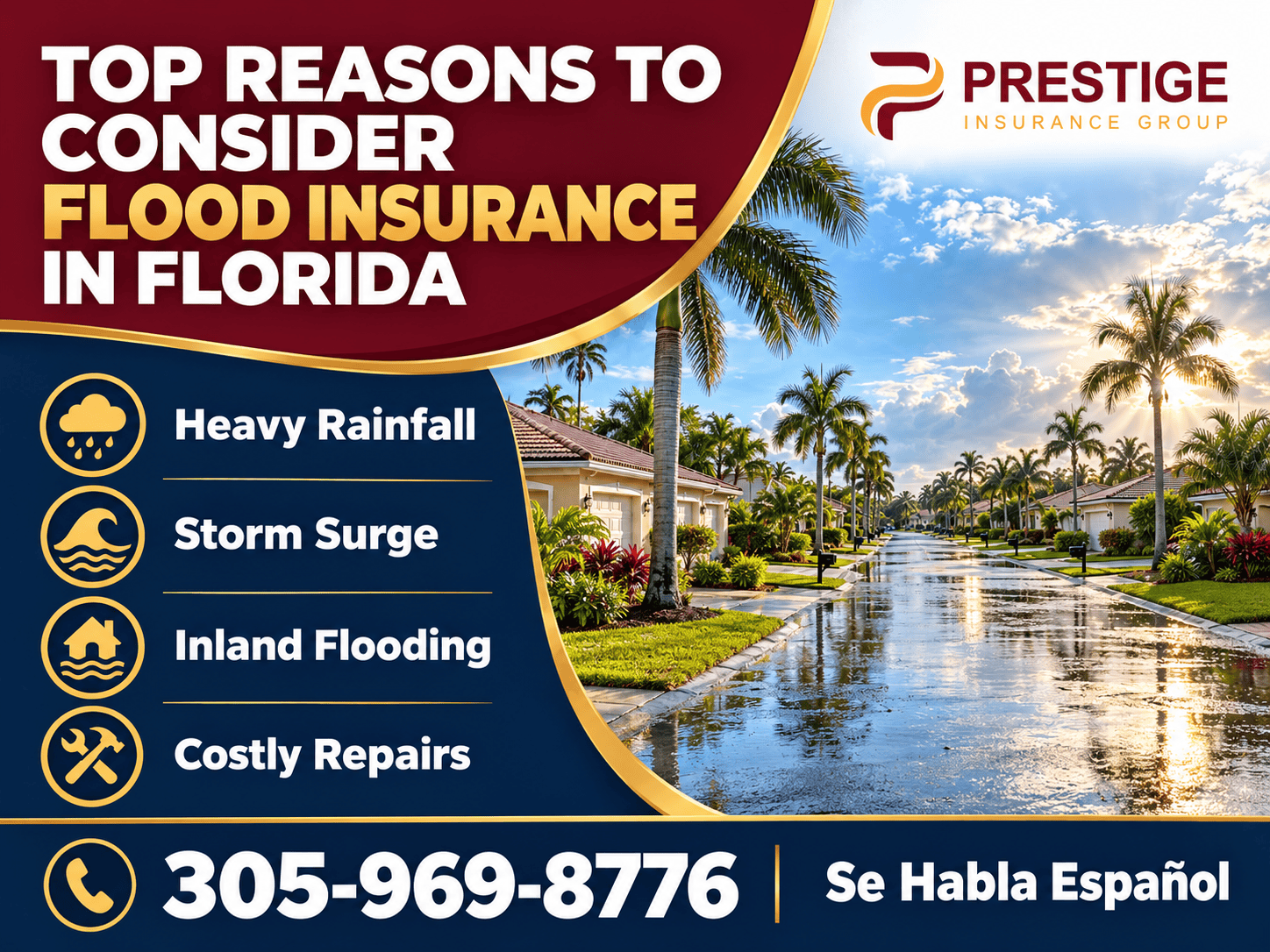
Their story is not unusual, and it is the clearest way to understand why flood insurance makes sense for far more Florida homes than the ones a lender requires it on. The reasons are practical rather than dramatic: who pays when water comes in from outside, what the alternatives actually look like and what the coverage costs compared to the risk it carries.
Your Homeowners Policy Will Not Pay for It
Every standard homeowners policy in Florida excludes flood. Wind damage from a hurricane, a roof leak, a pipe that bursts inside the wall, all of those go to the homeowners policy. Water that rises from outside and enters the home, whether from storm surge, an overflowing canal, a retention pond or a street that fills faster than it drains, does not. Without a separate flood policy, that damage is paid out of your own pocket. Our article on what flood insurance covers in Florida explains where the line between the two policies falls.
Flooding Does Not Follow the Map
FEMA’s flood zones identify where flooding is most likely, not the only places it happens. A large share of flood claims nationally come from properties outside the high-risk zones, and Florida’s flat terrain, high water table and heavy summer rains make that especially true here. Neighborhoods miles from the coast flood when a storm stalls, when drainage is overwhelmed or when new development changes how water moves through an area that used to drain just fine. Being outside a high-risk zone means no lender will force you to buy flood insurance. It does not mean the water knows where the line is. Our guide to reading a FEMA flood zone map explains what the zones do and do not tell you.
Outside the High-Risk Zones, It Is Usually Affordable
This is the reason that surprises people most. Because flood premiums are rated on the property’s actual risk, homes outside the high-risk zones are often inexpensive to insure, particularly compared with what a single flood would cost to repair. The properties that most need a second look are exactly the ones whose owners assume they cannot afford it or do not need it. Private flood carriers have added competition as well, and for some homes a private policy prices below the federal program. Our comparison of NFIP and private flood insurance explains when each tends to fit.
Disaster Assistance Is Not a Substitute
Many owners assume that if a major flood hits, federal disaster aid will cover the gap. It rarely works that way. Federal assistance is available only when a disaster is officially declared, which does not happen for many local floods, and when it is declared, the grants are limited and intended to make a home safe and livable, not to restore it. Most of the help available to homeowners comes as low-interest disaster loans, which have to be repaid on top of any mortgage. A flood policy pays a claim whether or not a disaster is declared, and the money does not have to be paid back.
Citizens Now Requires It
If your home is insured with Citizens Property Insurance, flood coverage is no longer optional. Florida law is phasing in a requirement for Citizens policyholders to carry flood insurance, and owners who cannot show proof are receiving non-renewal notices. Our article on the Citizens flood insurance requirement covers the timeline. If you have received one of those notices, we can quote flood coverage and also look at re-placing the homeowners policy with a private carrier.
A Paid-Off House Needs It as Much as a Financed One
Lenders require flood insurance to protect their loan, not your house, so when the mortgage is paid off, the requirement disappears and many owners drop the coverage. The risk does not change at all. If anything, the owner now carries all of it, because the home is the asset and there is no lender sharing the loss. For retirees and others whose home is the largest thing they own, keeping flood coverage after the last mortgage payment is one of the more important decisions they can make.
Coverage Has to Be in Place Before the Storm
A new flood policy through the National Flood Insurance Program generally takes thirty days to go into effect, so it cannot be bought once a storm is in the forecast. Private carriers set their own waiting periods, which are often shorter but still not immediate. The time to decide is during the quiet months, not when a named storm is in the cone. Our article on three details to check when buying flood insurance covers the waiting period and the exceptions.
It Can Help When You Sell
Florida now requires sellers of residential property to disclose before the contract is signed whether they have filed a flood insurance claim or received federal flood assistance on the property. Buyers increasingly ask what flood coverage costs before they make an offer, and an NFIP policy can be transferred to a buyer at closing. A house with an existing, reasonably priced flood policy answers one of a buyer’s first questions, and our article on checking the floor elevation before you buy explains why buyers care.
Worth Confirming
A few questions settle most of it:
-
Do you know your flood zone, and when the maps for your area were last updated?
-
Has your street or neighborhood flooded during heavy rain, even if your house has not?
-
Have you priced flood coverage recently, both NFIP and private?
-
If you are with Citizens, have you received a notice about the flood requirement?
-
If your mortgage is paid off, did you keep your flood policy?
-
Does your policy include contents coverage for your belongings?
Talk to Prestige Insurance Group About Flood Coverage
Prestige Insurance Group quotes NFIP and private flood coverage side by side for homeowners, condo owners, landlords and renters throughout Florida, and reviews how the flood policy fits with the homeowners coverage you already carry. Learn more on our flood insurance page, or see do I need flood insurance in Florida. Call the office nearest you. Se habla español.
Miami: 305-969-8776 Orlando: 407-993-2331
Frequently Asked Questions
Do I need flood insurance if I am not in a high-risk flood zone?
No lender will require it, but flooding happens outside high-risk zones too, and coverage in lower-risk areas is often affordable. It is worth getting a quote before deciding.
Does homeowners insurance cover flooding?
No. Standard homeowners policies exclude damage from rising water entering the home from outside. Flood requires a separate policy.
Won’t FEMA help if my home floods?
Only if a disaster is declared, and even then most help for homeowners comes as loans that must be repaid. Grants are limited. A flood policy pays a covered claim whether or not a disaster is declared.
Should I keep flood insurance after my mortgage is paid off?
Usually, yes. The lender’s requirement ends, but the risk does not, and without a lender the full loss falls on you.
General information only, not legal advice. Flood zone maps, NFIP rules, Citizens eligibility requirements, disaster assistance programs and private carrier appetite vary and change over time. Refer to your policy for the terms that apply to your property.



