

Supply Chain Risk and Insurance for Florida Distributors
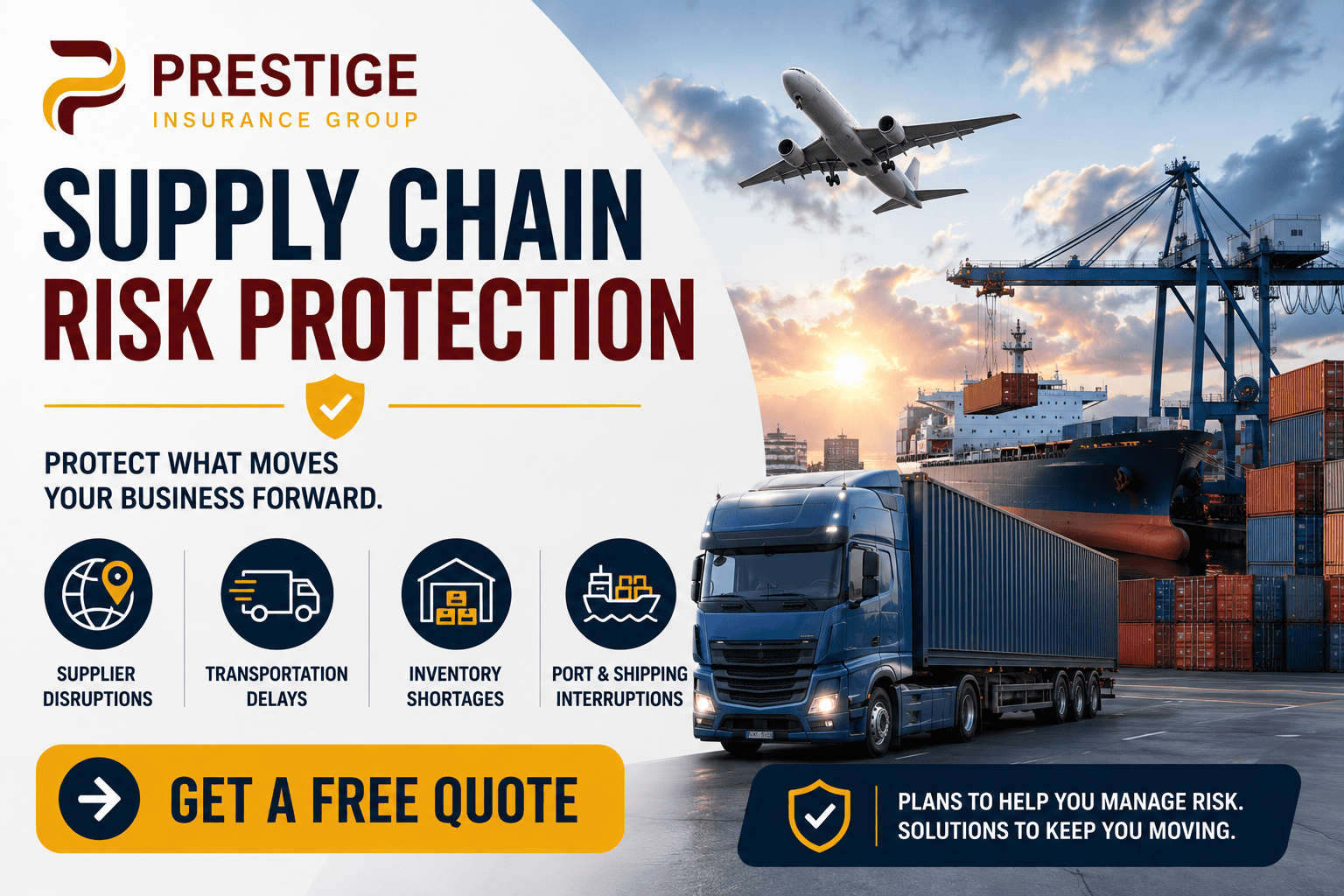
Modern distributors depend on complex supply chains that connect manufacturers, warehouses, transportation providers, ports, suppliers, and customers. While these systems help businesses move products efficiently, they also create vulnerabilities. A disruption anywhere in the supply chain can affect inventory availability, customer service, revenue, and business growth.
For Florida wholesalers and distributors, supply chain risk management has become increasingly important due to hurricanes, transportation challenges, labor shortages, cargo theft, and global market disruptions. Understanding these risks can help businesses better prepare for unexpected events and reduce operational interruptions.
What Is Supply Chain Risk?
Supply chain risk refers to any event that disrupts the flow of products from suppliers to customers. Disruptions may occur at manufacturing facilities, distribution centers, ports, warehouses, transportation networks, or supplier locations — even a problem occurring thousands of miles away can affect a Florida distributor’s ability to fulfill orders.
Why Supply Chain Risks Are Increasing
Today’s supply chains are more interconnected than ever. Many distributors rely on international suppliers, overseas manufacturers, multiple transportation providers, and just-in-time inventory systems. While efficient, these systems often leave little room for disruption, and recent years have repeatedly shown how quickly supply chains can be affected by unexpected challenges.
Common Supply Chain Risks for Florida Distributors
Hurricane disruptions can impact warehouses, ports, transportation routes, and supplier facilities all at once — a major storm can create delays lasting weeks or months, which is exactly why Florida distributors frequently prepare for hurricane-related interruptions before storm season begins rather than reacting after the fact.
Port delays affect the many distributors relying on imported products. Port disruptions can result from severe weather, labor shortages, equipment failures, and congestion, and when shipments are delayed, inventory shortages often follow directly.
Transportation interruptions stem from driver shortages, vehicle breakdowns, fuel issues, highway closures, and accidents — all of which can affect delivery schedules and customer satisfaction simultaneously.
Labor shortages remain a challenge throughout many industries, affecting warehouses, manufacturers, transportation providers, and ports alike, with reduced labor availability often slowing product movement across the entire chain.
Cargo theft remains a significant concern for Florida distributors, with theft-related disruptions involving lost inventory, delayed shipments, customer dissatisfaction, and financial losses. Businesses often review our Cargo Theft Insurance for Florida Distributors guide to better understand this specific exposure.
Inventory Shortages and Customer Impact
Supply chain disruptions often create inventory shortages, with potential consequences including delayed orders, lost customers, contract penalties, and revenue declines. Businesses that depend heavily on a limited number of suppliers may face greater challenges during shortages than those with more diversified sourcing.
Real Supply Chain Disruption Examples
An international manufacturing delay can occur when a distributor relies on products manufactured overseas, production issues delay shipments for several months, and customer orders begin accumulating while inventory levels decline. A hurricane port closure happens when a major storm temporarily closes a Florida port, delaying inbound shipments and creating shortages across multiple product lines. A transportation breakdown occurs when a provider experiences operational disruptions, leaving products in transit longer than expected and delaying customer deliveries. A vendor shutdown can happen when a key supplier temporarily ceases operations following property damage, forcing the distributor to quickly identify alternative product sources.
How Distributors Can Reduce Supply Chain Risk
Insurance is only one part of a genuine risk management strategy. Diversifying suppliers — avoiding reliance on a single source whenever possible — gives businesses real flexibility during disruptions. Maintaining inventory buffers for critical products may help absorb temporary supply interruptions without an immediate customer impact. Building strong vendor relationships often improves visibility into potential disruptions before they fully materialize. Monitoring supply chain data through technology can help identify shipment delays, inventory shortages, and transportation issues before they become major problems. And developing contingency plans for supplier failures, transportation disruptions, inventory shortages, and natural disasters means the business is executing an established plan rather than improvising one under pressure.
Insurance Considerations for Supply Chain Risk
Not all supply chain disruptions are insurable, but certain insurance policies may help address related losses. Commercial Property Insurance helps protect warehouses, inventory, and equipment. Business Interruption Insurance may help replace lost income following certain covered property losses. Commercial Flood Insurance is important for Florida warehouses and distribution facilities specifically. Warehousing and Logistics Insurance protects inventory storage and warehouse operations. And Business Auto Insurance is important for distributors operating delivery vehicles as part of their supply chain.
Florida-Specific Supply Chain Challenges
Florida distributors often face additional concerns beyond what businesses in other states encounter. Weather events — hurricanes, tropical storms, and flooding — can affect transportation and inventory movement directly. Florida’s economy also depends heavily on imported goods, meaning international disruptions can quickly affect product availability statewide. Rapid population growth increases demand for products while creating additional pressure on already-stretched supply networks.
Distribution concentration compounds this risk further — major logistics hubs in Miami, Doral, Medley, Tampa, Orlando, and Jacksonville handle genuinely significant shipment volume, with MIA cargo shipments alone rising 13.6% in 2025 to a record 3.5 million tons. Localized disruptions in these concentrated hubs can affect multiple businesses simultaneously given how much volume flows through a small number of critical points.
Frequently Asked Questions
What is the biggest supply chain risk for distributors? The answer varies, but common concerns include hurricanes, transportation delays, labor shortages, and supplier disruptions.
Can insurance prevent supply chain disruptions? No. Insurance helps manage certain financial consequences but does not prevent disruptions from occurring in the first place.
Should distributors rely on one supplier? Many businesses reduce risk by maintaining relationships with multiple suppliers rather than depending on a single source.
How do hurricanes affect supply chains? Storms can damage facilities, close ports, disrupt transportation routes, and delay shipments — often for weeks after the storm itself has passed.
Why are supply chain disruptions becoming more common? Global sourcing, transportation challenges, labor shortages, and weather-related events have all increased supply chain complexity together.
Building a More Resilient Distribution Business
Supply chain disruptions are likely to remain a long-term challenge for wholesalers and distributors. Businesses that prepare in advance often recover faster, maintain customer relationships more effectively, and reduce financial losses when disruptions occur.
Prestige Insurance Group helps Florida distributors evaluate insurance solutions designed to address warehouse risks, inventory protection, transportation exposures, business interruption concerns, and broader operational challenges.
Contact Prestige Insurance Group today to discuss insurance options for your distribution business:
Miami: 305-969-8776 Orlando: 407-993-2331 Stuart: 561-983-4333
Se Habla Español.