


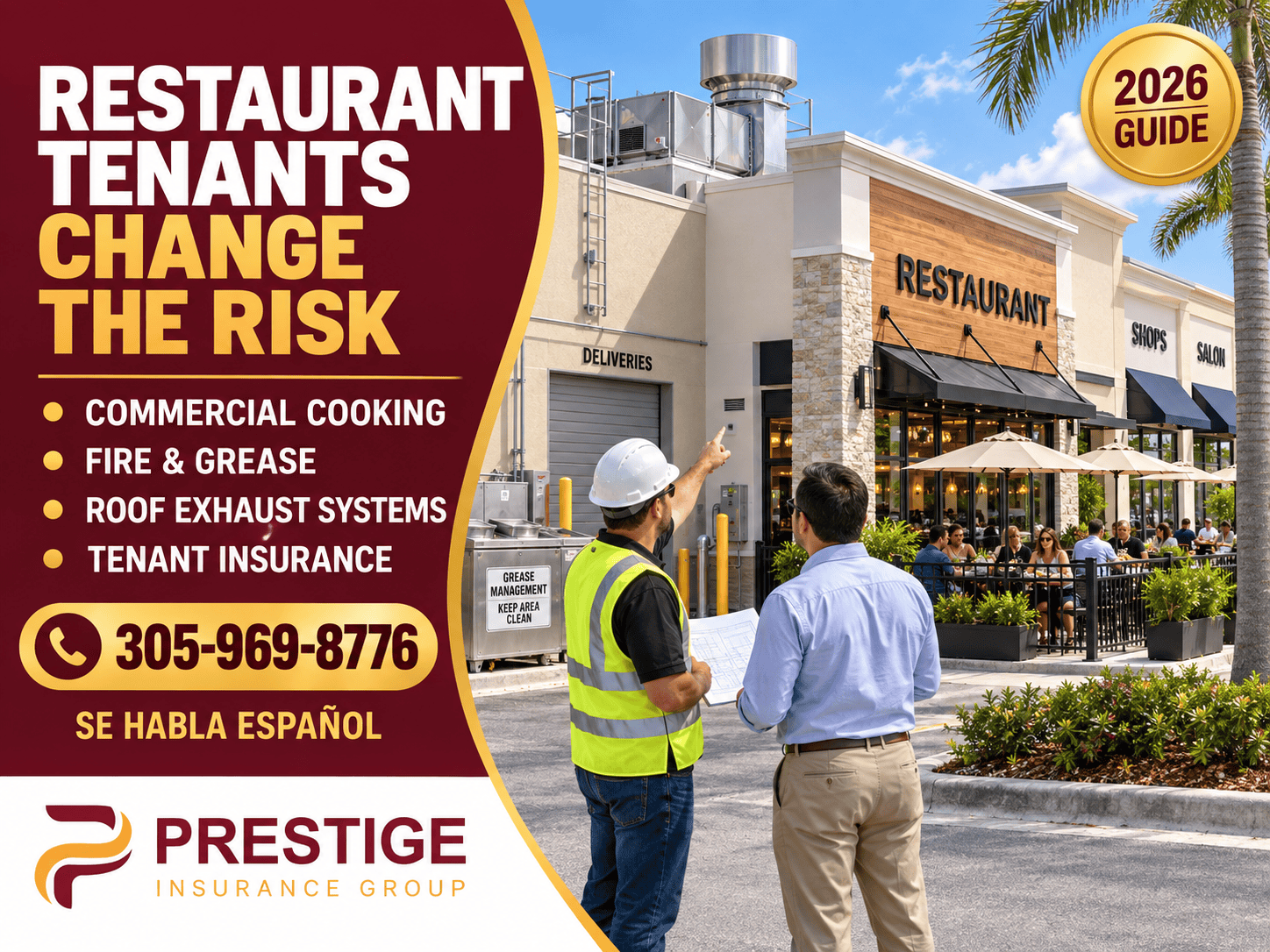
A plaza owner in Doral signs a restaurant to a ten-year lease on a unit that has been dark for a year. The rent is the best on the property and the concept will bring traffic in the evenings, when the rest of the center is closed. The build-out takes five months. When it is finished, the owner’s building has a new hood and exhaust system through the roof, two rooftop units he did not have before, upgraded electrical service, a gas line, floor drains, and a grease interceptor. He approved a tenant. He also changed his building, and he did it without ever asking what any of it would mean at renewal.
Restaurants are frequently the best tenants in a Florida shopping center. They draw traffic that e-commerce cannot take away, they fill evenings and weekends, and they make a center a destination. They also change the property itself in ways that outlast the lease.
The Build-Out Is the Part That Stays
Turning ordinary retail space into a restaurant means new plumbing, electrical capacity, gas service, floor drains, kitchen ventilation, fire suppression, and equipment on the roof. Some of that stays with the building when the restaurant leaves. Some of it belongs to the tenant. Which is which is a lease question, and it is the question that decides who rebuilds what after a fire and who removes what at the end of the term.
Three things should be settled before construction begins rather than after. Who owns each category of improvement, who insures it, and who is responsible for removing it and restoring the space when the tenant vacates. That last one is where owners get hurt: a landlord who inherits a hood system, abandoned roof penetrations, a gas line, and a grease interceptor has inherited maintenance obligations and a unit that is now difficult to lease to anyone but another restaurant.
It is also worth controlling the construction itself. Plans that involve roof penetrations, electrical upgrades, gas lines, and grease infrastructure deserve review before work starts, and the contractors doing that work should carry their own insurance naming both the tenant and the landlord.
Fire Does Not Stay in the Unit
Commercial cooking combines open flame, high heat, oil, and grease, and it runs for hours every day. The fire risk that matters to a landlord is not the fryer. It is the grease that accumulates inside the hood, the duct, and the rooftop fan, which turns a contained equipment fire into a fire traveling through the building’s ventilation.
In a strip center with shared walls and a continuous roof, that becomes everyone’s loss. The building is damaged, smoke reaches neighboring units, firefighting water damages more, and tenants who never burned still cannot open. The landlord’s property limit has to contemplate the whole building rather than the unit where it started, and the rent from every closed unit stops at the same time.
That makes hood and duct cleaning a landlord issue even though it is a tenant obligation. The lease should assign it clearly, specify a frequency, and require the tenant to provide service records. An owner who collects those records has a maintained property and evidence. An owner who assumes it is being done has neither.
The Roof Is Where the Restaurant Meets Your Building
Restaurant ventilation and HVAC equipment sit on the landlord’s roof and pass through the landlord’s roof assembly. Penetrations need proper flashing. Rooftop fans need servicing. Grease discharge around the equipment affects the roof surface around it.
The expensive version of this problem arrives at roof replacement, when a contractor has to work around, disconnect, raise, and reinstall multiple tenants’ rooftop equipment. If the lease never addressed who pays for that, it becomes a negotiation at the worst possible moment. Our article on roof insurance problems for retail plazas covers why roof condition drives so much of a center’s underwriting.
Water Damage Is the Quieter Version of the Same Problem
A restaurant uses far more water than the tenant it replaced. Commercial sinks, dishwashers, ice machines, refrigeration, floor drains, and restrooms all run constantly, often on plumbing that was designed for a retail store.
Water moves the same way fire does. A supply line that fails on a Saturday night sends water into neighboring units, walls, and flooring, and nobody finds it until Monday. Grease that reaches shared plumbing creates blockages and backups that affect tenants who have nothing to do with the restaurant. Before approving a restaurant conversion in an older center, it is worth knowing whether the building’s plumbing can carry the load rather than assuming that water service is water service.
Alcohol, Hours, and What the Business Becomes
A restaurant serving wine with dinner and a restaurant with a full bar, a DJ, and a two in the morning closing time are different properties from an insurance standpoint. Late hours bring parking demand when other tenants are closed, security questions, noise, and the assault and battery exposure that drives the severity of a negligent security claim.
The more important point is that the second business often started as the first. Concepts evolve, ownership changes, and a lease assignment can put a very different operator in the same space under the same name. The lease should define what is permitted, require landlord approval for material changes in operation, and the landlord should notice when the character of the tenant changes rather than learning it from a complaint.
Any tenant serving alcohol should be required to carry liquor liability specifically, because general liability excludes it for businesses in the alcohol business.
What the Lease Should Require From a Restaurant Tenant
Restaurant tenants should not carry the same insurance requirements as an accountant. At minimum the lease should require general liability at a limit sized to the operation, liquor liability where alcohol is served, property coverage on the tenant’s own contents and improvements, workers’ compensation, and the landlord named as an additional insured by endorsement, with primary and non-contributory wording and a waiver of subrogation.
Beyond insurance, the lease should assign hood and duct cleaning with a stated frequency and a requirement to produce records, grease trap maintenance and documentation, fire suppression system inspection, responsibility for rooftop equipment, and pest control and waste handling around shared dumpster areas.
Certificates need to be tracked by expiration date rather than collected once at signing. Our strip mall and retail plaza insurance page covers the full set of tenant requirements, and our article on liability insurance for shopping centers explains why an additional insured tender fails when the endorsement is wrong.
What Restaurants Do to Your Own Program
Restaurant occupancy affects the landlord’s insurance in three places.
Property. Cooking operations change the fire profile of the building, and carriers price the center accordingly. Some markets limit how many cooking tenants they will accept in one center.
Loss of rents. A restaurant fire can close multiple units for months, so the limit and the restoration period need to reflect a whole-building loss rather than one unit.
Availability. The tenant mix decides which carriers will look at the property at all, and a center with several full commercial kitchens has a shorter list than one with offices. Our article on lessor’s risk and tenant mix covers how that works.
When the mix changes, whether a restaurant arrives or leaves, the agent should know. A program written for a center of offices and shops is not the program for a center with three kitchens.
Parking, Delivery, and Outdoor Seating
A successful restaurant generates more parking demand than the square footage suggests, and delivery drivers add a second pattern of traffic that stops near entrances and fire lanes. Designated pickup areas solve more of this than most owners expect.
Outdoor seating extends the tenant into the common area, which is the landlord’s liability space. The agreement should define exactly what area the restaurant may use, who maintains it, and who is responsible for clearing and securing furniture when a storm is coming.
When the Restaurant Leaves
A closed restaurant is not an ordinary vacant unit. Equipment may remain, refrigeration is disconnected, plumbing sits unused, and grease and exhaust systems need attention. The vacancy provision in the property policy is still running, and a unit nobody enters is where undetected water damage and deterioration happen.
The next tenant determines the work. Another restaurant may want the bar moved, different exhaust, or new gas service, which starts the construction cycle over. A non-restaurant tenant means removing specialized improvements. Either way, the lease’s surrender provisions decide who pays.
Worth Confirming Before You Sign a Restaurant Tenant
-
The lease defines who owns, insures, maintains, and removes each category of improvement
-
Construction plans involving the roof, electrical, gas, and grease systems are reviewed before work begins
-
Build-out contractors carry insurance naming you and the tenant
-
Hood and duct cleaning is assigned, with a frequency and a requirement to produce records
-
Grease trap and fire suppression maintenance and documentation are assigned
-
Rooftop equipment responsibility is addressed, including at roof replacement
-
The building’s plumbing and electrical capacity were evaluated before the conversion
-
Liquor liability is required from any tenant serving alcohol
-
The lease defines permitted operations and requires approval for material changes
-
The landlord is an additional insured by endorsement, with primary and non-contributory wording and a waiver of subrogation
-
Outdoor seating areas are defined, with maintenance and storm procedures assigned
-
Your own property limit and loss of rents reflect a whole-building loss
-
Your agent knows when a restaurant joins or leaves the center
To review how a restaurant tenant affects your shopping center’s coverage, before the lease is signed or after the mix has changed, contact Prestige Insurance Group:
Miami 305-969-8776 · Orlando 407-993-2331 · Stuart 772-247-3788
Se Habla Español.
This article is for general informational purposes only and is not legal advice. Lease provisions, policy forms, and carrier guidelines vary; have leases reviewed by a qualified attorney and refer to your policy for the terms that apply to your property. Prestige Insurance Group, Florida agency license L057894.