


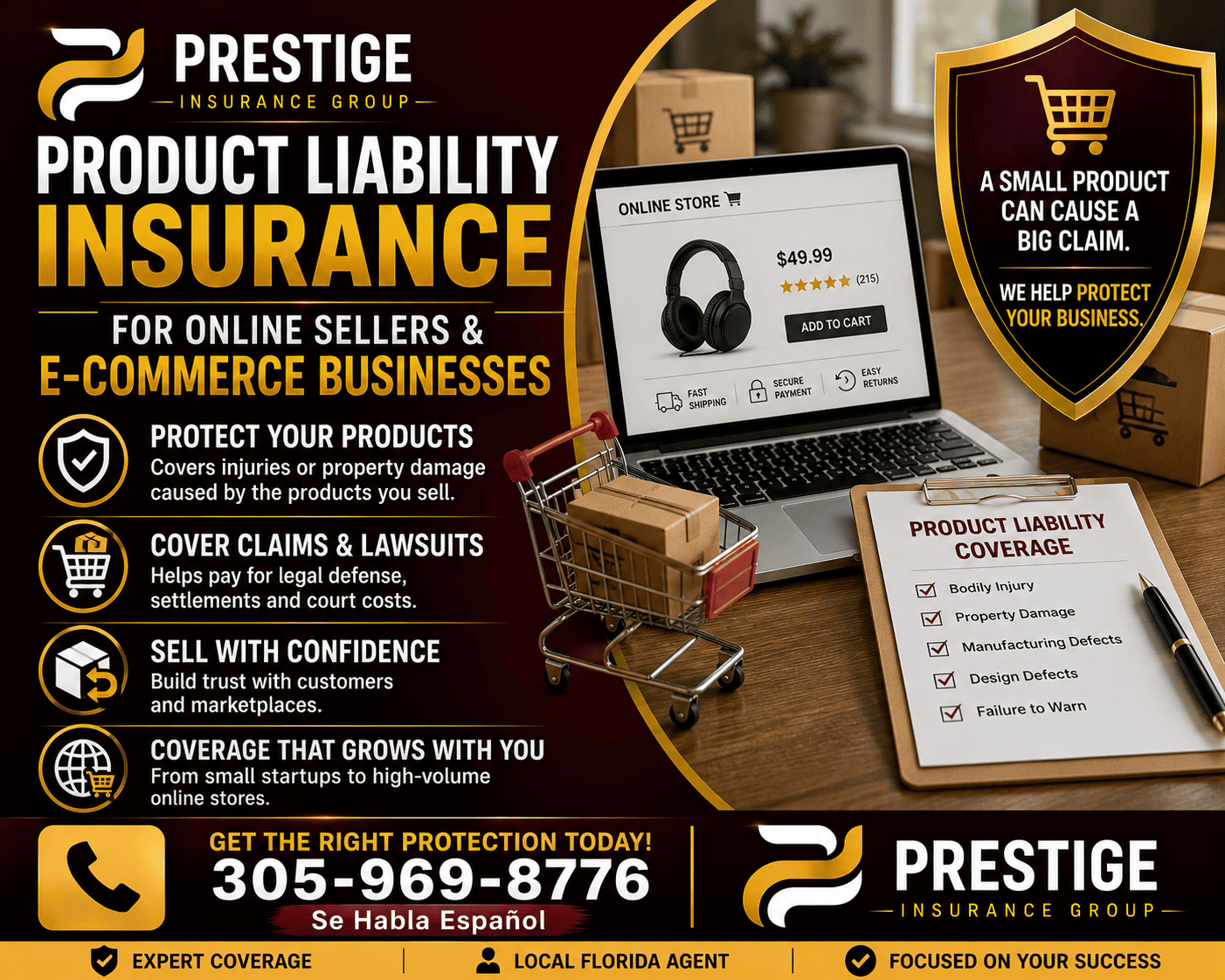
Product Liability Insurance for Online Sellers and E-Commerce Businesses
Amazon doesn’t leave this to chance. If a third-party seller’s monthly sales exceed $10,000, Amazon contractually requires that seller to carry product liability insurance with a minimum of $1 million per occurrence and $1 million aggregate, with Amazon itself named as an additional insured on the policy. This isn’t a suggestion — it’s a platform requirement enforced through the seller agreement.
Here’s the genuinely important insight most online sellers miss: Etsy, eBay, and Shopify impose no such requirement at all. And yet a seller’s actual legal liability for a defective product is exactly the same regardless of which platform the sale happened on. As one industry source put it directly: Amazon makes you get covered before something goes wrong. Shopify lets you find out after. The platform’s insurance requirement — or lack of one — has nothing to do with your real legal exposure. It’s simply a proof-of-coverage checkpoint some platforms enforce and others don’t.
At Prestige Insurance Group, we help Florida online sellers understand this distinction and get coverage that reflects their real risk, not just what a particular platform happens to require. Learn more about our E-Commerce Insurance and Business Owners Insurance solutions.
Why Product Liability Follows the Product, Not the Platform
Under strict liability principles, every entity in the supply chain — manufacturer, importer, distributor, and seller — can potentially be held responsible for a defective product, regardless of where the actual sale took place. Where the product was sold simply doesn’t come up in a product liability complaint. A customer injured by a defective product doesn’t care, and the law doesn’t care, whether that product was purchased through Amazon, a Shopify storefront, an Etsy shop, or a direct sale — the seller’s exposure exists independent of the platform entirely.
Amazon’s Specific Requirements
Amazon requires third-party sellers to carry product liability insurance once monthly sales exceed $10,000, with coverage of at least $1 million per occurrence and $1 million aggregate, covering both bodily injury and property damage claims. Sellers must also name Amazon as an additional insured on the policy, extending certain protections to the marketplace itself in case Amazon is named alongside the seller in a lawsuit. For sellers in genuinely higher-risk product categories — baby products, for example — carrying coverage even below the $10,000 threshold is worth serious consideration, given the inherent risk those categories carry regardless of sales volume.
How Other Major Platforms Compare
Walmart requires product liability insurance at a $100,000 gross merchandise value threshold over a 12-month period — a different trigger point than Amazon’s monthly sales figure, worth understanding directly if you sell across multiple marketplaces. TikTok Shop has reportedly been moving toward similar requirements as the platform matures. Etsy, eBay, and Shopify currently impose no contractual insurance mandate at all — which does not mean sellers on those platforms carry less actual risk, only that no one is checking before a claim happens.
Why Dropshippers Are Not Exempt From This Exposure
This is genuinely important for anyone running a dropshipping business specifically: even sellers who never hold inventory, never see the physical product, and never fulfill their own orders can still be named in a product liability lawsuit. The seller is still the party the customer transacted with, and strict liability principles extend to businesses throughout the supply chain regardless of how directly involved they were in production or fulfillment. Dropshipping doesn’t create a liability shield — if anything, it can create additional complexity, since a dropshipper often has less direct knowledge of or control over the product’s actual manufacturing quality than a seller who handles their own inventory.
Private-Label E-Commerce Sellers Face a Related, Distinct Exposure
Many e-commerce sellers operate private-label businesses — sourcing products from overseas manufacturers, then selling them under their own brand name without ever operating a factory themselves. This connects directly to a real legal doctrine worth understanding: under the “apparent manufacturer doctrine,” a business that puts its own name or label on a product manufactured by someone else can be held to the same legal standard as if it had manufactured the product itself. For online private-label sellers, this means the liability exposure closely resembles a traditional manufacturer’s, not a simple retailer’s. See our full guide on when importers and sellers are legally considered manufacturers for the complete legal framework.
Real Cost Range for Product Liability Claims
Product liability lawsuits can range from roughly $10,000 for smaller, more contained claims to several million dollars for serious injury cases — a genuinely wide range that depends heavily on the severity of the injury or damage involved, not just the size of the selling business. A small e-commerce operation can face the same catastrophic-end liability exposure as a much larger company if a single product causes a serious injury.
Why a Certificate of Insurance Matters Beyond Just Meeting Platform Requirements
Marketplaces increasingly request a Certificate of Insurance (COI) as proof that a seller actually maintains required coverage — Amazon typically requires this within 30 days of crossing the $10,000 monthly sales threshold, and Walmart requests it above the $100,000 GMV mark. Beyond simply satisfying a platform’s compliance check, an active, current COI genuinely protects the seller’s own business, since it confirms real coverage is in place before a claim ever tests it.
What Product Liability Insurance Typically Covers for Online Sellers
Property damage coverage helps pay for repair or replacement if a product a seller sold causes damage to a customer’s home, vehicle, or other belongings.
Medical expenses coverage helps address costs if a product causes bodily injury or illness, including treatment, hospital stays, and rehabilitation.
Legal defense costs help cover attorney fees, court costs, and potential settlement or judgment amounts arising from a customer lawsuit — often the single largest expense in a product liability claim, regardless of how the case ultimately resolves.
Building Coverage Around What You Actually Sell
Coverage needs vary significantly by product category and sales model. A seller of low-risk items (books, basic apparel, home décor) faces a genuinely different risk profile than a seller of higher-risk categories like electronics, supplements, children’s products, or anything involving batteries or chemicals. Reviewing your specific product categories with an insurance professional, rather than assuming a generic policy covers your specific risk, matters directly given how much product liability exposure can vary within e-commerce alone.
Frequently Asked Questions
Does every online seller need product liability insurance? Amazon and Walmart contractually require it above certain sales thresholds, but the underlying legal exposure exists for every seller regardless of platform — Etsy, eBay, and Shopify sellers carry the same real risk without a platform mandate forcing the issue.
Am I exempt from product liability if I dropship and never touch the product? No. Dropshippers can still be named in product liability lawsuits as the party the customer transacted with, regardless of fulfillment method.
What’s the minimum coverage Amazon requires? $1 million per occurrence and $1 million aggregate, with Amazon named as an additional insured, once monthly sales exceed $10,000.
Do private-label sellers face different liability than resellers? Yes — private-label sellers who put their own brand on a product manufactured by someone else can be held to manufacturer-level liability standards under the apparent manufacturer doctrine.
Is a Certificate of Insurance just paperwork for the platform? It also serves the seller’s own interest, confirming that real, active coverage exists before a claim tests whether it’s actually there.
Protecting Your E-Commerce Business Regardless of Platform
Product liability exposure exists for every online seller, whether or not the platform they sell through happens to require proof of it. Understanding this distinction — and building coverage around actual risk rather than the bare minimum a particular marketplace enforces — is genuinely important for any Florida e-commerce business selling physical products.
Prestige Insurance Group helps Florida online sellers evaluate product liability coverage designed around what they actually sell, not just what a platform happens to check for.
Contact Prestige Insurance Group today to discuss product liability insurance for your e-commerce business:
Miami: 305-969-8776 Orlando: 407-993-2331 Stuart: 561-983-4333
Se Habla Español.