A fence contractor in Cape Coral gets a call from a homeowner who just bought a canal-front house with an in-ground pool and a young grandchild who visits on weekends. The existing fence is rotted in places and the gate no longer latches. The homeowner wants something that looks good from the water, keeps the dog in and satisfies the inspector, and asks whether the gate really needs to swing out and close on its own. The contractor knows the job is only a few days of work. The contractor also knows it is the kind of job that, if something goes wrong years from now, puts the company’s name in the most serious claim residential work produces.
Pool barrier fencing is life-safety work, not just a property line. The rules are specific, the owner’s choices matter, and the contractor’s records are what separate a defensible job from a difficult one. Insurance for this work has to account for completed operations exposure that can last long after the crew leaves.
What Florida’s barrier rules cover
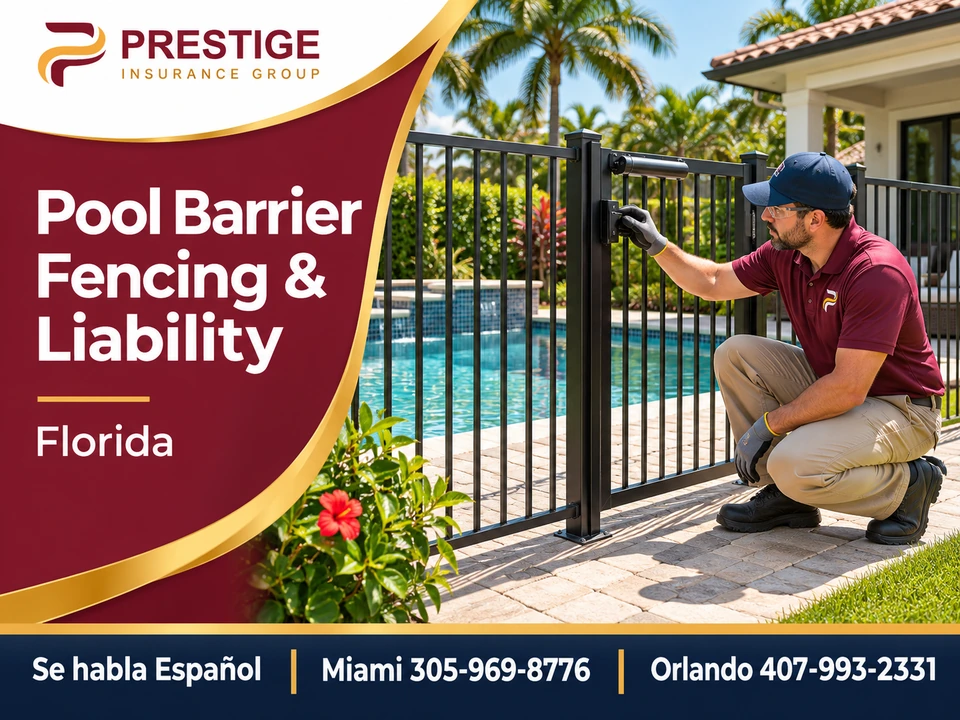
Florida regulates barriers around residential swimming pools, and local building departments enforce them through permits and inspections. The rules address the height of the barrier, how close openings and gaps can be, what can be used to climb it, and where it sits in relation to the pool and the house. They also address gates: pool barrier gates generally must open outward away from the pool, close on their own and latch on their own, with the latch release placed high enough or positioned so a small child cannot reach it. Doors and windows that open directly onto the pool area, and screen enclosures that serve as part of the barrier, have their own requirements.
Those details change with code updates and can vary with local amendments, so confirm the current requirements with the local building department before quoting and again before installing. Quoting from memory or from the last job is a risk the policy may not fix.
Why these claims are so serious
When a child is hurt or dies in a residential pool, the investigation looks at every layer that was supposed to keep the child out, and the barrier is usually the first. If the fence was too low, a gap was too wide, a latch was within reach or the gate did not close on its own, the contractor who installed or last repaired it becomes part of the claim. These are among the most severe claims in residential construction.
That severity is why limits for barrier work should not be set at the minimum a homeowner or a contract mentions, and why a commercial umbrella is worth carrying for contractors who do this work regularly. The exposure on a small backyard job can be as large as on a community pool.
Document what you installed and what the owner chose
Owners often want changes that affect compliance: a gate that swings in because it fits the yard better, a latch moved lower for convenience, a section left open for a boat lift or dock access, a decorative style with wider spacing. Some requests can be accommodated within the rules and some cannot. Either way, the contractor’s protection is a clear written record.
Before work starts, the agreement should describe the barrier to be installed and state that it is intended to meet the current barrier requirements. When the job is done, photographs of the gate, latch height, hardware and spacing, along with the final inspection, belong in the job file. If the owner declined something you recommended, such as an alarm, a different latch or closing a gap, have the owner sign an acknowledgment. If a request would make the barrier noncompliant, the safest answer is not to do it.
Gates and hardware are where barriers fail
Most barrier failures are not in the fence panels. They are in the gate. Self-closing hinges lose tension, latches drift out of alignment as posts settle, and owners prop gates open or replace hardware with something cheaper. Florida’s heat, humidity and salt air near the coast speed all of that up.
Use hardware rated for pool barrier use and for the environment, set posts so the gate stays aligned, and test closing and latching from several positions before leaving the job. Give the owner simple written instructions on checking the gate and what to do if it stops closing or latching. If you are called back to adjust or repair a barrier gate, treat it like a new job: record what you found, what you fixed and what still needs attention, because the repair visit makes you responsible for the gate’s condition when you leave.
Permits, inspections and screen enclosures
Pool barrier work usually requires a permit and an inspection, and a passed inspection is valuable evidence that the barrier met requirements when it was built. Skipping the permit to save the owner time or money removes that evidence and can cause problems with the claim.
Barrier jobs often involve other trades. A screen enclosure may serve as part of the barrier, an existing house wall may form one side, and a pool contractor may be finishing work at the same time. Know who is responsible for which part of the barrier, put it in writing, and collect certificates from any subcontractor before they start. Our pool contractor insurance page covers the exposure on the pool side of the same project.
Community pools for associations
HOAs and condominium associations hire fence contractors to replace or repair the barriers around community pools, often while the pool stays open. Those jobs combine the barrier exposure with the usual community work concerns: residents and children around open post holes, a temporary gap in the barrier while panels are replaced, and contracts that require additional insured status for ongoing and completed operations, waiver of subrogation and high limits.
Plan the work so the pool is closed or the barrier is never left open, and agree on that schedule with the property manager in writing. Our article on fence and gate contractors working for Florida HOAs covers what boards and managers usually require.
Completed operations and how long the risk lasts
Barrier claims almost always come after the job is finished, which makes completed operations coverage the center of the program for this work. Completed operations responds to bodily injury and property damage caused by finished work. Florida’s statute of repose for construction, shortened in 2023, generally limits how long claims can be brought after a project is completed, but that period still runs for years. Keep job files, photos, inspection results and signed acknowledgments for at least that long, and keep your completed operations limit in line with the barrier work you do.
Worth confirming on your policy
-
Whether pool barrier installation and repair are included in your described operations
-
Whether your completed operations limit fits the years barrier claims can surface
-
Whether your umbrella sits above general liability for this work
-
Whether you confirm current barrier requirements with the building department on every job
-
Whether every barrier job has a permit, a passed inspection and photos in the file
-
Whether owners sign an acknowledgment when they decline a recommendation
-
Whether gate repair visits produce a written report of conditions and work done
-
Whether certificates for community pool work carry the endorsements associations require
For more, see our fence and gate contractor insurance page, our contractor insurance page, and our articles on what your contract requires from your insurance policy, what contractor insurance does not cover in Florida and HOA vendor insurance requirements.
Talk to us
Prestige Insurance Group works with fence contractors across Florida that install and repair pool barriers for homeowners, builders of pool additions and community associations. We review your contracts and certificate requests against the policy, make sure barrier work is part of your described operations, compare options across the many carriers and specialty markets we work with, and set completed operations and umbrella limits that fit the work before the next job starts.
Call the office nearest you. Se habla español.
-
Miami: 305-969-8776
-
Orlando: 407-993-2331
-
Stuart: 772-247-3788
This article is general information, not legal advice. Coverage forms, contract terms and carrier appetite vary and change over time. Prestige Insurance Group, Florida agency license L057894.