

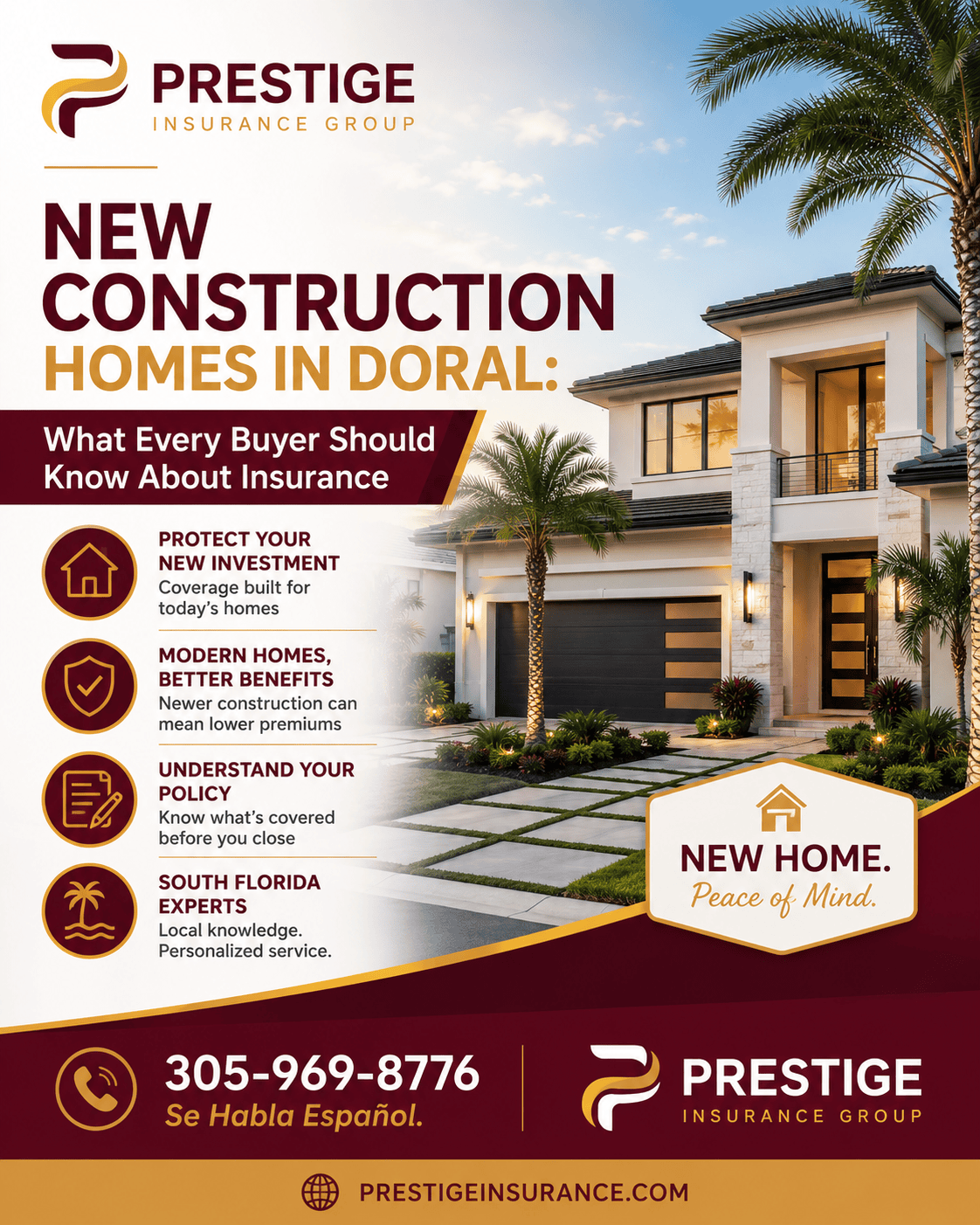
Buying A New Home In Doral Is Exciting, But Insurance Deserves Equal Attention
Over the past decade, Doral has become one of the most desirable places to live in South Florida. Once known primarily for its warehouses and business parks, the city has transformed into a thriving residential community with modern neighborhoods, luxury condominiums, townhome developments, excellent schools, parks, restaurants, and one of the strongest local economies in Miami-Dade County. Thousands of families relocating from other parts of Florida, other states, and countries throughout Latin America have chosen Doral because it offers newer construction, a strong sense of community, and convenient access to major highways and Miami International Airport.
One of the biggest advantages of purchasing a newer home is that today’s buildings are constructed under significantly stricter standards than homes built several decades ago. Modern engineering, updated building materials, and stronger hurricane-resistant requirements have greatly improved the durability of residential construction throughout South Florida.
However, many buyers mistakenly believe that because a home is brand new, insurance becomes a simple afterthought. In reality, purchasing a newly built home presents its own set of insurance considerations. Understanding how insurers evaluate these properties before closing can help homeowners make informed decisions and avoid unexpected coverage gaps.
Modern Building Codes Have Changed Residential Construction
Florida’s building codes have evolved dramatically over the past several decades, particularly following Hurricane Andrew in 1992. The lessons learned from that devastating storm reshaped how homes are designed and constructed throughout the state. As a result, many of the homes being built in Doral today are substantially stronger than homes constructed before those changes took effect.
Builders now incorporate reinforced roofing systems, stronger roof-to-wall connections, impact-resistant windows and doors, upgraded garage doors, improved waterproofing methods, and enhanced structural engineering. These improvements are intended to reduce wind damage during hurricanes while helping minimize water intrusion and structural failures.
Insurance companies recognize these improvements. Homes that successfully pass a wind mitigation inspection often qualify for premium discounts because the likelihood of severe hurricane damage is generally lower than with older structures. While every insurer evaluates these features differently, modern construction often provides advantages that simply were not available twenty or thirty years ago.
The Purchase Price And Replacement Cost Are Not The Same Thing
One of the most misunderstood aspects of homeowners insurance involves the difference between what someone pays for a home and what it would actually cost to rebuild it after a catastrophic loss.
Many buyers assume their insurance limit should match the purchase price listed on the closing documents. In reality, insurers focus primarily on reconstruction costs rather than market value. Land values, neighborhood demand, school districts, and local real estate appreciation all influence a home’s selling price, but none of those factors determine how much it will cost to rebuild the structure.
Construction costs throughout South Florida continue to fluctuate because of labor shortages, rising material prices, transportation costs, permitting expenses, and demand following major storms. Even a recently completed home may require substantially more money to rebuild than many homeowners expect. Making sure replacement cost estimates remain accurate over time is one of the most important aspects of maintaining adequate homeowners insurance.
Builder Warranties Do Not Replace Homeowners Insurance
Many buyers receive documentation describing the warranties offered by the builder, which often creates confusion about what is actually protected after closing.
Builder warranties generally address defects involving workmanship, certain building components, or structural issues for specified periods established in the purchase agreement. They are designed to address construction-related concerns rather than unexpected losses.
Homeowners insurance serves an entirely different purpose. It protects the financial investment against covered events such as fire, wind damage, theft, vandalism, certain types of water damage, liability claims, and many other unexpected situations that can occur after the buyer takes ownership of the property.
Understanding the distinction between these two forms of protection prevents homeowners from assuming a builder will be responsible for losses that actually require an insurance claim.
Even New Communities Can Experience Flooding
Because many of Doral’s newest neighborhoods include sophisticated drainage systems and modern engineering, buyers sometimes assume flooding is no longer a concern. While these improvements certainly help manage heavy rainfall, they cannot eliminate every flood exposure.
South Florida regularly experiences intense rain events capable of overwhelming drainage systems in a short period of time. Tropical storms, hurricanes, blocked drainage infrastructure, and unusually heavy seasonal rainfall can all create flooding conditions, even in neighborhoods that have never experienced significant flood damage before.
An equally important consideration is that standard homeowners insurance policies generally do not cover flood damage. Whether a home is located inside or outside a designated flood zone, buyers should carefully evaluate whether separate flood insurance makes sense based on the property’s location, elevation, and individual risk factors.
Homeowners Associations Create Shared Responsibilities
Many of Doral’s residential developments include homeowners associations that maintain common areas, recreational facilities, security features, landscaping, and neighborhood amenities. While these associations provide significant value, they can also create misunderstandings regarding insurance responsibilities.
Association insurance generally protects common elements owned collectively by the community, while individual homeowners remain responsible for protecting their residence, personal belongings, liability exposure, and, in many cases, certain portions of the building itself depending on the governing documents.
Before closing, buyers should review both the association’s master policy and the association bylaws so they clearly understand where the HOA’s responsibility ends and their personal insurance begins. This simple step can eliminate confusion should a loss ever occur.
Your Personal Property Usually Represents A Much Larger Investment Than You Think
Moving into a new home often means purchasing new furniture, upgraded appliances, electronics, artwork, home office equipment, designer clothing, and other personal belongings. Individually these purchases may seem manageable, but collectively they often represent hundreds of thousands of dollars in property.
Many homeowners underestimate the total value of everything they own until they attempt to create a detailed inventory after a loss. Taking photographs, maintaining receipts for major purchases, and periodically reviewing coverage limits can help ensure adequate protection as personal belongings accumulate over time.
High-value jewelry, collectibles, firearms, fine art, watches, and other specialty items may also require separate scheduling or additional endorsements depending on the policy.
Local Experience Can Make A Significant Difference
Doral’s housing market continues to evolve rapidly. New communities are constantly being developed, construction methods continue to improve, and insurance companies frequently adjust their underwriting guidelines based on changing market conditions and catastrophe exposure.
An agency familiar with South Florida’s insurance marketplace can often identify available discounts, explain differences between policy forms, and help buyers understand how local construction characteristics influence coverage options. This becomes particularly valuable for first-time buyers, families relocating from other states, and international purchasers who may not be familiar with Florida’s unique insurance environment.
Buying a newly constructed home is one of the largest financial decisions most families will ever make. Taking the time to understand how homeowners insurance fits into that investment provides valuable peace of mind long after the closing documents have been signed.
If you’re purchasing a home in Doral or anywhere in Miami-Dade County, Prestige Insurance Group can help you compare homeowners insurance options from multiple carriers and explain the differences between available coverages so you can choose protection that fits both your home and your budget.
Learn more about our homeowners insurance solutions:
https://www.prestigeinsurance.com/personal-insurance/homeowners-insurance/
Explore our South Florida insurance resources:
https://www.prestigeinsurance.com/south-florida-insurance/
For personalized assistance, call 305-969-8776. Se Habla Español.