


A wedding venue in Palm City sits on a few acres of oak trees and pasture, with a renovated barn that seats two hundred. The owner does not sell alcohol. He has no liquor license, no bar inventory and no bartenders on staff. Couples bring their own wine and beer or hire a caterer who brings it, and his contract says the client is responsible for beverage service. He assumes that keeps him out of the alcohol conversation entirely.
It does not, and which coverage applies to him is one of the more confusing questions in hospitality insurance. The answer depends less on whether he holds a license and more on how alcohol actually moves through his business.
Two Different Coverages
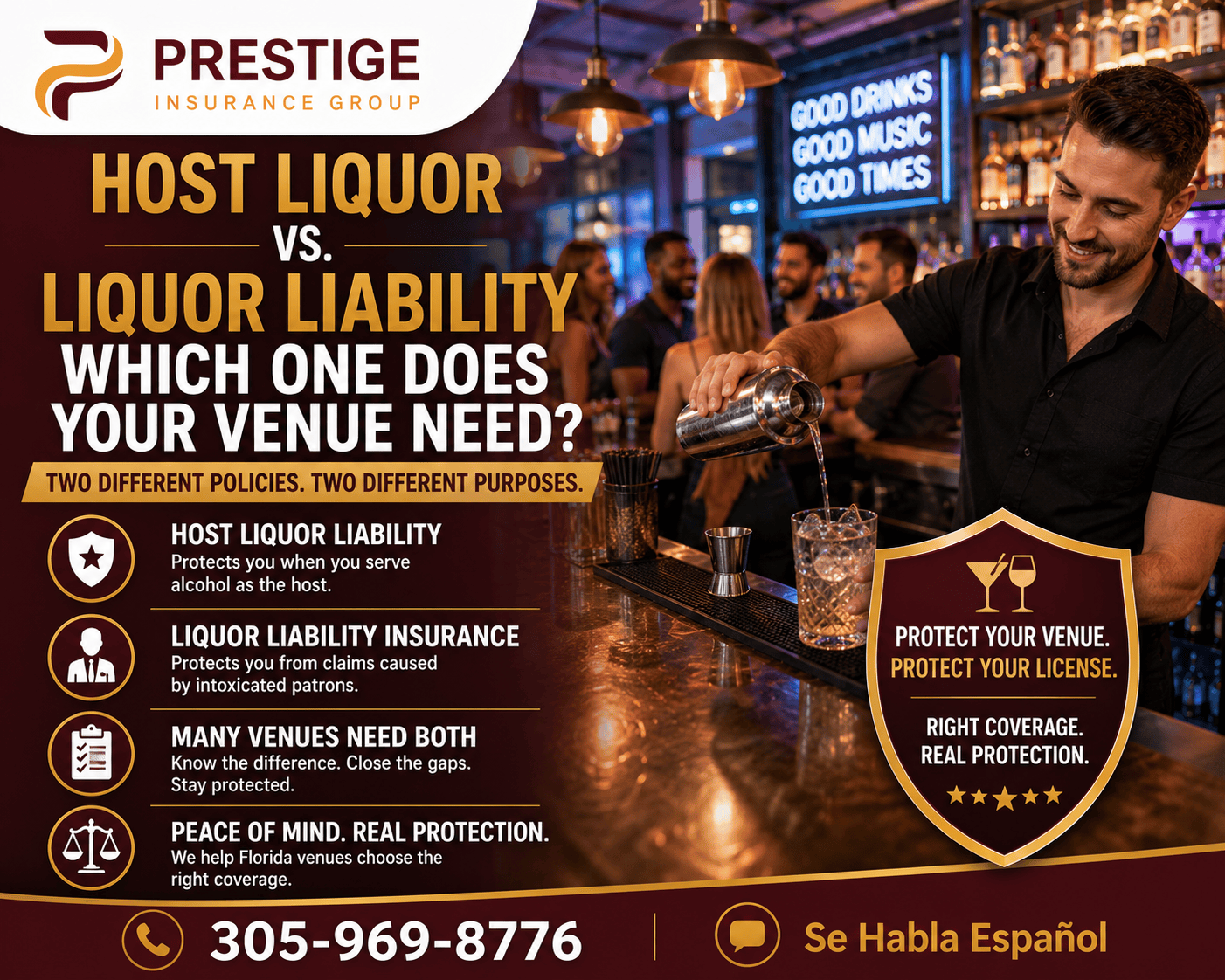
Host liquor liability is meant for businesses that serve or provide alcohol without being in the business of selling it. Think of an office holiday party, a gallery opening with wine, or a car dealership’s customer appreciation event. Because the exposure is incidental, host liquor coverage is often included in a general liability policy.
Liquor liability is meant for businesses that manufacture, distribute, sell, serve or furnish alcohol as part of how they operate. That includes bars, restaurants, caterers, breweries and many event venues. General liability forms usually exclude alcohol-related claims for businesses in that category, which is why a separate liquor liability policy exists. Our article on how much liquor liability insurance costs in Florida explains how that policy is priced.
The dividing line is whether alcohol is part of how the business makes money or delivers its service. That sounds simple until you apply it to a venue.
Why Venues Sit in the Middle
A venue that allows alcohol but does not sell it sits on uncertain ground, and the answer turns on details owners rarely think about. Does the rental price change when alcohol is served? Does the venue require clients to use a specific caterer or bar company from an approved list, and does it receive a fee or commission from those vendors? Does it provide the bar, glassware, ice, coolers or setup? Does its staff ever pour, serve, clear drinks or manage the bar area? Has it ever obtained a temporary permit for an event?
A venue that answers no to all of those may reasonably rely on host liquor. One that answers yes to several is likely in the business of alcohol, whether or not drinks are sold over a counter, and needs a true liquor liability policy. The honest answer comes from someone reading the venue’s contracts and watching how events actually run, not from a general rule.
Bring-Your-Own Does Not Remove the Risk
Bring-your-own arrangements feel like they push responsibility to the guests. In practice, they often remove the controls that protect everyone. Nobody checks identification, nobody watches consumption and nobody has been trained to cut someone off. If an underage guest drinks at an event on the property and later causes an accident, the absence of professional service is not a defense. It becomes part of the plaintiff’s story. Our article on BYOB restaurants and liquor liability covers the same issue from a restaurant’s point of view.
Contracts Do Most of the Work
For a venue that permits alcohol without selling it, the event contract is the main risk management tool. The most effective control is requiring that alcohol be served only by a licensed, insured bar company or caterer. That vendor brings its own liquor liability coverage, trained staff and responsibility for checking IDs.
The contract should require certificates of insurance showing liquor liability and general liability at limits the venue chooses, with the venue named as an additional insured. It should include an indemnity agreement from the vendor and the client, rules on service hours, a requirement to stop service before the event ends, and a right for the venue to shut down service if guests become unsafe. Certificates should be collected and reviewed before every event, not filed after the fact.
Special Event Coverage for Clients
Some venues require clients to buy a one-day special event policy that includes host liquor coverage and names the venue as an additional insured. These policies are inexpensive and easy to purchase, and they add a layer between the venue and a guest’s claim. They do not replace the venue’s own coverage, because claims often name the property owner regardless of who poured.
The Venue’s Own Program
Even with strong contracts, the venue should confirm whether its general liability includes host liquor coverage and whether that coverage fits how events are run. If the venue provides anything that looks like bar service, a standalone liquor liability policy is usually the safer choice. Assault and battery coverage deserves a look, since disputes at weddings and parties do happen, and an umbrella should be checked to see whether it extends over liquor liability.
Worth Confirming With Your Agent
-
Whether your general liability includes host liquor coverage and on what terms
-
Whether your rental pricing, vendor list or staff duties put you in the business of alcohol
-
Whether you need a standalone liquor liability policy
-
What limits and additional insured wording you require from bar vendors and clients
-
Whether assault and battery is covered, sublimited or excluded
-
Whether your umbrella follows over liquor liability
This article is general information and is not legal advice.
Talk to Prestige Insurance Group
Prestige Insurance Group works with wedding and event venues, caterers and restaurants across Florida to sort out host liquor and liquor liability questions. If you are not sure which coverage your venue needs, we can review your contracts and operation and show you where the gaps are.
Call the office nearest you. Se habla español.
Orlando: 407-993-2331
Miami: 305-969-8776
Stuart: 772-247-3788
Prestige Insurance Group, License L057894