


The manager of a sports bar in Pompano Beach gets a call on a Sunday morning. During an undercover compliance check the night before, a newer bartender served a beer to a nineteen-year-old, and there is now an administrative case against the license. The owner’s first worry is the fine. His second, once someone explains it, is a possible suspension, because a bar that cannot sell alcohol for even a few days on a football weekend cannot make payroll.
Florida has a program designed for exactly this situation. Many owners have never heard of it, and many who have misunderstand what it does.
What the Act Is
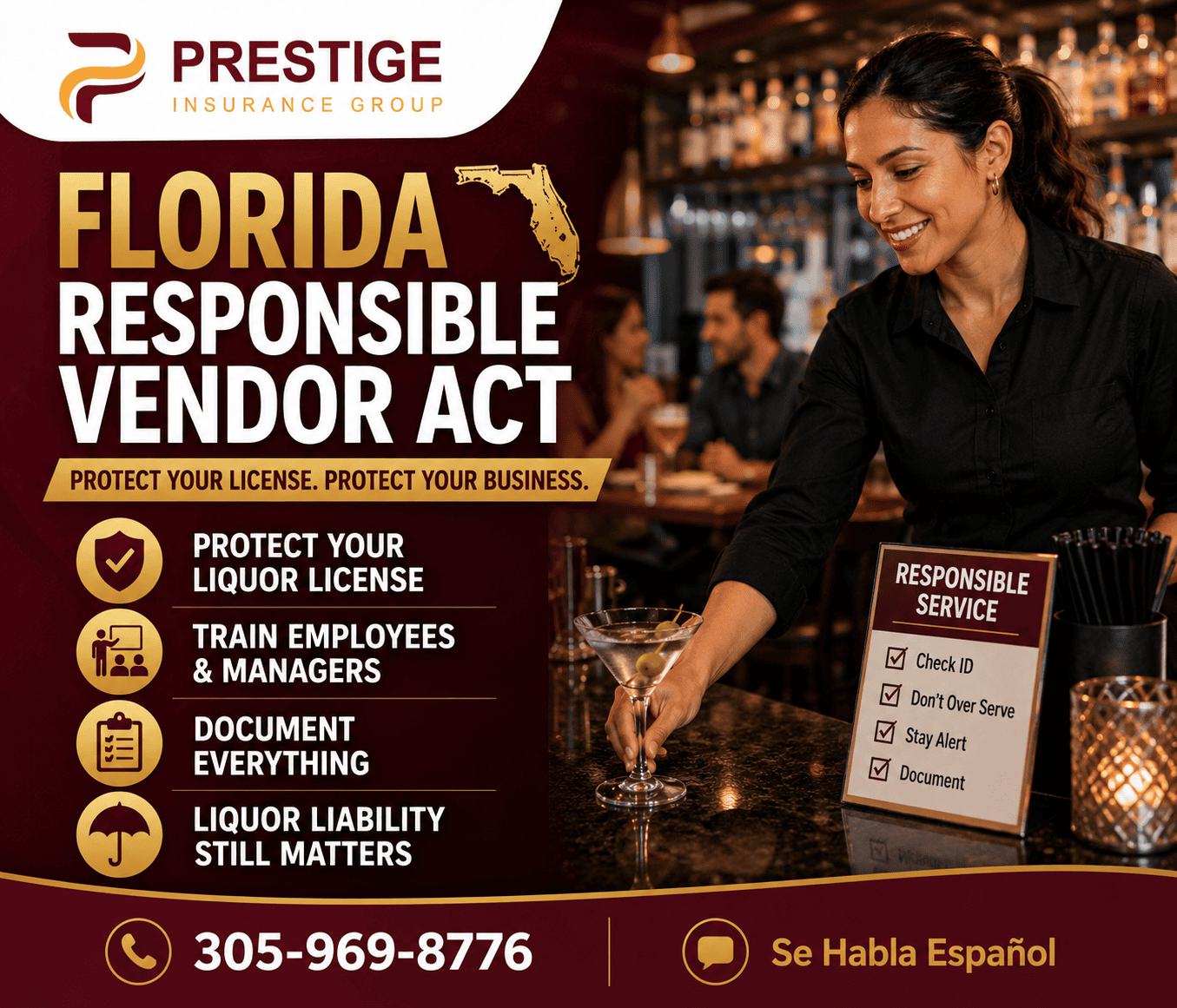
Florida’s Responsible Vendor Act, sections 561.701 through 561.706 of the Florida Statutes, lets an alcoholic beverage licensee qualify as a responsible vendor by maintaining a training program for employees and managers that meets the statute’s requirements. Participation is voluntary. The value comes from what qualification protects.
The Protection Is for the License
Under section 561.706, the license of a qualified responsible vendor may not be suspended or revoked because an employee illegally sold or served alcohol to a minor, or because of an employee’s illegal sale, use or trafficking of controlled substances on the premises, as long as that employee had completed the required training before the violation. The protection does not apply if the vendor knew about the violation, should have known about it, or participated in it. The statute also says an owner or manager cannot rely on being absent from the premises when violations are flagrant, persistent, repeated or recurring.
That is narrower and more valuable than it first sounds. It protects the license, which is what keeps the doors open. It does not erase a fine, it does not protect the employee who made the sale from criminal exposure, and it does not protect the business from a civil lawsuit. And it only works if the training happened first. A bar that enrolls its staff after a violation gets nothing for that violation.
Administrative Protection Is Not Liability Protection
Training companies sometimes market responsible vendor programs as liability protection. That blurs two different things. Administrative liability is what the Division of Alcoholic Beverages and Tobacco can do to the license. Civil liability is what an injured person can recover in court, and that is governed by Florida’s dram shop statute, section 768.125, which generally allows liability when a business willfully and unlawfully serves a minor or knowingly serves a person habitually addicted to alcohol. The Responsible Vendor Act does not create a defense to that kind of lawsuit.
What the program does provide on the civil side is a documented record. A bar that can show every server completed a state-recognized course on a specific date, and that managers enforced the policy, is in a very different position in a negligence claim than one relying on a manager’s memory. It is evidence of reasonable care, not immunity. Our article on ID verification and underage service explains why underage sales are where most serious claims begin.
What Qualifying Requires
The statute sets out specific obligations. Employees who serve alcohol must complete training covering alcohol laws, the effects of alcohol and its interaction with other drugs, and how to recognize and handle underage customers, within a set time after they start. Managers complete a course at a supervisory level. Training is not a one-time event, so ongoing education is required. The program also calls for employment questionnaires, posted signs, and records showing who was trained and when.
The practical challenge is turnover. In a business where servers come and go every month, the records have to keep up. A program that was complete in January can have gaps by June if new hires are put on the floor before they finish training.
How It Fits With Insurance
Liquor liability insurance responds to civil claims, not to administrative actions, and it generally does not pay fines or the income lost during a suspension. That is why protecting the license through responsible vendor status and insuring the civil exposure through liquor liability work together rather than overlapping. Carriers that write liquor liability often ask whether the business participates in responsible vendor training, and documented training can help with underwriting. Our liquor liability guide for Florida restaurants and bars explains how that coverage is structured.
Worth Confirming With Your Agent
-
Whether every server and manager has completed responsible vendor training, and when
-
How new hires are kept off the floor until training is complete
-
Where training records, questionnaires and signage documentation are kept
-
Your liquor liability limit and whether assault and battery is included
-
Whether any policy conditions require training or ID procedures
-
How you would keep operating financially during a license suspension
This article is general information and is not legal advice. Confirm current requirements with the Division of Alcoholic Beverages and Tobacco.
Talk to Prestige Insurance Group
Prestige Insurance Group places liquor liability for bars, restaurants and venues throughout Florida, and we help owners understand how training, documentation and coverage work together. If you want a review of your liquor liability program, we can compare options and point out where your protection stops.
Call the office nearest you. Se habla español.
Orlando: 407-993-2331
Miami: 305-969-8776
Stuart: 772-247-3788
Prestige Insurance Group, License L057894