


A couple from Atlanta buys a two-story beach cottage in New Smyrna Beach, planning to use it a few weeks a year and rent it the rest of the time. They furnish it, photograph it and list it on two platforms within a month of closing. The first bookings arrive quickly. Then a letter comes from the county about tourist development tax registration, a neighbor mentions the city’s rental rules, and their insurance agent asks whether the property is licensed with the state. They had assumed that owning the house was all the permission they needed.
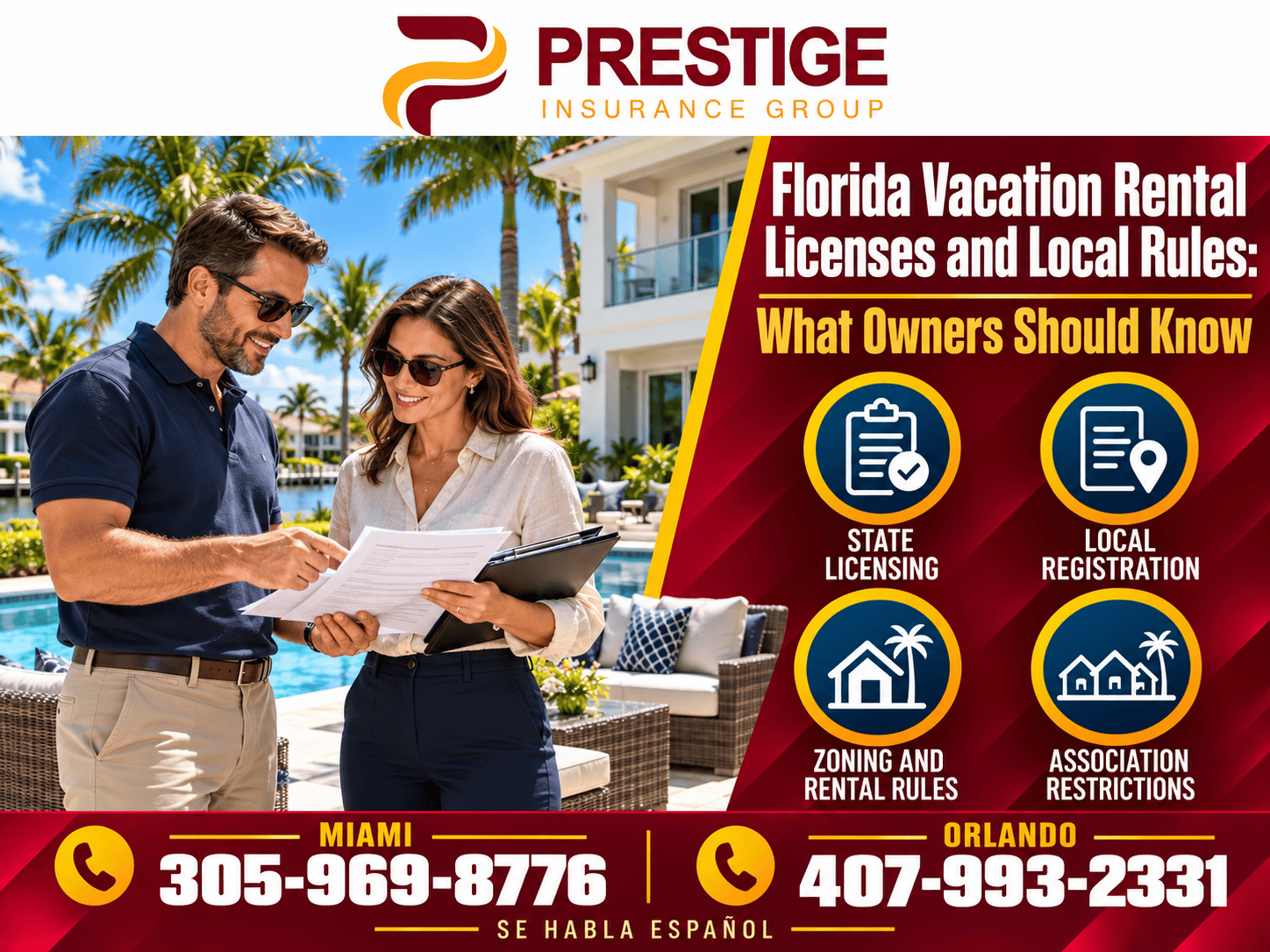
Florida welcomes vacation rentals, but it also regulates them at several levels at once. The state licenses them, the Department of Revenue and the counties tax them, local governments regulate parts of how they operate, and condominium and homeowners associations can restrict them further. Each of these layers affects the owner, and several of them can affect insurance.
When a Property Needs a State License
Florida treats a vacation rental as a public lodging establishment under chapter 509 of the Florida Statutes. In general, a single-family home, townhouse or condominium unit that is rented to guests more than three times a year for periods of less than thirty days or one calendar month, or that is advertised as regularly available for those stays, falls under the vacation rental category and must be licensed by the Department of Business and Professional Regulation, Division of Hotels and Restaurants.
The Division issues separate license classifications for dwellings and for condominiums. The license must be renewed and is subject to the Division’s rules. Because licensing requirements and fees can change, owners should confirm the current requirements directly with DBPR before they begin renting.
What Local Governments Can and Cannot Do
Florida law limits how far cities and counties can go in regulating vacation rentals. Under section 509.032(7), a local government generally may not prohibit vacation rentals or regulate the duration or frequency of rentals, unless it had an ordinance in place before June 1, 2011. Those older ordinances are grandfathered.
That preemption does not leave local governments without a role. Many cities and counties require vacation rentals to register locally, pass inspections, follow occupancy limits, provide parking, observe noise and trash rules and designate a responsible party who can be reached around the clock. Local rules vary widely from one community to the next, and they can change. Proposals to change the state framework appear regularly; a 2024 bill that would have revised it was vetoed, so owners should check the current state of the law rather than rely on what applied when they bought.
Taxes on Short Stays
Rentals of six months or less are generally subject to Florida’s transient rental tax under section 212.03, and owners or their managers must register with the Florida Department of Revenue to collect and remit it. Most counties also levy a tourist development tax on short-term stays, and some add other local taxes. In some counties the platforms collect and remit certain taxes on bookings made through them, while the owner remains responsible for direct bookings and for any taxes the platform does not handle. Owners should confirm with the Department of Revenue, their county tax collector and each platform which taxes are collected and by whom.
Condominium and HOA Restrictions
State preemption limits local governments, not private associations. Condominium declarations and homeowners association covenants can restrict or prohibit short-term rentals, set minimum rental periods, require registration with the association or limit the number of rentals per year. Some buildings and communities allow rentals only of a minimum length that rules out nightly stays altogether.
Before buying a property for rental use, owners should read the governing documents and confirm the current rules with the association. Associations can amend their documents, and the effect of an amendment on existing owners depends on Florida law and the wording of the documents. An owner who rents in violation of association rules faces fines and disputes, and may also face questions from an insurer.
How Rule Violations Can Affect Insurance
Insurance applications for vacation rentals usually ask how the property is used, how often it is rented, whether it is licensed and whether it is managed professionally. Answering those questions accurately matters. A property insured as an owner-occupied home while it is rented nightly, or described as an occasional rental while it operates as a full-time vacation rental, can create a coverage problem when a claim arises. Misrepresenting the use of a property on an application can give an insurer grounds to deny a claim or rescind a policy.
Operating without required licenses or in violation of local rules does not automatically void coverage, but it can complicate a claim, particularly a liability claim, where an injured guest’s attorney will examine whether the owner followed applicable safety, occupancy and registration requirements. Keeping licenses, registrations and inspections current is part of keeping the property insurable. Our article on whether homeowners insurance covers Airbnb in Florida explains why the form of the policy matters so much.
Out-of-State and Foreign Owners
Many Florida vacation homes are owned by people who live elsewhere. Owners who are not in Florida often rely on a local property manager to handle licensing, tax remittance, guest communication and compliance with local rules, but the legal obligations generally remain with the owner. Out-of-state and foreign owners should be clear about which tasks the manager handles and keep copies of licenses, registrations and tax filings. Our guide to homeowners insurance for foreign national buyers covers other issues these owners face.
Getting the Insurance Right From the Start
The licensing and tax steps tell an insurer that the property is operated as a business, and the insurance should match. A standard homeowners policy is designed for an owner-occupied home and often excludes or limits rental activity. Short-term rental programs and dwelling policies endorsed for rental use are built for properties that host guests. Getting the right policy in place before the first booking is easier than fixing a mismatch after a claim. Our page on Florida vacation rental insurance outlines the coverage most owners need.
Worth Confirming With Your Agent
-
Whether your property needs a DBPR vacation rental license and which classification applies
-
Which city or county registration, inspection and occupancy rules apply to your address
-
Whether you or your platform collects the state transient rental tax and the county tourist tax
-
Whether your condominium or HOA documents allow short-term rentals, and on what terms
-
Whether your insurance application accurately describes how the property is used
-
Which compliance tasks your property manager handles, and which remain yours
This article is general information and is not legal advice. Confirm current requirements with DBPR, the Florida Department of Revenue, your county and your association.
Talk to Prestige Insurance Group
Prestige Insurance Group helps vacation rental owners across Florida, including out-of-state and international owners, put coverage in place that matches how their properties are actually used. If you are starting to rent a property, or you are not sure your current policy fits a short-term rental, we can review it with you before the next booking.
Call the office nearest you. Se habla español.
Orlando: 407-993-2331
Miami: 305-969-8776
Stuart: 772-247-3788
Prestige Insurance Group, License L057894



