

Fidelity Bond and Crime Insurance for Security Guard Companies in Florida
Security work is built entirely around trust — clients hand security companies keys, access codes, and unsupervised entry to their properties precisely because they’re trusting the company and its guards to protect those assets, not exploit them. That trust creates a genuinely distinct exposure most other trades don’t share at the same scale: what happens if the person given that access is the one who causes the loss. Fidelity bonds and crime insurance address exactly this gap, and it’s a genuinely underappreciated coverage question in this industry.
Why This Trade Carries Unusually High Exposure
Few employees across any industry are handed the level of unsupervised access that security guards routinely receive — keys to residential units, gate and access codes, alarm system credentials, camera system access, and often direct proximity to client cash, valuables, or sensitive areas during overnight or off-hours shifts. This access is the entire point of the job, which is exactly why it also creates real exposure if an employee misuses it. Apartment communities, HOAs, retail centers, warehouses, and commercial properties all place genuine trust in the guards protecting them, and that trust is precisely what fidelity and crime coverage exists to protect against being violated.
Fidelity Bonds and Crime Insurance Address Related but Distinct Questions
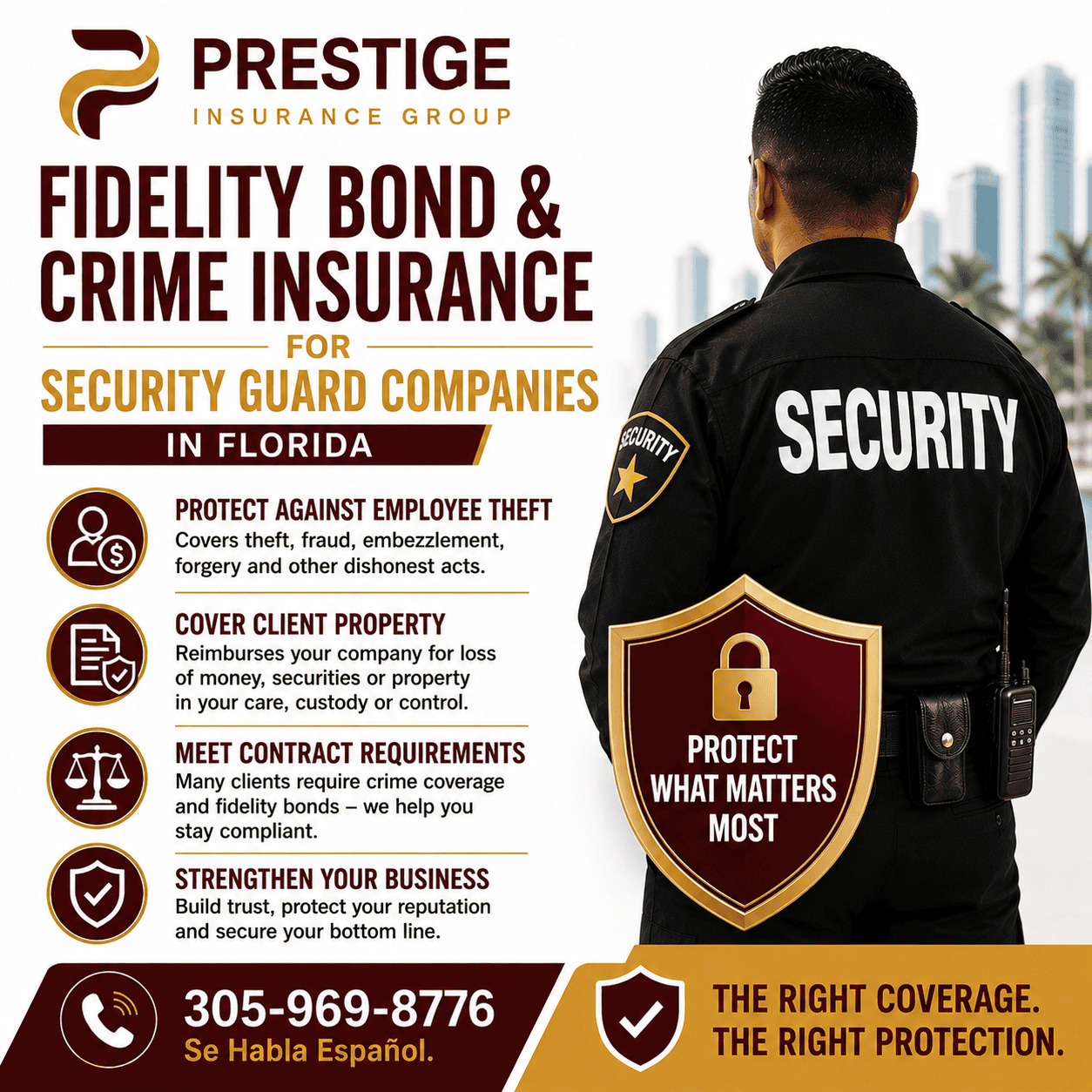
These terms get used somewhat interchangeably, but they’re worth understanding separately. A fidelity bond is specifically designed to protect against losses caused by employee dishonesty — theft, fraud, or embezzlement committed by the company’s own staff. Crime insurance is typically broader, potentially addressing a wider range of criminal acts including theft by third parties, forgery, and other crime-related losses beyond just employee dishonesty. Many security companies need elements of both, and the right combination depends on the specific exposures a company’s operations actually create.
Real Scenarios Where This Coverage Matters
Consider the range of ways this exposure actually shows up: a guard with access to a client’s residence or unit using that access to steal property. A guard exploiting knowledge of alarm codes or camera blind spots to facilitate a theft, either alone or in coordination with an outside party. An employee with access to the security company’s own funds — payroll, petty cash, client payments — diverting money for personal use. Each of these scenarios involves genuine trust being violated by someone the company placed in a position of access specifically because that access was the job itself.
Standard Liability Coverage Doesn’t Address This
This is worth stating plainly, since it connects to a broader theme throughout this cluster: general liability insurance protects against claims others bring against the company for injury or property damage — it was never built to address theft or dishonesty by the company’s own employees. A security company relying solely on general liability, workers’ compensation, and assault and battery coverage has genuinely comprehensive protection for the exposures those policies address, and zero protection for employee dishonesty, because that’s simply not what those coverages were designed for.
Some Client Contracts Specifically Require Bonding
Given how directly this exposure connects to the core trust relationship security companies are built around, some clients — particularly larger commercial properties, financial institutions, and certain residential communities — specifically require proof of bonding as a contract condition, separate from the standard general liability and workers’ compensation requirements already common throughout this cluster. A security company that hasn’t evaluated this coverage may find itself unable to satisfy a contract requirement it never anticipated, similar to the gap-discovery pattern covered in our guide to contract insurance mechanics.
Background Checks Reduce Risk, But Don’t Replace Coverage
Thorough hiring practices and genuine background check procedures reduce the likelihood of hiring someone who will actually misuse access — but they don’t eliminate the risk entirely, and they don’t provide financial protection if a loss happens despite reasonable hiring practices. A company can do genuinely everything right in its hiring process and still face a dishonesty claim; the coverage question and the hiring-practice question are related but ultimately separate layers of protection.
The Bottom Line
Fidelity bond and crime coverage address an exposure that’s genuinely central to what security companies do — they’re placed in positions of trust and access specifically because that’s the job, and that same access creates real risk if it’s ever misused. This coverage deserves direct evaluation rather than an assumption that general liability or workers’ compensation somehow extends to cover employee dishonesty, since neither was ever designed to.
Prestige Insurance Group works with Florida security guard companies to build fidelity and crime coverage that genuinely matches the level of trust and access their operations actually require. Call 305-969-8776 or request a quote online to have your security guard coverage reviewed, or contact our Miami office directly.